
Search engine for discovering works of Art, research articles, and books related to Art and Culture


Javascript must be enabled to continue!
Steatite vase with spout and lugs
View through The Met
Steatite, Early Minoan II–Middle Minoan I, Minoan
Greek and Roman Art, Metropolitan Museum of Art New York NY, Bequest of Richard B. Seager 1926
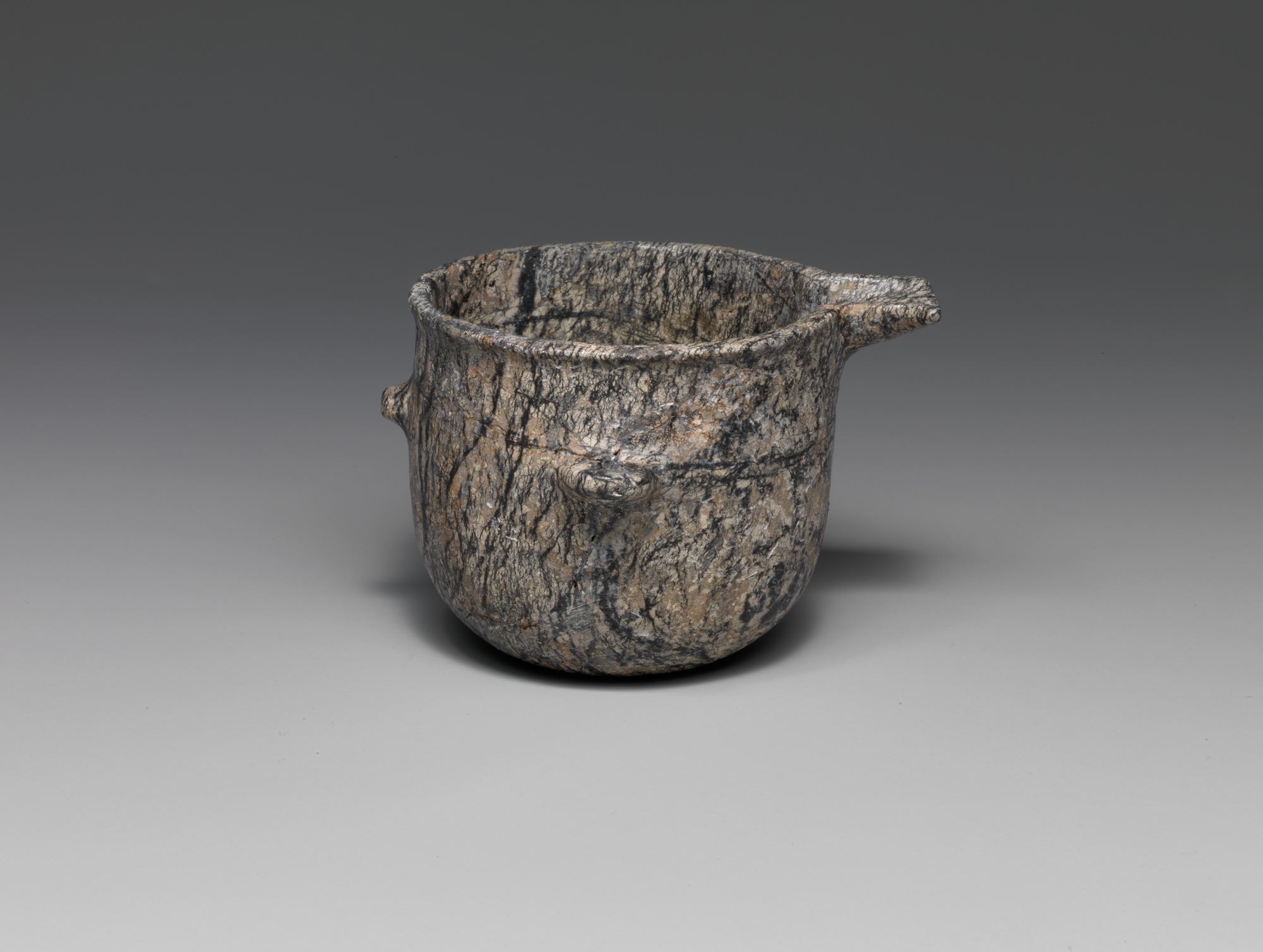
Title: Steatite vase with spout and lugs
Description:
Steatite, Early Minoan II–Middle Minoan I, Minoan.
Related Results
Large Stirrup Jar
Large Stirrup Jar
Large ovoid stirrup jar. Broad ring base. Rounded body with maximum diameter above center. Broad shoulder with narrow, tubular spout and slightly flaring rim, positioned vertically...
Flat-bowl With Bridge-spout With Native Geometric Mattpainted Decoration
Flat-bowl With Bridge-spout With Native Geometric Mattpainted Decoration
Flat-bowl with bridge-spout. Red monochrome interior and base. Brown on buff bands below lip, base (brushwork begining under spout), and on edges of spout. 2 thin, //, vertical ...
vase: ["Portland Vase"]
vase: ["Portland Vase"]
A late eighteenth century first edition black Jasperware Portland vase made in c. 1790. Number 29 marked on inner lip in pencil., A late eighteenth century Wedgwood Portland Vase, ...
Beak-Spouted Pitcher
Beak-Spouted Pitcher
The vessel has a shallow foot with flat base. A slight edge marks the transition of shoulder to neck, which opens in a flaring mouth. A flat strap handle connects lip and shoulder....
Diese großformatige Vase mit Deckel stammt aus Kutani in der Präfektur Ishikawa. Die dreifärbige (Gold, Rot, Schwarz), die gesamte Gefäßoberfläche ausfüllende Bemalung wird aka-e saikō genannt und war von der späten Edo- bis in die mittlere Meiji-Zeit (Mi
Diese großformatige Vase mit Deckel stammt aus Kutani in der Präfektur Ishikawa. Die dreifärbige (Gold, Rot, Schwarz), die gesamte Gefäßoberfläche ausfüllende Bemalung wird aka-e saikō genannt und war von der späten Edo- bis in die mittlere Meiji-Zeit (Mi
This large-format vase with lid comes from Kutani in Ishikawa Prefecture. The three-coloured (gold, red, black), the entire vessel surface filled painting is called aka-e saikō and...
Diese großformatige Vase mit Deckel stammt aus Kutani in der Präfektur Ishikawa. Die dreifärbige (Gold, Rot, Schwarz), die gesamte Gefäßoberfläche ausfüllende Bemalung wird aka-e saikō genannt und war von der späten Edo- bis in die mittlere Meiji-Zeit (Mi
Diese großformatige Vase mit Deckel stammt aus Kutani in der Präfektur Ishikawa. Die dreifärbige (Gold, Rot, Schwarz), die gesamte Gefäßoberfläche ausfüllende Bemalung wird aka-e saikō genannt und war von der späten Edo- bis in die mittlere Meiji-Zeit (Mi
This large-format vase with lid comes from Kutani in Ishikawa Prefecture. The three-coloured (gold, red, black), the entire vessel surface filled painting is called aka-e saikō and...
Chicken headed ewer with descending lotus-petal decor
Chicken headed ewer with descending lotus-petal decor
Ewer with rounded shoulders, sides tapering gently inward and then straight down to a flat base; long, waisted cylindrical neck topped with dish-like mouth; short spout in the form...