
Search engine for discovering works of Art, research articles, and books related to Art and Culture


Javascript must be enabled to continue!
Noh Robe (Karaori)
View through The Met
Twill-weave silk with brocading in silk and supplementary weft patterning in silk (karaori), Edo period (1615–1868), Japan
Rights: Public Domain
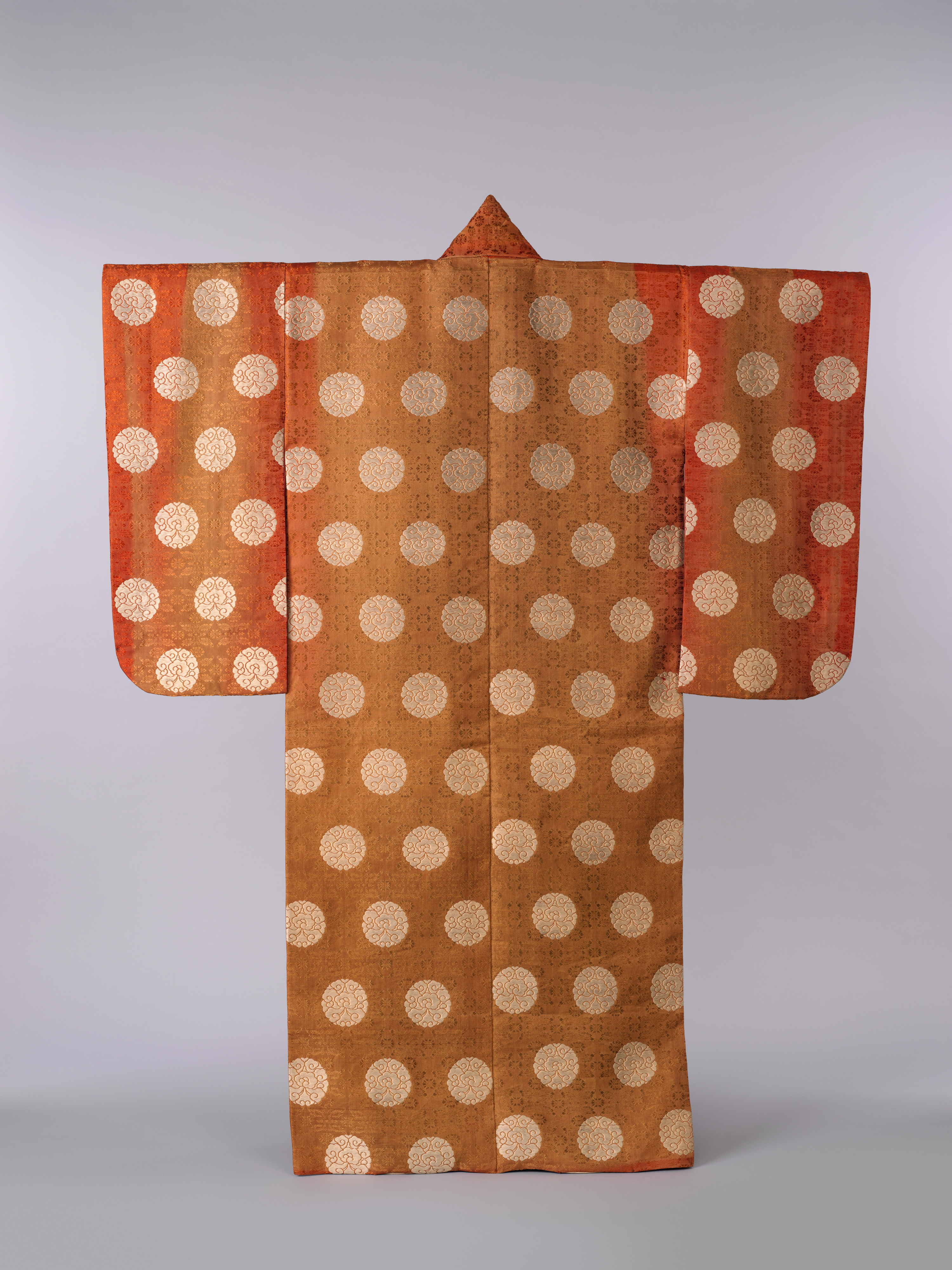
Title: Noh Robe (Karaori)
Description:
Twill-weave silk with brocading in silk and supplementary weft patterning in silk (karaori), Edo period (1615–1868), Japan.
Related Results
Robe of brocaded silk and cotton, made by Liberty & Co., London, ca. 1897. This garment was inspired by 16th-century long gowns, and it was made in Liberty's Artistic and Historic Costume Studio for a member of the Liberty family. The fairly large scale
Robe of brocaded silk and cotton, made by Liberty & Co., London, ca. 1897. This garment was inspired by 16th-century long gowns, and it was made in Liberty's Artistic and Historic Costume Studio for a member of the Liberty family. The fairly large scale
Robe of brocaded silk and cotton, made by Liberty & Co., London, ca. 1897. This garment was inspired by 16th-century long gowns, and it was made in Liberty's Artistic and Historic ...
Noh Robe (Karaori) with Pattern of Bamboo and Young Pines on Bands of Red and White
Noh Robe (Karaori) with Pattern of Bamboo and Young Pines on Bands of Red and White
Twill-weave silk with resist-dyed warps supplementary weft patterning in silk and gold-leaf paper strips (karaori), Edo period (1615–1868), Japan...
Christening robe with sleeves of satin bound and faced with silk, England, ca. 1740. Christening robe bound and faced with pink silk and trimmed down the front with five bows made up from white silk ribbon edged with pink. The robe consists of a plain bod
Christening robe with sleeves of satin bound and faced with silk, England, ca. 1740. Christening robe bound and faced with pink silk and trimmed down the front with five bows made up from white silk ribbon edged with pink. The robe consists of a plain bod
Christening robe with sleeves of satin bound and faced with silk, England, ca. 1740. Christening robe bound and faced with pink silk and trimmed down the front with five bows made ...
Man's informal robe or banyan of silk (red faded to pink, with pattern woven in colours), lined with block-printed cotton dyed with madder. The lining has an all-over black-printed trailing vine and floral design in a design reminscent of Indian chintz, f
Man's informal robe or banyan of silk (red faded to pink, with pattern woven in colours), lined with block-printed cotton dyed with madder. The lining has an all-over black-printed trailing vine and floral design in a design reminscent of Indian chintz, f
Man's informal robe or banyan of silk (red faded to pink, with pattern woven in colours), lined with block-printed cotton dyed with madder. The lining has an all-over black-printed...
Robe of brocaded silk, England, 18th century. Robe of maroon brocaded silk. With an open front and a pleated back, and with three-quarter length sleeves. A design of flower sprigs in green, blue, reds and white on a brown ground. The facing panels on the
Robe of brocaded silk, England, 18th century. Robe of maroon brocaded silk. With an open front and a pleated back, and with three-quarter length sleeves. A design of flower sprigs in green, blue, reds and white on a brown ground. The facing panels on the
Robe of brocaded silk, England, 18th century. Robe of maroon brocaded silk. With an open front and a pleated back, and with three-quarter length sleeves. A design of flower sprigs ...
Noh Robe (Karaori) with Court Carriages and Cherry Blossoms
Noh Robe (Karaori) with Court Carriages and Cherry Blossoms
Twill-weave silk brocade with supplementary weft patterning in metallic thread, Meiji period (1868–1912, Japan...
Long-Sleeved Outer Robe (Uchikake) with Decoration of Landscape, Waves, and Peonies
Long-Sleeved Outer Robe (Uchikake) with Decoration of Landscape, Waves, and Peonies
A white silk crepe (chirimen) was dyed to a dark gray color to create the ground for this long-sleeved outer robe with "twilight dying" (akebono-zome) designs. Such robes are typic...
Nō Robe (Karaori) with Decoration of Irises over an Alternating-Color Block Ground with Basketweave Pattern
Nō Robe (Karaori) with Decoration of Irises over an Alternating-Color Block Ground with Basketweave Pattern
This magnificent robe decorated with irises was made as a costume for young female roles in the aristocratic all-male Nō theater. Silk threads resist-dyed in alternating colors of ...