
Search engine for discovering works of Art, research articles, and books related to Art and Culture


Javascript must be enabled to continue!
Ettore Sottsass, Ettore Sottsass Vase (1973)
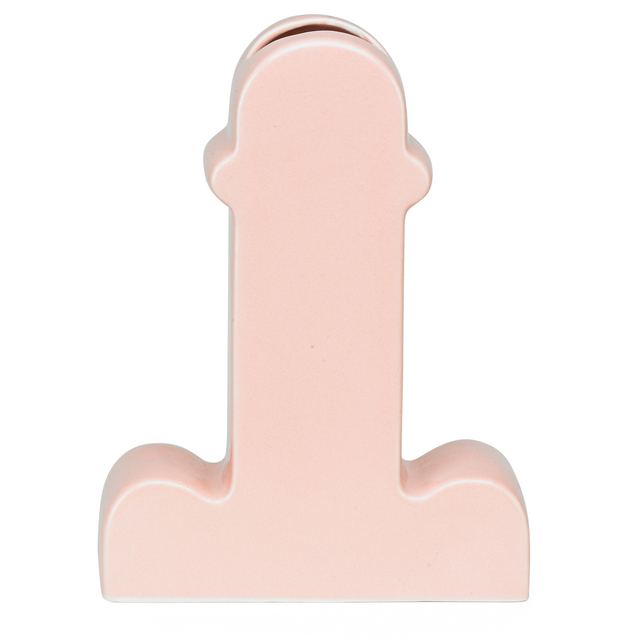
Title: Ettore Sottsass, Ettore Sottsass Vase (1973)
Description:
"Shiva" vase, glazed earthenware, Italy, 9 × 7 × 2 3/4 in.
Related Results
vase: ["Portland Vase"]
vase: ["Portland Vase"]
A late eighteenth century first edition black Jasperware Portland vase made in c. 1790. Number 29 marked on inner lip in pencil., A late eighteenth century Wedgwood Portland Vase, ...
Ettore Sottsass, Masanori Umeda, and Memphis Miniatures, Ettore Sottsass And Masanori Umeda For Memphis Miniatures
Ettore Sottsass, Masanori Umeda, and Memphis Miniatures, Ettore Sottsass And Masanori Umeda For Memphis Miniatures
Two: Casablanca laminated 1:6 scale cabinet (no. 148/500) designed by Ettore Sottsass and Ginza laminated 1:6 scale cabinet (no. 62/500) designed by Masanori Umeda, Italy...
Ettore Sottsass, Super cahier by Ettore Sottsass Jr.
Ettore Sottsass, Super cahier by Ettore Sottsass Jr.
Artist's book embellished with two silk laces. Fully illustrated with color drawings and texts by Sottsass....
A King Performing a Ritual (painting, recto; painting, verso), illustration from a Ramayana series
A King Performing a Ritual (painting, recto; painting, verso), illustration from a Ramayana series
The folio depicts the ritual of the “Puttatresti Yajna,” a sacrifice mentioned in the ancient Indian text of the Atharva-Veda, performed to obtain a son. In the Indian Epic Ramayan...
Girls Worshipping at a Shiva Shrine, Rama and Lakshmana on the Left (painting, recto), illustration from a Ramayana series
Girls Worshipping at a Shiva Shrine, Rama and Lakshmana on the Left (painting, recto), illustration from a Ramayana series
This painting depicts the blue-skinned Rama, the seventh avatar of Hindu god Vishnu, and his brother, Lakshmana, on their way to a temple dedicated to the Hindu god Shiva. They plu...
Diese großformatige Vase mit Deckel stammt aus Kutani in der Präfektur Ishikawa. Die dreifärbige (Gold, Rot, Schwarz), die gesamte Gefäßoberfläche ausfüllende Bemalung wird aka-e saikō genannt und war von der späten Edo- bis in die mittlere Meiji-Zeit (Mi
Diese großformatige Vase mit Deckel stammt aus Kutani in der Präfektur Ishikawa. Die dreifärbige (Gold, Rot, Schwarz), die gesamte Gefäßoberfläche ausfüllende Bemalung wird aka-e saikō genannt und war von der späten Edo- bis in die mittlere Meiji-Zeit (Mi
This large-format vase with lid comes from Kutani in Ishikawa Prefecture. The three-coloured (gold, red, black), the entire vessel surface filled painting is called aka-e saikō and...
Diese großformatige Vase mit Deckel stammt aus Kutani in der Präfektur Ishikawa. Die dreifärbige (Gold, Rot, Schwarz), die gesamte Gefäßoberfläche ausfüllende Bemalung wird aka-e saikō genannt und war von der späten Edo- bis in die mittlere Meiji-Zeit (Mi
Diese großformatige Vase mit Deckel stammt aus Kutani in der Präfektur Ishikawa. Die dreifärbige (Gold, Rot, Schwarz), die gesamte Gefäßoberfläche ausfüllende Bemalung wird aka-e saikō genannt und war von der späten Edo- bis in die mittlere Meiji-Zeit (Mi
This large-format vase with lid comes from Kutani in Ishikawa Prefecture. The three-coloured (gold, red, black), the entire vessel surface filled painting is called aka-e saikō and...