
Search engine for discovering works of Art, research articles, and books related to Art and Culture


Javascript must be enabled to continue!
Enlightenment: Cranium
View through Europeana Collections
In the words of the artist: “The human skull has always fascinated me, I found unexpected beauty. Despite the morbid culture attributed to the skull, I've chosen to focus on the anatomical build and to emulate its bones, comprised of 22 different parts. The cranium’s construction in this project is essentially a zoom-in to the structure of the bone as a means to explore the technology of enamel. The bone structure was designed with the help of a parameter code combined with 3D design programs, and was printed in wax, then cast in silver. The network-like build of the construction created a fruitful canvas for applying the enamel using the traditional Plique-a-jour technique, and enabled me to combine these technologies together in order to enlighten unknown regions of the skull."
Bezalel Academy of Arts and Design
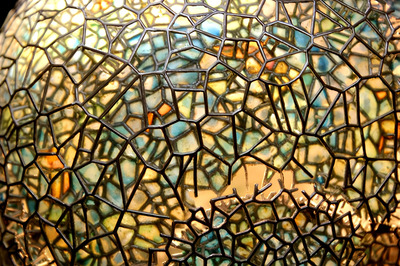
Title: Enlightenment: Cranium
Description:
In the words of the artist: “The human skull has always fascinated me, I found unexpected beauty.
Despite the morbid culture attributed to the skull, I've chosen to focus on the anatomical build and to emulate its bones, comprised of 22 different parts.
The cranium’s construction in this project is essentially a zoom-in to the structure of the bone as a means to explore the technology of enamel.
The bone structure was designed with the help of a parameter code combined with 3D design programs, and was printed in wax, then cast in silver.
The network-like build of the construction created a fruitful canvas for applying the enamel using the traditional Plique-a-jour technique, and enabled me to combine these technologies together in order to enlighten unknown regions of the skull.
".
Related Results
Indian Cows from Delaware in North America, the first half of the 16th century.
Indian Cows from Delaware in North America, the first half of the 16th century.
Koger from the colony of New Sweden. Possibly a gift from the guvenor Johan Printz (1642-1653) to Carl Gustaf Wrangel or Per Brahe d.y. The cogret is probably from the Susquehannoc...
Archaeological final examination, development of horse cranium in post hole 813, house 1, SöderArby, Vaksala parish, Uppland 2015
Archaeological final examination, development of horse cranium in post hole 813, house 1, SöderArby, Vaksala parish, Uppland 2015
Archaeological final examination, development of horse cranium in post hole 813, house 1, SöderArby, Vaksala parish, Uppland 2015...
Buda històric Sakyamuni en dejuni
Buda històric Sakyamuni en dejuni
This image, typical of the art of Gandhara, represents the historical Buddha Siddhartha Gautama, also known as ¿¿kyamuni, who lived between the 6th and 5th centuries before Christ....
Delar av skelett, kranium, bäcken, underkäke samt några mynt.
Urval från Elisabet Iregrens anteckningar -2004: “Två lösa lappar i lådan, “Hsiu Tieu B” och “Han skeleton”. Incomplete skeleton, not cleaned, and in a bad state. Age ca. 25- 35 years.”
Mer inf
Delar av skelett, kranium, bäcken, underkäke samt några mynt.
Urval från Elisabet Iregrens anteckningar -2004: “Två lösa lappar i lådan, “Hsiu Tieu B” och “Han skeleton”. Incomplete skeleton, not cleaned, and in a bad state. Age ca. 25- 35 years.”
Mer inf
Parts of skeletons, cranium, pelvis, lower jaw and some coins.
Selection from Elisabet Iregren’s notes -2004: “Two loose patches in the box,” Hsiu Tieu B “and” Han skeleton. " Inn ...
Body measurements, back view, Chinese woodcut, 1443
Body measurements, back view, Chinese woodcut, 1443
Lettering: Image title: Fu ren chicun (measurements [chi and cun] on the prone body) Other lettering: From the back of the ear to wangu (the mastoid process) is 9 cun. From the cra...
drum, membranophone, musical instrument, instrument
drum, membranophone, musical instrument, instrument
Skull drum, (Sanskrit: damaru). A drum made of two cranes attached to each other, and coated with hard tensioned skin over the two openings. The cranies association point is covere...