
Search engine for discovering works of Art, research articles, and books related to Art and Culture


Javascript must be enabled to continue!
Chiang-Hsun’s Vision of Art Education: Dadu Studio in 1983/ 蔣勳-美學-創作教育: 1983大度山聯展
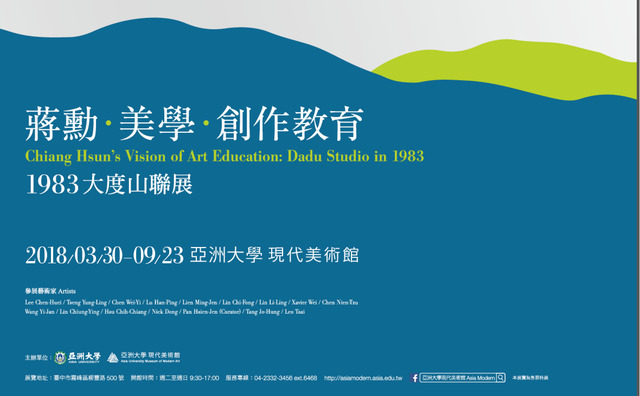
Title: Chiang-Hsun’s Vision of Art Education: Dadu Studio in 1983/ 蔣勳-美學-創作教育: 1983大度山聯展
Description not available.
Related Results
Studio for the First Amendment, miscellaneous, 1978-1983 and 1986
Studio for the First Amendment, miscellaneous, 1978-1983 and 1986
1) Box advertising file folders filled with the following: 2 rubber stamps, one with the Studio for the First Amendment logo, the other a copyright stamp originally made for 1976 b...
Dance belt
Dance belt
362-187Hopi woven belt, faja (TK); wool; l. 239 cm., w. 9 cm.; ca. 1880.\Such belts were usually used by women to secure their dress, but on ceremonial occasions men adopted these ...
Skirt suit, grey cotton with broken glass and skeleton print, by Sarah Whitworth for New Masters, Great Britain, 1983. Jacket, grey cotton with spider and skeleton print, by Sarah Whitworth's label New Masters, Great Britain, 1983; Skirt, grey cotton with
Skirt suit, grey cotton with broken glass and skeleton print, by Sarah Whitworth for New Masters, Great Britain, 1983. Jacket, grey cotton with spider and skeleton print, by Sarah Whitworth's label New Masters, Great Britain, 1983; Skirt, grey cotton with
Skirt suit, grey cotton with broken glass and skeleton print, by Sarah Whitworth for New Masters, Great Britain, 1983. Jacket, grey cotton with spider and skeleton print, by Sarah ...
Artist's documents: photographs of Sackett Street studio, 1985-87
Artist's documents: photographs of Sackett Street studio, 1985-87
1) Black-and-white photograph of Sackett St. studio with Gnomon's Parade (Front), 1980; Long Straight Stray, 1976; Susan Walked In, 1976; and Gnomon's Parade, 1978. The print is id...
Studio Interior with "The Steeplechase" (Aux Courses, Le Jockey Blesse)
Studio Interior with "The Steeplechase" (Aux Courses, Le Jockey Blesse)
Edgar Degas received a thorough academic art education. He studied with a pupil of Ingres and completed the course at the Ecole des Beaux-Arts. Initially, he attempted a traditiona...
"Because of the void everything is possible. Without the void nothing is possible.", Written in Bold Black Script
"Because of the void everything is possible. Without the void nothing is possible.", Written in Bold Black Script
This large, horizontally oriented, rectangular album leaf is inscribed with seven columns of text, the columns with varying numbers of characters. The calligraphy on this album lea...
Dance belt
Dance belt
674-3, 6°Kachina dance sash (in two halves); ta-kun-i-kwi-kya-tsi-napa, or kâkâthléom (TK); cotton, wool, pigments; l. 102 cm. (without fringe), w. 26.5 cm.; ca. 1880.‖ The oldest ...