
Search engine for discovering works of Art, research articles, and books related to Art and Culture


Javascript must be enabled to continue!
Vase with auspicious symbols of Dragon Boat Festival (Duanwu)
View through The Met
Porcelain painted in overglaze polychrome enamels (Jingdezhen ware), Qing dynasty (1644–1911) Jiaqing period (1796–1820), China
Asian Art, Metropolitan Museum of Art New York NY, Gift of A. Sichel 1879
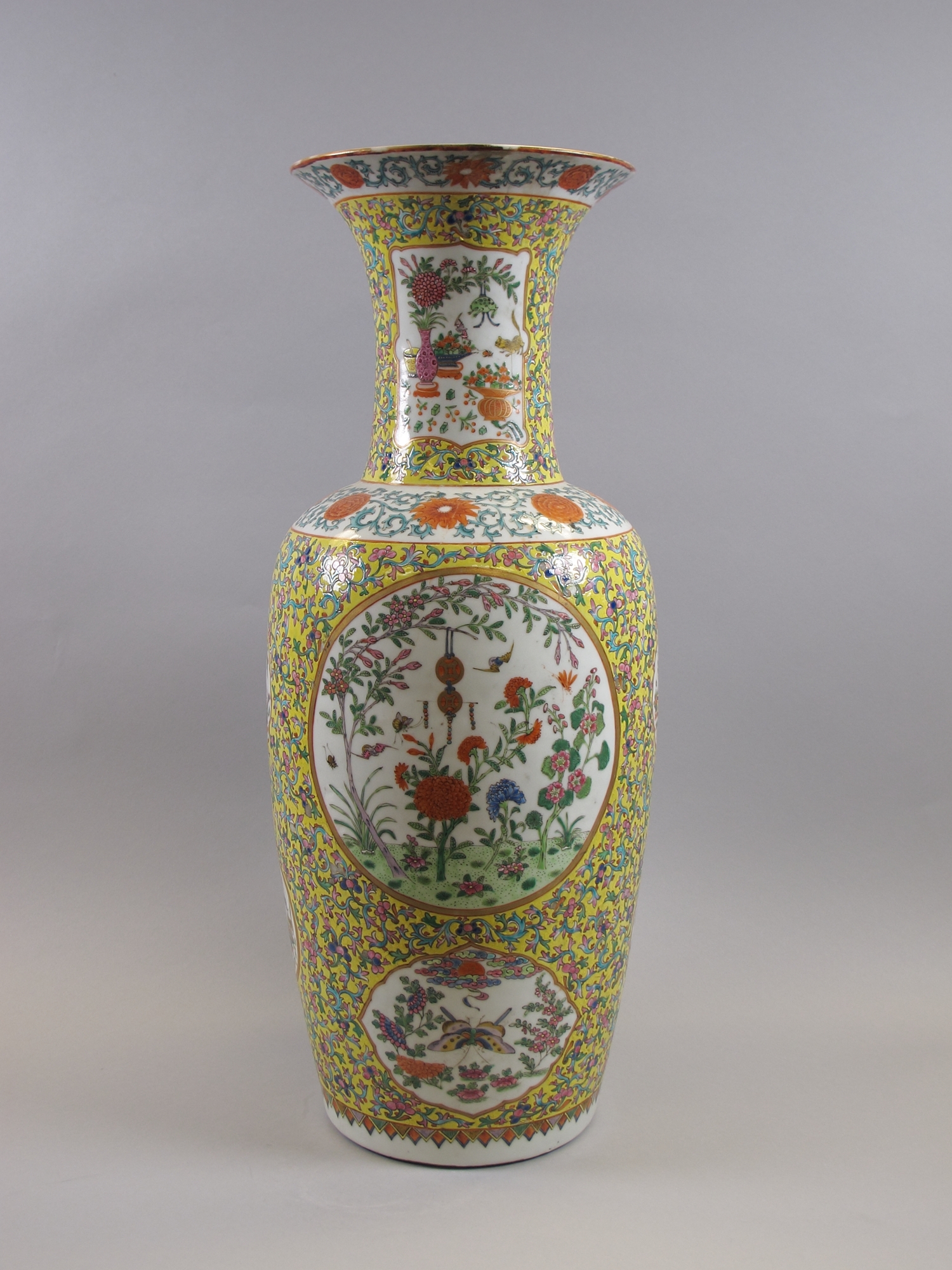
Title: Vase with auspicious symbols of Dragon Boat Festival (Duanwu)
Description:
Porcelain painted in overglaze polychrome enamels (Jingdezhen ware), Qing dynasty (1644–1911) Jiaqing period (1796–1820), China.
Related Results
Ljungströmbåten "Zinganee" under byggnation vid Arendals båtvarv
Ljungströmbåten "Zinganee" under byggnation vid Arendals båtvarv
From left: Hjalmar Olsson and Gunnar Nestling, brother of Hjalmar and David Olsson, on the construction of the Ljungström boat Zinganee, built in a copy at Arendals Båtlap.
The bo...
vase: ["Portland Vase"]
vase: ["Portland Vase"]
A late eighteenth century first edition black Jasperware Portland vase made in c. 1790. Number 29 marked on inner lip in pencil., A late eighteenth century Wedgwood Portland Vase, ...
Vas. Grave finds. The Eastern Handynasty.
Vas. Grave finds. The Eastern Handynasty.
VASE. Grave finds. Abdominal Hu vase with turned high neck. Around the shoulder a broad frieze with animal representations. The frieze is interrupted in two places by a mascaron wi...
Vase in the Shape of an Archaic Jade 'Cong' Ritual Implement
Vase in the Shape of an Archaic Jade 'Cong' Ritual Implement
Square in section, this tall vase has a circular footring and a short, circular neck with lightly flaring walls. The vase is strongly archaistic in character, its shape deriving f...
Diese großformatige Vase mit Deckel stammt aus Kutani in der Präfektur Ishikawa. Die dreifärbige (Gold, Rot, Schwarz), die gesamte Gefäßoberfläche ausfüllende Bemalung wird aka-e saikō genannt und war von der späten Edo- bis in die mittlere Meiji-Zeit (Mi
Diese großformatige Vase mit Deckel stammt aus Kutani in der Präfektur Ishikawa. Die dreifärbige (Gold, Rot, Schwarz), die gesamte Gefäßoberfläche ausfüllende Bemalung wird aka-e saikō genannt und war von der späten Edo- bis in die mittlere Meiji-Zeit (Mi
This large-format vase with lid comes from Kutani in Ishikawa Prefecture. The three-coloured (gold, red, black), the entire vessel surface filled painting is called aka-e saikō and...
Diese großformatige Vase mit Deckel stammt aus Kutani in der Präfektur Ishikawa. Die dreifärbige (Gold, Rot, Schwarz), die gesamte Gefäßoberfläche ausfüllende Bemalung wird aka-e saikō genannt und war von der späten Edo- bis in die mittlere Meiji-Zeit (Mi
Diese großformatige Vase mit Deckel stammt aus Kutani in der Präfektur Ishikawa. Die dreifärbige (Gold, Rot, Schwarz), die gesamte Gefäßoberfläche ausfüllende Bemalung wird aka-e saikō genannt und war von der späten Edo- bis in die mittlere Meiji-Zeit (Mi
This large-format vase with lid comes from Kutani in Ishikawa Prefecture. The three-coloured (gold, red, black), the entire vessel surface filled painting is called aka-e saikō and...
Circular Mirror with Decoration of Chinese Zodiac Animals and Auspicious Characters
Circular Mirror with Decoration of Chinese Zodiac Animals and Auspicious Characters
A thin, well-defined, relief lip borders this circular mirror's decorated back. The decorative scheme is organized into five concentric rings with the crouching-beast-form boss at ...
Vas. Dehuaporcelain, Ming-Qingdynasty.
Vas. Dehuaporcelain, Ming-Qingdynasty.
VAS, A vase in an archaic bronze form called gu. The vase was probably part of an altar set at a Buddhist temple. During the end of the Ming Dynasty and the following Qing Dynasty,...