
Search engine for discovering works of Art, research articles, and books related to Art and Culture


Javascript must be enabled to continue!
Mother and Children at the New Year
View through The Met
Hanging scroll; ink and color on silk, Edo period (1615–1868), Japan
Rights: Public Domain
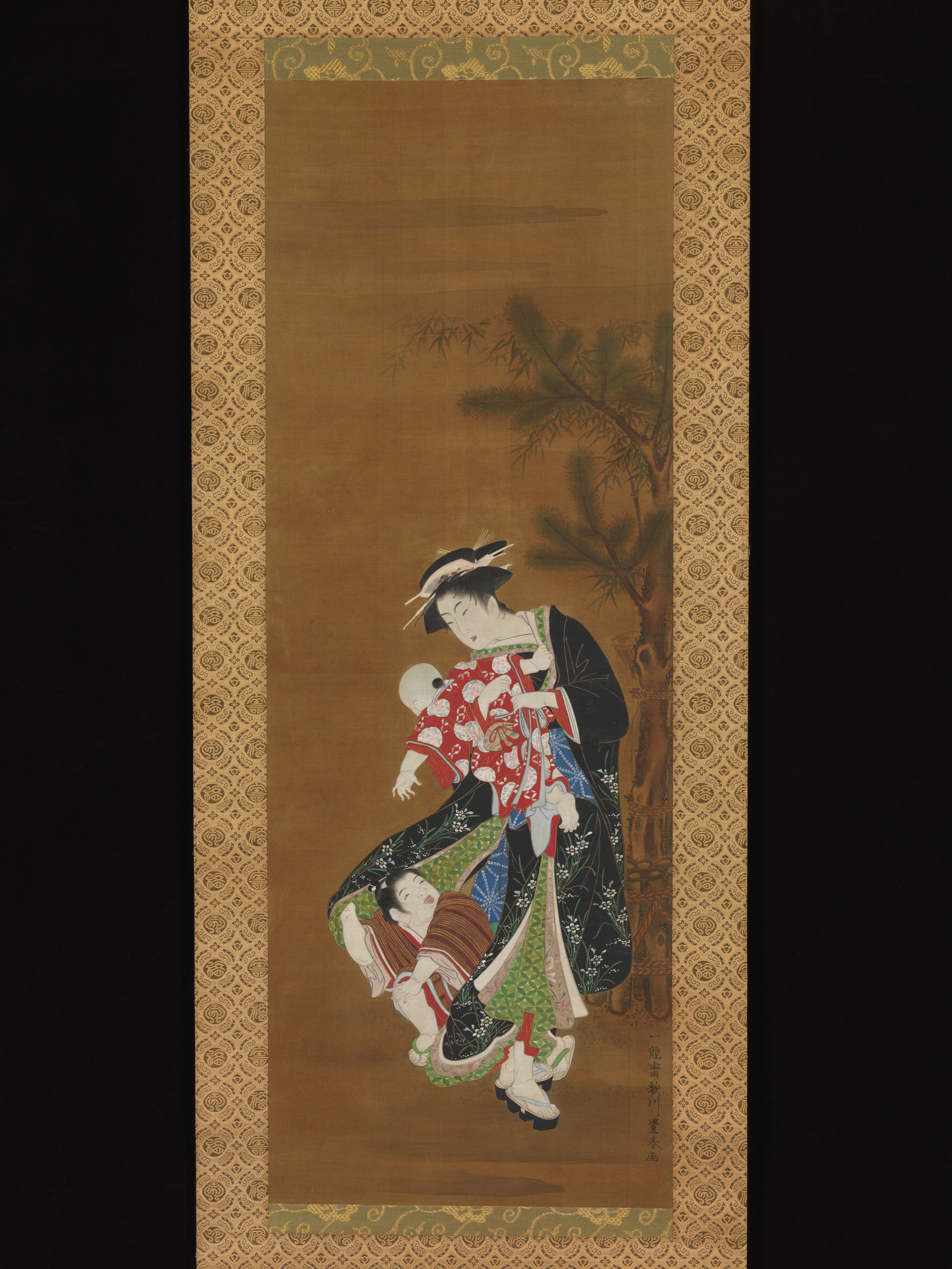
Title: Mother and Children at the New Year
Description:
Hanging scroll; ink and color on silk, Edo period (1615–1868), Japan.
Related Results
Folding fan, leaf of vellum painted in watercolours with carved mother-of-pearl sticks, leaf design after Jean-Baptiste Pillement, France, 1760-70. Fan leaf of vellum painted in watercolours. Three vignettes make up the design, showing Chinese fishermen,
Folding fan, leaf of vellum painted in watercolours with carved mother-of-pearl sticks, leaf design after Jean-Baptiste Pillement, France, 1760-70. Fan leaf of vellum painted in watercolours. Three vignettes make up the design, showing Chinese fishermen,
Folding fan, leaf of vellum painted in watercolours with carved mother-of-pearl sticks, leaf design after Jean-Baptiste Pillement, France, 1760-70. Fan leaf of vellum painted in wa...
Spectacle case of painted and gilded mother-of-pearl, ca. 1685-1688, containing a later pair of tortoise-shell and silver folding spectacles of 1700-1725, probably made in France. Spectacle case of painted and gilded mother-of-pearl, containing a later pa
Spectacle case of painted and gilded mother-of-pearl, ca. 1685-1688, containing a later pair of tortoise-shell and silver folding spectacles of 1700-1725, probably made in France. Spectacle case of painted and gilded mother-of-pearl, containing a later pa
Spectacle case of painted and gilded mother-of-pearl, ca. 1685-1688, containing a later pair of tortoise-shell and silver folding spectacles of 1700-1725, probably made in France. ...
Purse of mother-of-pearl, England, 1600-1630. Purse made from two half-shells of mother-of-pearl. Pear-shaped with the shells joined only at the very bottom and with the brown silk lining forming the actual container. The mother-of-pearl is engraved with
Purse of mother-of-pearl, England, 1600-1630. Purse made from two half-shells of mother-of-pearl. Pear-shaped with the shells joined only at the very bottom and with the brown silk lining forming the actual container. The mother-of-pearl is engraved with
Purse of mother-of-pearl, England, 1600-1630. Purse made from two half-shells of mother-of-pearl. Pear-shaped with the shells joined only at the very bottom and with the brown silk...
On the back of the left image is written with a pencil at the top: Gottfrid’s mother [?]. At the hem stands with ink: 18 1/2 years old.
On the back of the right-hand picture is written with pencil at the top: Gottfrid’s grandmother and grandfather. In th
On the back of the left image is written with a pencil at the top: Gottfrid’s mother [?]. At the hem stands with ink: 18 1/2 years old.
On the back of the right-hand picture is written with pencil at the top: Gottfrid’s grandmother and grandfather. In th
On the back of the left image is written with a pencil at the top: Gottfrid’s mother [?]. At the hem stands with ink: 18 1/2 years old.
On the back of the right-hand picture is wr...
On the back of the left image is written with a pencil at the top: Gottfrid’s mother [?]. At the hem stands with ink: 18 1/2 years old.
On the back of the right-hand picture is written with pencil at the top: Gottfrid’s grandmother and grandfather. In th
On the back of the left image is written with a pencil at the top: Gottfrid’s mother [?]. At the hem stands with ink: 18 1/2 years old.
On the back of the right-hand picture is written with pencil at the top: Gottfrid’s grandmother and grandfather. In th
On the back of the left image is written with a pencil at the top: Gottfrid’s mother [?]. At the hem stands with ink: 18 1/2 years old.
On the back of the right-hand picture is wr...
The Mother of God of Trakai
The Mother of God of Trakai
It is one of the oldest easel paintings in Lithuania, closely linked to Vytautas, the Grand Duke of Lithuania (reigning 1401-1430), and early Christianisation in Lithuania. Up unti...
Fan, painted with a centre vignette showing a man playing a clarinet or similar instrument, a woman playing a mandoline, and a second woman with a book, probably singing. The leaf is further painted with flowers in colours, vignettes of musical instrument
Fan, painted with a centre vignette showing a man playing a clarinet or similar instrument, a woman playing a mandoline, and a second woman with a book, probably singing. The leaf is further painted with flowers in colours, vignettes of musical instrument
Fan, painted with a centre vignette showing a man playing a clarinet or similar instrument, a woman playing a mandoline, and a second woman with a book, probably singing. The leaf ...
Lace fan with mother of pearl mounts. Mother of pearl fan with lace leaf and silk tassel. Mother of pearl and lace.
Lace fan with mother of pearl mounts. Mother of pearl fan with lace leaf and silk tassel. Mother of pearl and lace.
Lace fan with mother of pearl mounts. Mother of pearl fan with lace leaf and silk tassel. Mother of pearl and lace....