
Search engine for discovering works of Art, research articles, and books related to Art and Culture


Javascript must be enabled to continue!
Star deities of the northern and central dippers
View through The Met
Hanging scroll; ink and color on silk, Ming dynasty (1368–1644) Jingtai period (1450–56), China
Rights: Public Domain
Asian Art, Metropolitan Museum of Art New York NY, Gift of Oscar L. Tang Family 2012
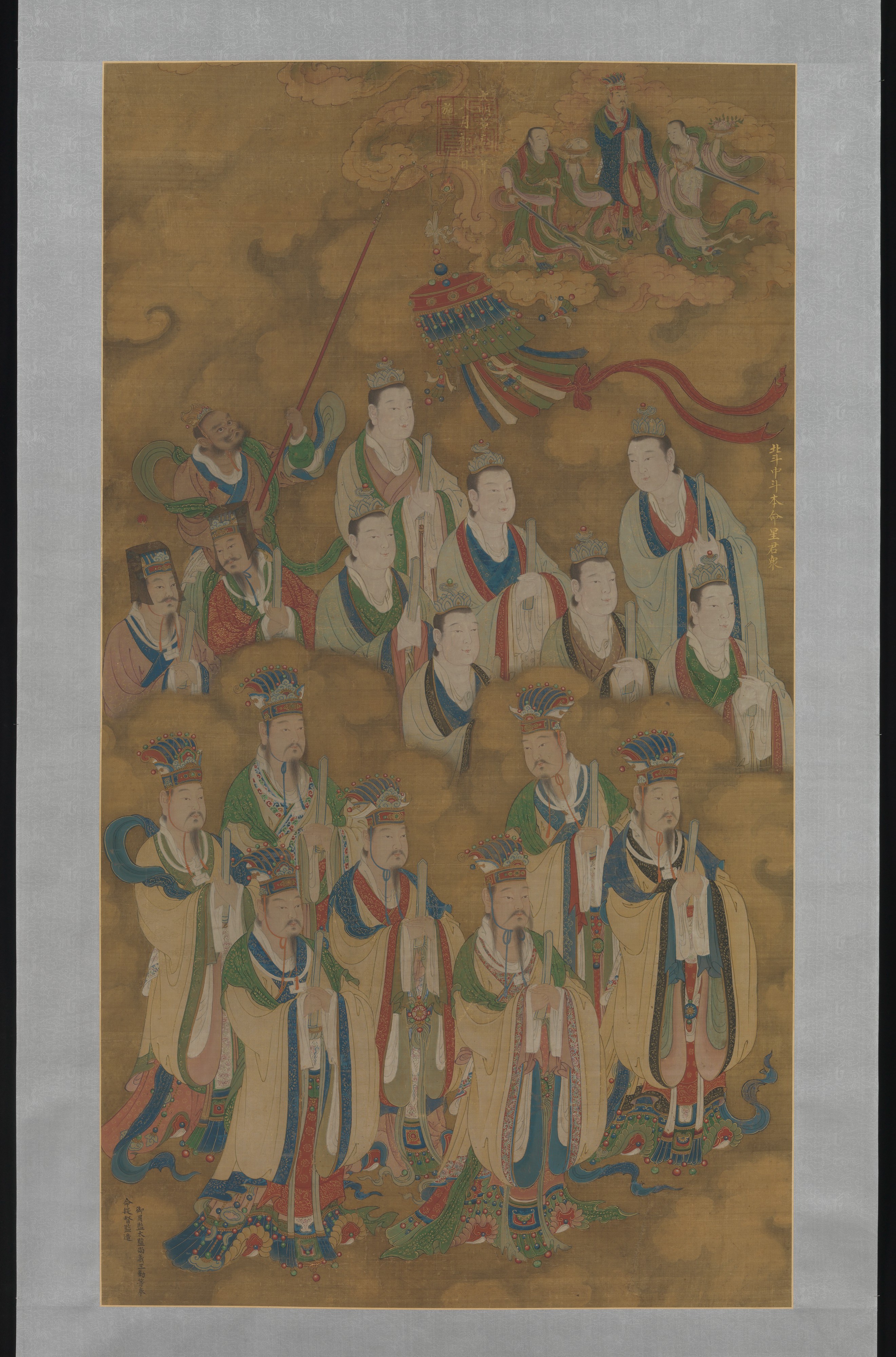
Title: Star deities of the northern and central dippers
Description:
Hanging scroll; ink and color on silk, Ming dynasty (1368–1644) Jingtai period (1450–56), China.
Related Results
Powder bag and powder horn
Powder bag and powder horn
Engesle textThis powder bag; 1860-1870Hide, wool, glass, cow horn, wood; bag: h. 20.5 cm., w. 18 cm.\nRMV 710-7; Herman Ten Kate collection; purchased from Niagara Falls trader, 18...
Title Plate, from Pendant Designs with Deities in Niches and Flower-Arabesques
Title Plate, from Pendant Designs with Deities in Niches and Flower-Arabesques
Engraving; first state of two (New Hollstein), Pendant Designs with Deities in Niches and Flower-Arabesques...
Cylinder Seal: Deities and Worshipper
Cylinder Seal: Deities and Worshipper
Beardless worshipper, presumably the seal owner, before two astral deities: a bearded deity with sword and two star-tipped bow cases holds a ring and stands on a mountain; on a lio...
Man's shirt
Man's shirt
Man's outfit; Plains Cree; 1840-1850Hide, porcupine quills, beaver toes, sinew, pigments; l. of shirt at front, 105 cm; l. of inside leggings, 115 cm.‖RMV 524-2 and 3; purchased fr...
Square with Bird
Square with Bird
Red tapestry woven square. Red oval medallion at center contains a bird standing in profile, possibly a duck. An eight pointed star in contrasting buff wefts extends around the cen...
Thangka de les deïtats i dels lames de l'ordre Geluk
Thangka de les deïtats i dels lames de l'ordre Geluk
This thangka is formed by two scenes that are particular to the paintings of the Geluk Order, which, from the 16th century and guided by Dalai Lamas, occupied a central space in th...
Silver necklace with pendant
Silver necklace with pendant
Necklace with a pendant decorated with a palm tree, a half moon and a five-pointed star. Images of nature such as the palm tree pictured here are rare on Yemeni silver. They are mo...