
Search engine for discovering works of Art, research articles, and books related to Art and Culture


Javascript must be enabled to continue!
Exhibition Vase with Scenes from the Ramayana
View through The Met
Earthenware with colored slips under a clear glaze., India Bombay School
Rights: Public Domain
Asian Art, Metropolitan Museum of Art New York NY, Gift of Steven Kossak The Kronos Collections in celebration of the Museum's 150th Anniversary 2020
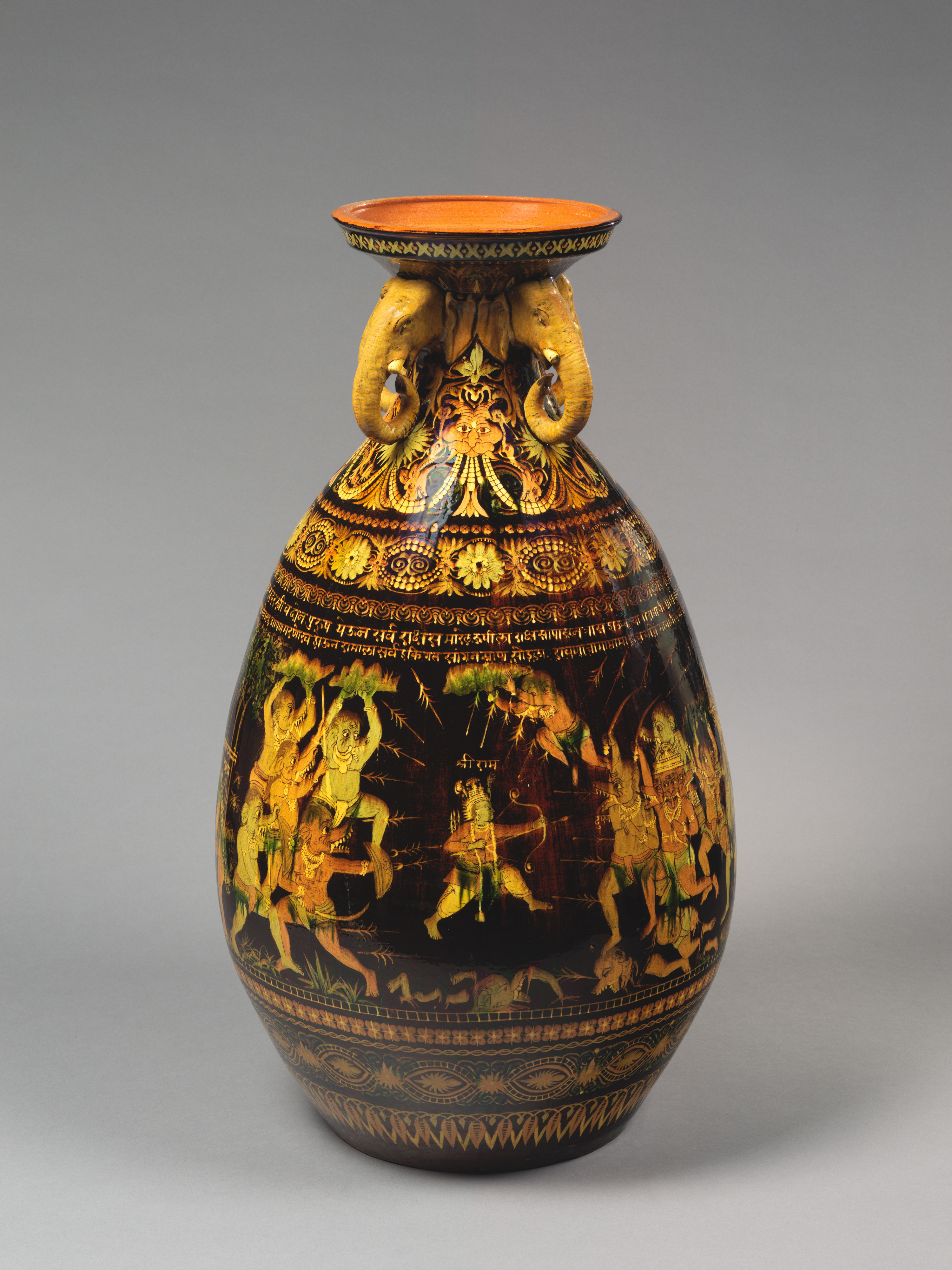
Title: Exhibition Vase with Scenes from the Ramayana
Description:
Earthenware with colored slips under a clear glaze.
, India Bombay School.
Related Results
Diese großformatige Vase mit Deckel stammt aus Kutani in der Präfektur Ishikawa. Die dreifärbige (Gold, Rot, Schwarz), die gesamte Gefäßoberfläche ausfüllende Bemalung wird aka-e saikō genannt und war von der späten Edo- bis in die mittlere Meiji-Zeit (Mi
Diese großformatige Vase mit Deckel stammt aus Kutani in der Präfektur Ishikawa. Die dreifärbige (Gold, Rot, Schwarz), die gesamte Gefäßoberfläche ausfüllende Bemalung wird aka-e saikō genannt und war von der späten Edo- bis in die mittlere Meiji-Zeit (Mi
This large-format vase with lid comes from Kutani in Ishikawa Prefecture. The three-coloured (gold, red, black), the entire vessel surface filled painting is called aka-e saikō and...
Diese großformatige Vase mit Deckel stammt aus Kutani in der Präfektur Ishikawa. Die dreifärbige (Gold, Rot, Schwarz), die gesamte Gefäßoberfläche ausfüllende Bemalung wird aka-e saikō genannt und war von der späten Edo- bis in die mittlere Meiji-Zeit (Mi
Diese großformatige Vase mit Deckel stammt aus Kutani in der Präfektur Ishikawa. Die dreifärbige (Gold, Rot, Schwarz), die gesamte Gefäßoberfläche ausfüllende Bemalung wird aka-e saikō genannt und war von der späten Edo- bis in die mittlere Meiji-Zeit (Mi
This large-format vase with lid comes from Kutani in Ishikawa Prefecture. The three-coloured (gold, red, black), the entire vessel surface filled painting is called aka-e saikō and...
Vase in the Shape of an Archaic Jade 'Cong' Ritual Implement
Vase in the Shape of an Archaic Jade 'Cong' Ritual Implement
Square in section, this tall vase has a circular footring and a short, circular neck with lightly flaring walls. The vase is strongly archaistic in character, its shape deriving f...
A Vase is a Vase is a Vase
A Vase is a Vase is a Vase
"A Vase is a Vase is a Vase" is a group exhibition co-curated with Alejandro Jassan, featuring new works by Sarah Bedford, Charlie Goering, Caroline Larsen, Karen Lederer, Emilia O...
Vas. Dehuaporcelain, Ming-Qingdynasty.
Vas. Dehuaporcelain, Ming-Qingdynasty.
VAS, A vase in an archaic bronze form called gu. The vase was probably part of an altar set at a Buddhist temple. During the end of the Ming Dynasty and the following Qing Dynasty,...
A King Performing a Ritual (painting, recto; painting, verso), illustration from a Ramayana series
A King Performing a Ritual (painting, recto; painting, verso), illustration from a Ramayana series
The folio depicts the ritual of the “Puttatresti Yajna,” a sacrifice mentioned in the ancient Indian text of the Atharva-Veda, performed to obtain a son. In the Indian Epic Ramayan...
Ravana's Abduction of Sita, folio from a Ramayana Series
Ravana's Abduction of Sita, folio from a Ramayana Series
The painting represents a scene from the Sanskrit epic, the Ramayana (Story of Rama). Ravana, the demon king of Lanka, wants to abduct Sita, the wife of Rama, who is the seventh av...