
Search engine for discovering works of Art, research articles, and books related to Art and Culture


Javascript must be enabled to continue!
Summer Kimono with Design of Plovers, Waves, Chinese Bellflowers, Pinks, Pines, Carriages, and Fences
View through The Met
Silk gauze; paste-resist dyeing, late Taishō (1912–1926) to early Shōwa (1926–1989) period, Japan
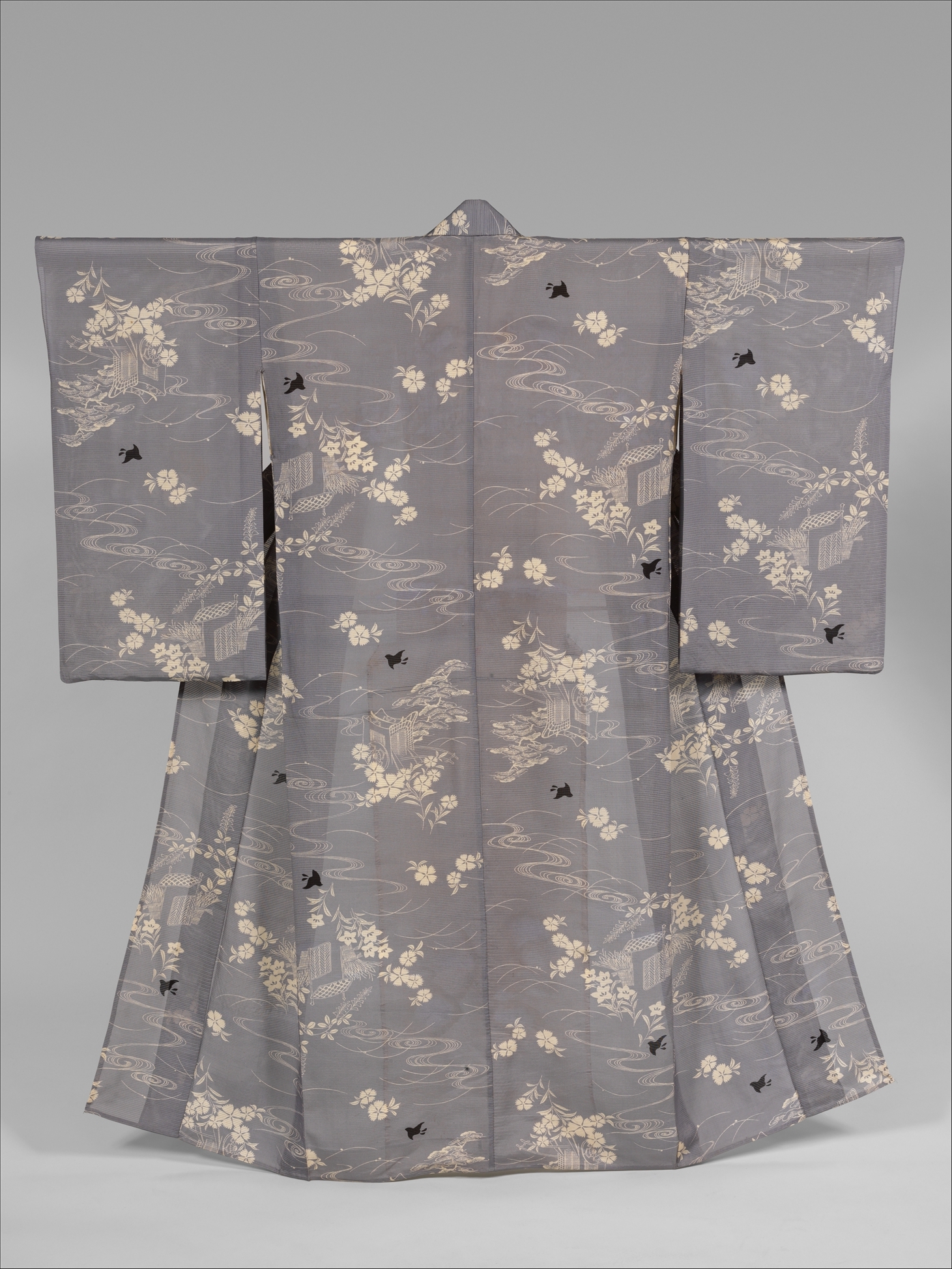
Title: Summer Kimono with Design of Plovers, Waves, Chinese Bellflowers, Pinks, Pines, Carriages, and Fences
Description:
Silk gauze; paste-resist dyeing, late Taishō (1912–1926) to early Shōwa (1926–1989) period, Japan.
Related Results
Kimono with Design of Lilies, Chinese Bellflowers, and Pinks
Kimono with Design of Lilies, Chinese Bellflowers, and Pinks
Figured crepe silk with woven diagonal fret pattern; hand-painted with gold accents embroidered crest, Shōwa period (1926–89), Japan...
The Rhedarium for the Sale of All Sorts of Carriages by Geoffrey GIgg, or, A New Book of Horses and Carriages: Title page
The Rhedarium for the Sale of All Sorts of Carriages by Geoffrey GIgg, or, A New Book of Horses and Carriages: Title page
Etching, The Rhedarium or A New Book of Horses and Carriages...
The Rhedarium for the Sale of All Sorts of Carriages by Geoffrey Gigg, or, A New Book of Horses and Carriages: Title page
The Rhedarium for the Sale of All Sorts of Carriages by Geoffrey Gigg, or, A New Book of Horses and Carriages: Title page
Etching; state before letters, The Rhedarium or A New Book of Horses and Carriages...
Grey and multicoloured kimono (1977)
Grey and multicoloured kimono (1977)
Grey kimono with on the back a hand painted image of a landscape with a village and people, with Mount Fuji in the background. Light grey lining....
Men’s Kimono, Lining
Men’s Kimono, Lining
This short men’s kimono, a haori, has a scene from a baseball game on the lining. It may be the annual competition between Waseda and Keio Universities. The perspective is that of ...
Women’s kimono decorated with chrysanthemums
Women’s kimono decorated with chrysanthemums
Slightly lower in the kimono hierarchy is the tsukesage, a smart garment for occasions such as tea ceremonies. Com-parison with the more formal examples to the left reveals that th...
Two Wagtails on Streamside Rocks amidst Blossoming Pinks
Two Wagtails on Streamside Rocks amidst Blossoming Pinks
A title slip mounted under the silk-covered mat attributes this painting to Kim Sik, a statement that accords with the impressed seals. Skilled at landscape depictions but best kno...