
Search engine for discovering works of Art, research articles, and books related to Art and Culture


Javascript must be enabled to continue!
Samson and the Philistines
View through National Gallery of Denmark
With Samson and the Philistines, painted in Rome in 1863, Bloch entered the Danish art scene in earnest.
With his virtuoso technique and narrative devices such as the way we as spectators are drawn into the scene, and the sheer concentrated action of the piece he brought Danish art on a par with contemporary European history painting.
The theatrical effects
Art history has reproached Bloch for his pronounced use of theatrical effects. Seen in a wider perspective, however, it is remarkable how his aggressive involvement of spectators and setpiece authenticity points ahead towards the aestetics of film where such effects are basic elements.
Just think of the Hollywood studios and D.W. Griffith’s (1875-1948) lavish historical extravaganzas, the theatrical facial expressions and gestures, and the use of close-ups to remove the filters between spectators and objects.
Denmark's greatest painter
Samson was followed by several similar pictures, which brought Bloch great recognition, carving him a reputation among his contemporaries as Denmark’s greatest painter. Bloch’s principal work is the series of 23 paintings with scenes from the New Testament that the brewer J.C. Jacobsen (1811-1887) of Carlsberg fame commissioned in 1865 as decorations for King Christian 4.’s (1577-1648) prayer seat in Frederiksborg Chapel.
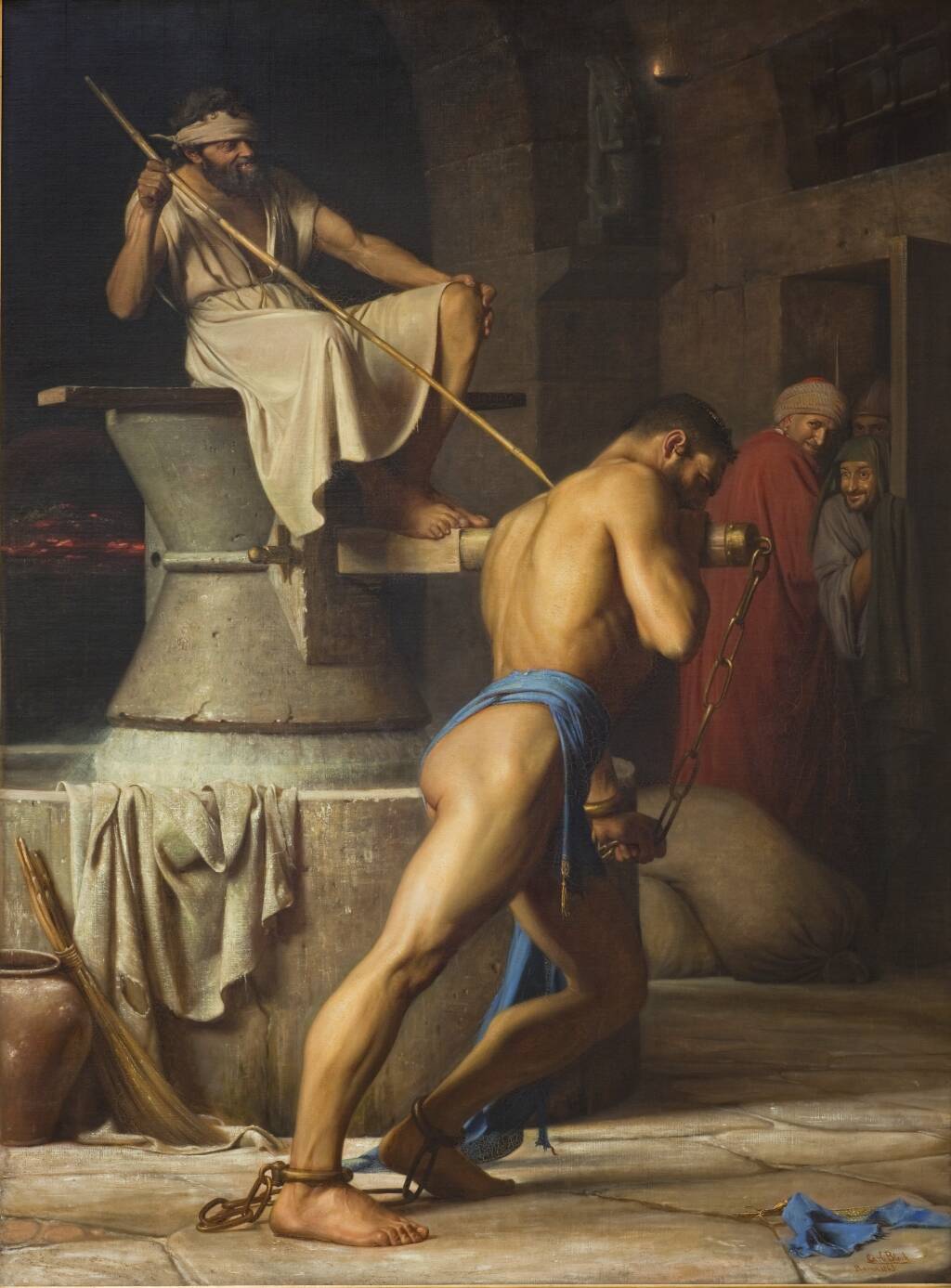
Title: Samson and the Philistines
Description:
With Samson and the Philistines, painted in Rome in 1863, Bloch entered the Danish art scene in earnest.
With his virtuoso technique and narrative devices such as the way we as spectators are drawn into the scene, and the sheer concentrated action of the piece he brought Danish art on a par with contemporary European history painting.
The theatrical effects
Art history has reproached Bloch for his pronounced use of theatrical effects.
Seen in a wider perspective, however, it is remarkable how his aggressive involvement of spectators and setpiece authenticity points ahead towards the aestetics of film where such effects are basic elements.
Just think of the Hollywood studios and D.
W.
Griffith’s (1875-1948) lavish historical extravaganzas, the theatrical facial expressions and gestures, and the use of close-ups to remove the filters between spectators and objects.
Denmark's greatest painter
Samson was followed by several similar pictures, which brought Bloch great recognition, carving him a reputation among his contemporaries as Denmark’s greatest painter.
Bloch’s principal work is the series of 23 paintings with scenes from the New Testament that the brewer J.
C.
Jacobsen (1811-1887) of Carlsberg fame commissioned in 1865 as decorations for King Christian 4.
’s (1577-1648) prayer seat in Frederiksborg Chapel.
Related Results
Capital with Four Scenes from the Story of Samson
Capital with Four Scenes from the Story of Samson
The four scenes are: Samson wrestling the lion; Samson carrying off the gates of Gaza; Delilah and the Philistines cutting Samson's hair; and Samson destroying the house of the Phi...
Samson and the Lion, from "The Story of Samson"
Samson and the Lion, from "The Story of Samson"
Woodcut with pochoir (stencil) and hand coloring, The Story of Samson...
The Meeting of Tamar and Judah
The Meeting of Tamar and Judah
To judge from their similar style and dimensions, these two canvases should be considered a pair, both depicting Old Testament scenes. They were formerly in the Watney collection i...
The Annunciation to Manoah's Wife
The Annunciation to Manoah's Wife
To judge from their similar style and dimensions, these two canvases should be considered a pair, both depicting Old Testament scenes. They were formerly in the Watney collection i...