
Search engine for discovering works of Art, research articles, and books related to Art and Culture


Javascript must be enabled to continue!
Par nirvana (death and transcendence of the Buddha) and attendant arhats
View through The Met
Earthenware with polychrome glaze, Ming dynasty (1368–1644) Hongzhi period (1488–1505), China
Rights: Public Domain
Asian Art, Metropolitan Museum of Art New York NY, Fletcher Fund 1925
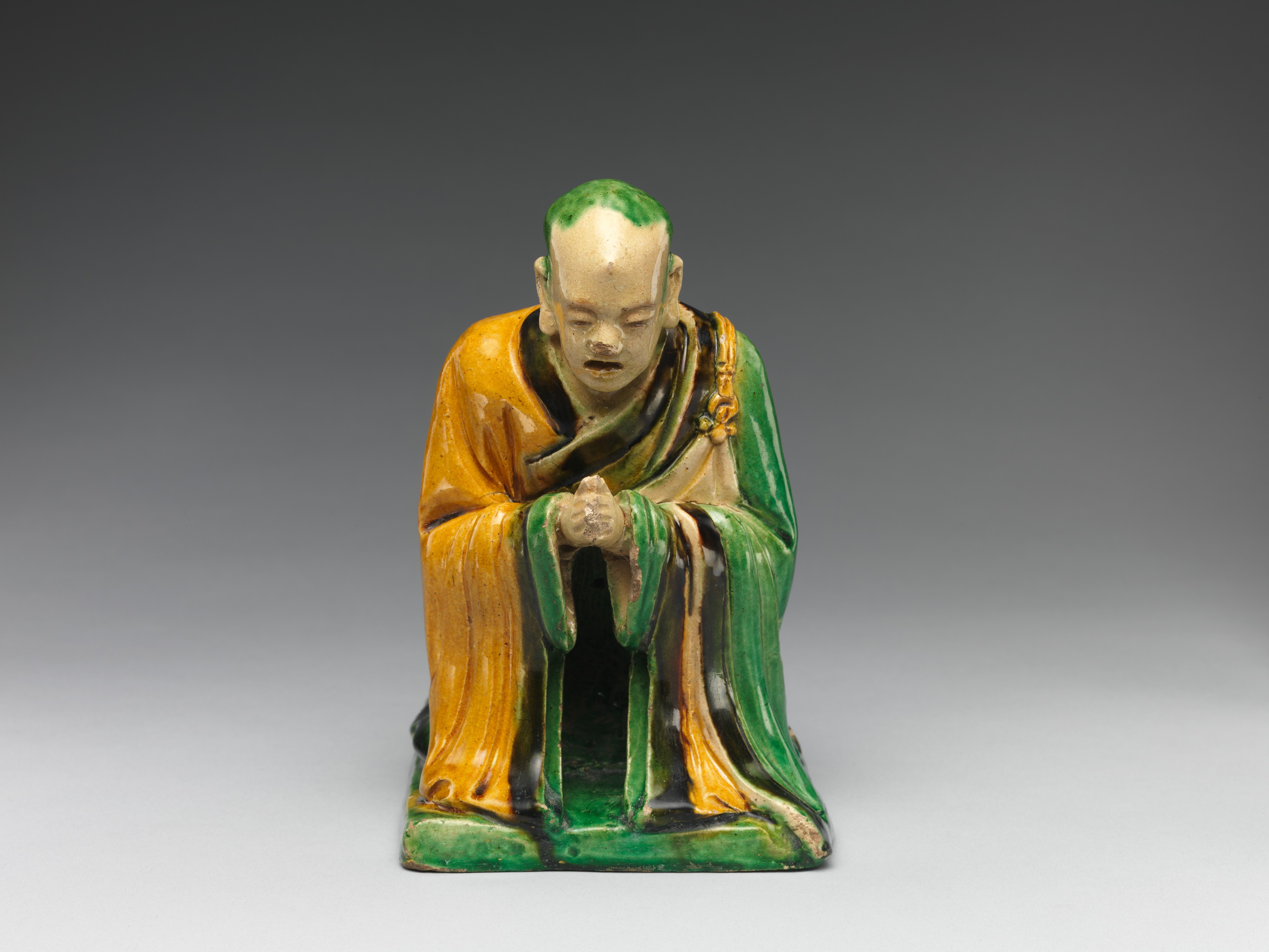
Title: Par nirvana (death and transcendence of the Buddha) and attendant arhats
Description:
Earthenware with polychrome glaze, Ming dynasty (1368–1644) Hongzhi period (1488–1505), China.
Related Results
Standing Buddha Shakyamuni in Varada-mudra
Standing Buddha Shakyamuni in Varada-mudra
This sculpture depicts a Buddha gracefully standing on a shallow lotus pedestal, the Buddha likely the Buddha Sakyamuni (the Historical Buddha) though possibly the Buddha Dipankara...
skulptur, statyett, sculpture
skulptur, statyett, sculpture
Function: During the stay of the frigate Vanadis in Bangkok during its circumnavigation (1883-1885), the Swedish archaeologist and ethnographer Hjalmar Stolpe (1841-1905) the first...
Seated Medicine Buddha (Sanskrit: Bhaishajyaguru)
Seated Medicine Buddha (Sanskrit: Bhaishajyaguru)
The central figure in this Tibetan Buddhist painting, or thangka, is Bhaisajyaguru—the buddha of healing and medicine known more commonly as the Medicine Buddha. Seated on an elabo...
Head of Buddha, probably the Buddha Sakyamuni
Head of Buddha, probably the Buddha Sakyamuni
Carved in gray limestone in Thailand in the seventh or early eighth century, this stone sculpture depicts the head of a Buddha, probably the Buddha Sakyamuni, the Historical Buddha...
Par nirvana (death and transcendence of the Buddha) and attendant arhats
Par nirvana (death and transcendence of the Buddha) and attendant arhats
Earthenware with polychrome glaze, Ming dynasty (1368–1644) Hongzhi period (1488–1505), China...
Scenes from the Buddha’s Life
Scenes from the Buddha’s Life
This painting is composed of three vignettes from the Buddha’s life.
The primary scene begins in the top right corner of the painting. It shows the Buddha ascended to the Trayas...
Par nirvana (death and transcendence of the Buddha) and attendant arhats
Par nirvana (death and transcendence of the Buddha) and attendant arhats
Earthenware with polychrome glaze, Ming dynasty (1368–1644) Hongzhi period (1488–1505), China...
Par nirvana (death and transcendence of the Buddha) and attendant arhats
Par nirvana (death and transcendence of the Buddha) and attendant arhats
Earthenware with polychrome glaze, Ming dynasty (1368–1644) Hongzhi period (1488–1505), China...