
Search engine for discovering works of Art, research articles, and books related to Art and Culture


Javascript must be enabled to continue!
Kneeling Youth - possibly Ilioneus, son of Niobe
View through National Gallery of Denmark
Copy in plaster transferred in 1897 from the Academy of Fine Art, made on a heavily restored Roman copy of a lost, Greek original made by a follower of Praxiteles around 300 BCE. The Roman version of the sculpture was owned by Renaissance artist Lorenzo Ghiberti, when he won the competition in 1402 for the making of bronze doors to the Baptistry in Florenze, surpassing his colleague Filippo Brunneleschi. The contest stated, that both competitors should do a panel showing “The sacrifice of Issac”. Ghiberti’s version show clear inspiration from the “Illioneus”. The competition is said to mark the starting point of the early Renaissance, the “rebirth” of antiquity.
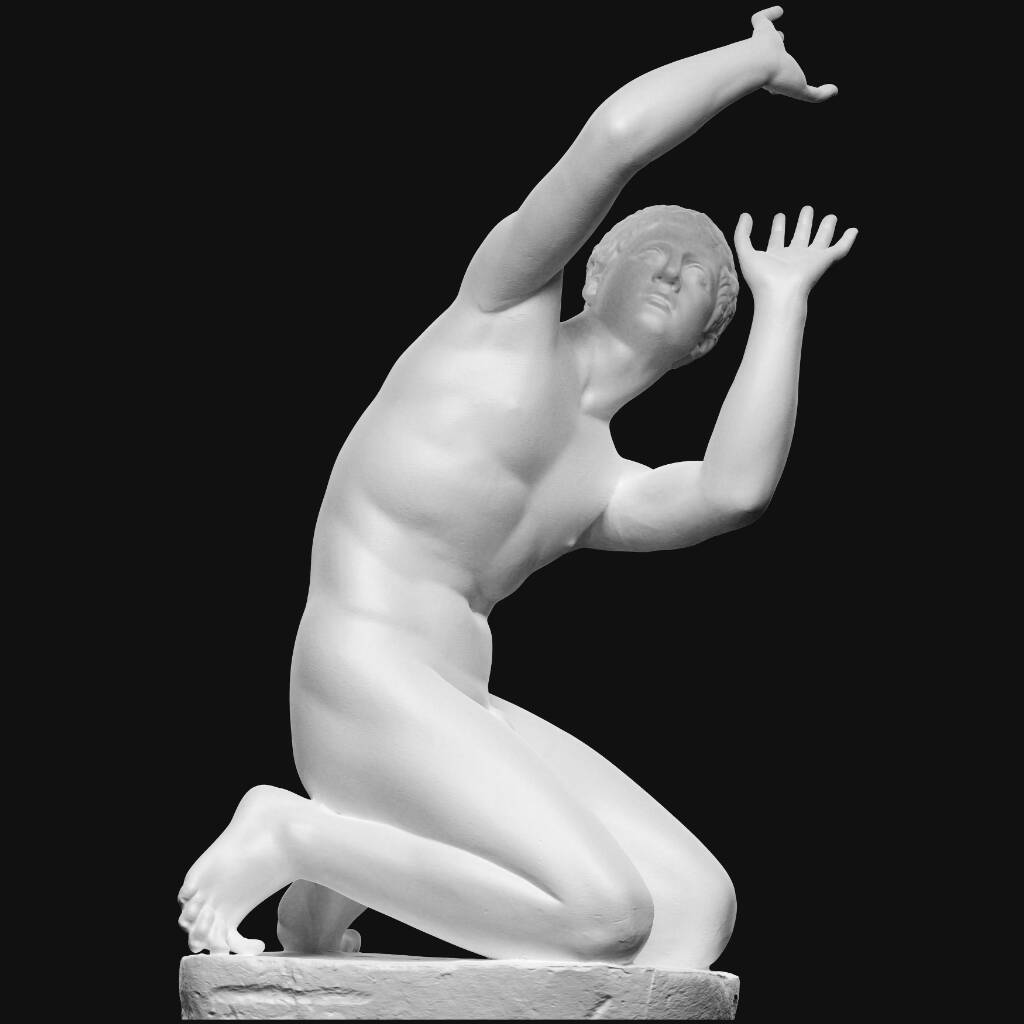
Title: Kneeling Youth - possibly Ilioneus, son of Niobe
Description:
Copy in plaster transferred in 1897 from the Academy of Fine Art, made on a heavily restored Roman copy of a lost, Greek original made by a follower of Praxiteles around 300 BCE.
The Roman version of the sculpture was owned by Renaissance artist Lorenzo Ghiberti, when he won the competition in 1402 for the making of bronze doors to the Baptistry in Florenze, surpassing his colleague Filippo Brunneleschi.
The contest stated, that both competitors should do a panel showing “The sacrifice of Issac”.
Ghiberti’s version show clear inspiration from the “Illioneus”.
The competition is said to mark the starting point of the early Renaissance, the “rebirth” of antiquity.
Related Results
Plate 5, from "Punishment of Niobe"
Plate 5, from "Punishment of Niobe"
Engraving, Punishment of Niobe...
Plate 4, from "Punishment of Niobe"
Plate 4, from "Punishment of Niobe"
Engraving, Punishment of Niobe...
Kneeling man offering wine, attributed to Reẓā `Abbāsī (d. 1635)
Kneeling man offering wine, attributed to Reẓā `Abbāsī (d. 1635)
Kneeling man offering wine, possibly by Reza `Abbasi (d. 1635)
A young man holds out a small footed glass of red wine, to an unseen companion. The wine vessels and fruit suggest th...