
Search engine for discovering works of Art, research articles, and books related to Art and Culture


Javascript must be enabled to continue!
Ukiyo-e
View through Artsy
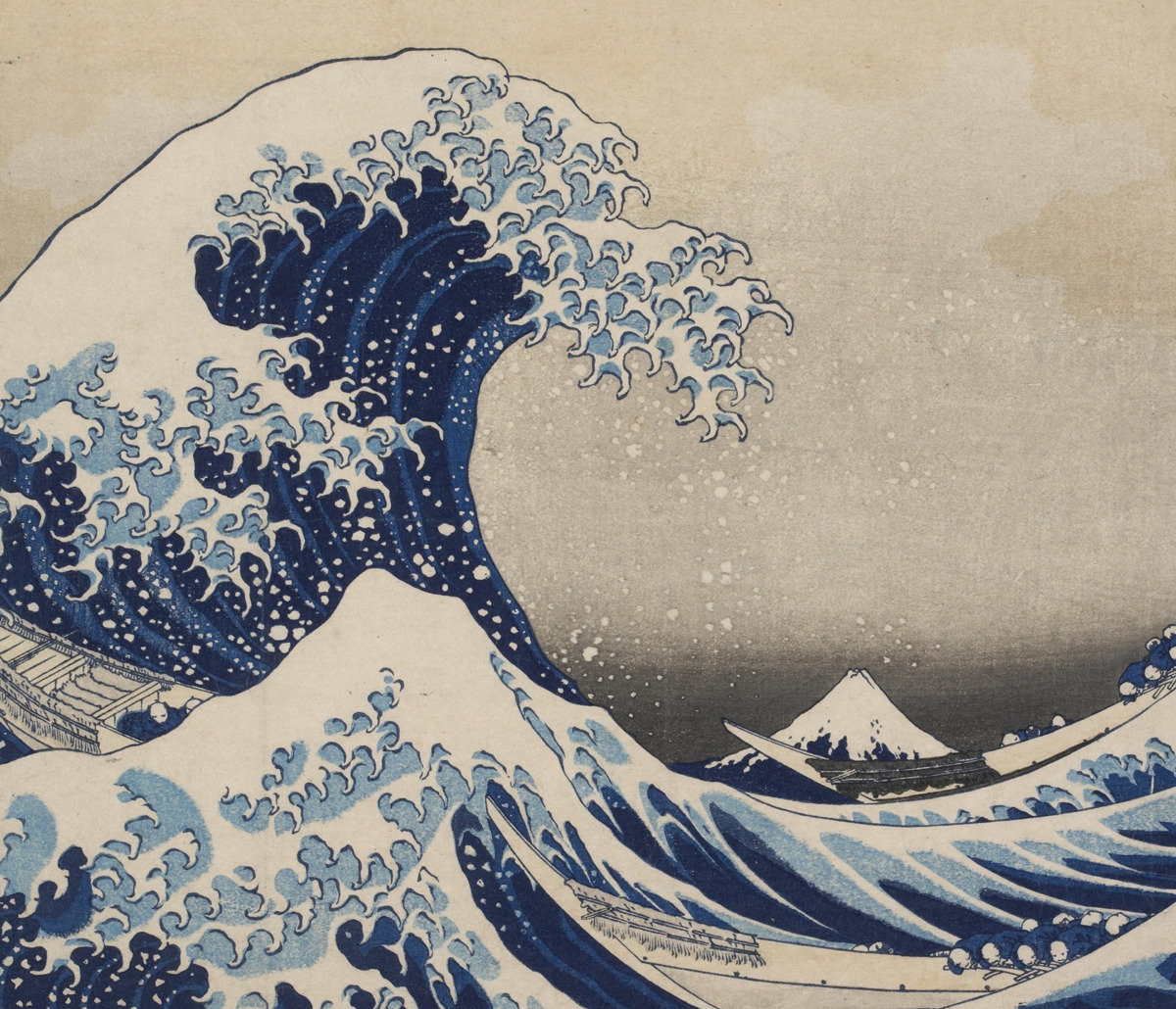
Literally meaning “Pictures of the Floating World,” ukiyo-e refers to a style of Japanese woodblock print and painting from the Edo period depicting famous theater actors, beautiful courtesans, city life, travel in romantic landscapes, and erotic scenes. The Floating World—as the pleasure districts of Edo (modern-day Tokyo) were called—exemplifies the sensory pleasures of urban life, but also offers a bittersweet reminder of the fleeting nature of worldly delights. It’s commonly said that in Edo Japan, anyone could own a masterpiece ukiyo-e print for about the price of a bowl of noodles. While this claim oversimplifies, it is true that by the 17th century, ukiyo-e printmakers innovated centuries-old woodblock text printing techniques to create colorful picture prints that were distributed widely for popular consumption. Some of the greatest Japanese artists of their time—Utagawa Hiroshige, Katsushika Hokusai, Utagawa Toyokuni III, and Keisai Eisen among them—became known primarily as woodblock print designers in the ukiyo-e style. In the 19th century, ukiyo-e printmakers also began to focus on landscape, creating series such as Hokusai’s famed Thirty-Six Views of Mount Fuji (1830–1835). Ukiyo-e also had a profound impact on European artists at that time—its flattened perspective and innovative compositions inspired artists such as Mary Cassatt, Vincent van Gogh, and Henri de Toulouse-Lautrec, as well as the Japonisme movement in art and design.
Title: Ukiyo-e
Description:
Literally meaning “Pictures of the Floating World,” ukiyo-e refers to a style of Japanese woodblock print and painting from the Edo period depicting famous theater actors, beautiful courtesans, city life, travel in romantic landscapes, and erotic scenes.
The Floating World—as the pleasure districts of Edo (modern-day Tokyo) were called—exemplifies the sensory pleasures of urban life, but also offers a bittersweet reminder of the fleeting nature of worldly delights.
It’s commonly said that in Edo Japan, anyone could own a masterpiece ukiyo-e print for about the price of a bowl of noodles.
While this claim oversimplifies, it is true that by the 17th century, ukiyo-e printmakers innovated centuries-old woodblock text printing techniques to create colorful picture prints that were distributed widely for popular consumption.
Some of the greatest Japanese artists of their time—Utagawa Hiroshige, Katsushika Hokusai, Utagawa Toyokuni III, and Keisai Eisen among them—became known primarily as woodblock print designers in the ukiyo-e style.
In the 19th century, ukiyo-e printmakers also began to focus on landscape, creating series such as Hokusai’s famed Thirty-Six Views of Mount Fuji (1830–1835).
Ukiyo-e also had a profound impact on European artists at that time—its flattened perspective and innovative compositions inspired artists such as Mary Cassatt, Vincent van Gogh, and Henri de Toulouse-Lautrec, as well as the Japonisme movement in art and design.
Related Results
New perspective-picture: Battle at Jiuxian-shan in China
New perspective-picture: Battle at Jiuxian-shan in China
Utagawa Toyoharu no to UU様様様 The theme of this perspective (uki-e U) is taken from the historical drama “The Battle of Kokusen 'ya 様 UUU” by Chikamatsu Monzaemon 様 UUUabout Watonai...
The Hidden Gems of Slovenian Museums Ukiyo-e
The Hidden Gems of Slovenian Museums Ukiyo-e
A 19th-century Ukiyo-e woodcut by Andō Hiroshige, Alma Karlin Collection, Celje Regional Museum, K 825....
UKIYO-E PROJECT, Paul Stanley Ukiyo-e (2015)
UKIYO-E PROJECT, Paul Stanley Ukiyo-e (2015)
Woodblock print on washi-paper, 18 9/10 × 13 2/5 × 1/5 in...
UKIYO-E PROJECT, Paul Stanley Ukiyo-e (autographed) (2015)
UKIYO-E PROJECT, Paul Stanley Ukiyo-e (autographed) (2015)
Woodblock print on washi-paper, 18 9/10 × 13 2/5 × 1/5 in...
“‘A Boat Cast Adrift’ (Ukifune): Omatsu and Akabori Mizuemon,” from the series Scenes amid Genji Clouds Matched with Ukiyo-e Pictures (Genji-gumo ukiyo e-awase)
“‘A Boat Cast Adrift’ (Ukifune): Omatsu and Akabori Mizuemon,” from the series Scenes amid Genji Clouds Matched with Ukiyo-e Pictures (Genji-gumo ukiyo e-awase)
Woodblock ōban print (nishiki-e); ink and color on paper, Edo period (1615–1868), Japan...