
Search engine for discovering works of Art, research articles, and books related to Art and Culture


Javascript must be enabled to continue!
The Assumption of the Virgin (recto); Architectural Notations (verso)
View through The Met
Black chalk a little pen and brown ink (recto); architectural notations in black chalk (verso)
Rights: Public Domain
Drawings and Prints, Metropolitan Museum of Art New York NY, Rogers Fund 1962
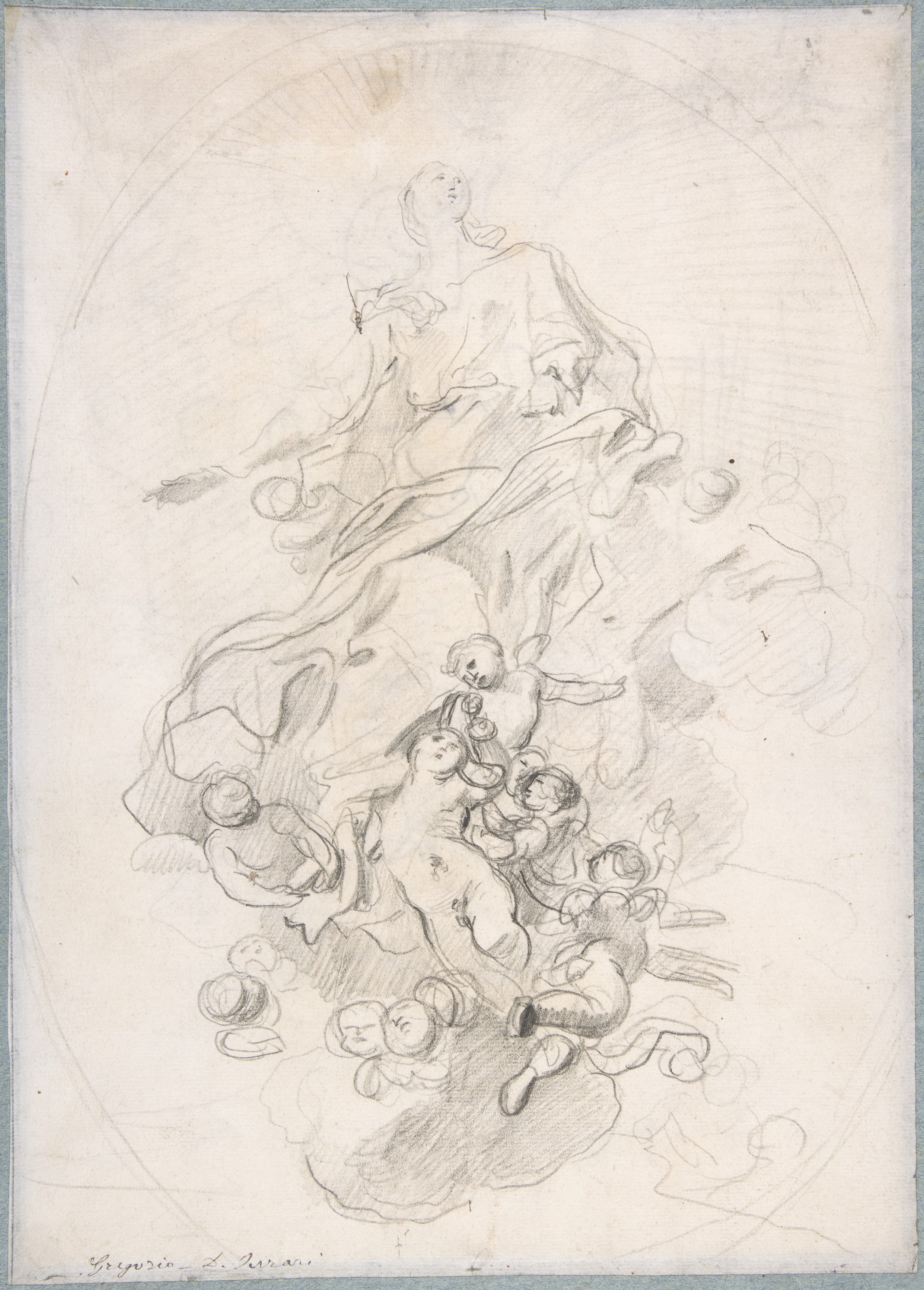
Title: The Assumption of the Virgin (recto); Architectural Notations (verso)
Description:
Black chalk a little pen and brown ink (recto); architectural notations in black chalk (verso).
Related Results
Album of Fingernail Artwork
Album of Fingernail Artwork
This codex-format album consists of 19 relief images created by the pressure of the artist’s fingernail on paper (san`at-i nākhun). Specimens include calligraphic, floral, and figu...
Lyric sheets: bound folder of song lyrics, 1970-72
Lyric sheets: bound folder of song lyrics, 1970-72
1 brown bound folder labeled on cover in black ink: 5 SONGS / CHRIS JAMES / (WILMARTH). [According to an email from Susan Wilmarth-Rabineau, Wilmarth's original last name was James...
Untitled (seven view at Oxford University, clockwise from top left, Interior of Hall, Exeter College; Library, Exeter College; Pugin's Gateway, Magdalen College; Merton Tower; Merton College; Turl Street Front; Broad Street Front; verso: clockwise from to
Untitled (seven view at Oxford University, clockwise from top left, Interior of Hall, Exeter College; Library, Exeter College; Pugin's Gateway, Magdalen College; Merton Tower; Merton College; Turl Street Front; Broad Street Front; verso: clockwise from to
Photograph information:
Recto (clockwise from top left):
Interior of Hall, Exeter College
Library, Exeter College
Pugin's Gateway, Magdalen College
Merton Tower
M...
The Virgin and Child enthroned
The Virgin and Child enthroned
This small panel of the Virgin and Child belonged to Frederick II of Prussia. It was in the Rohoncz collection by 1930, the date when it was included in the exhibition held at the ...
Fashion Designs for Women and Girls (recto); Portraits of British Actors and Actresses (verso)
Fashion Designs for Women and Girls (recto); Portraits of British Actors and Actresses (verso)
Recto: pen and black ink brush and wash gouache (bodycolor)
Verso: lithograph...
The Virgin and the Child between Angels
The Virgin and the Child between Angels
This anonymous painter worked in the city of Bruges, as we can tell from the depictions of the city that appear in some of the backgrounds of his paintings. His name is derived fro...
The Virgin, standing, with the Christ Child at her Breast
The Virgin, standing, with the Christ Child at her Breast
This Virgin and Child entered the Thyssen-Bornemisza collection in 1975. The painting was acquired as a work by Bernaert van Orley from the Cramer gallery in The Hague where it was...
The Assumption of the Virgin
The Assumption of the Virgin
During the 15th century Johann Koerbecke was the most important artist in the Westphalian city of Munster. He trained in the workshop of his father, Hermann Koerbecke, and took ove...