
Search engine for discovering works of Art, research articles, and books related to Art and Culture


Javascript must be enabled to continue!
Viewing Plum Blossoms at Night
View through The Met
Ink and color on silk, Edo period (1615–1868), Japan
Asian Art, Metropolitan Museum of Art New York NY, Charles Stewart Smith Collection Gift of Mrs. Charles Stewart Smith Charles Stewart Smith Jr. and Howard Caswell Smith in memory of Charles Stewart Smith 1914
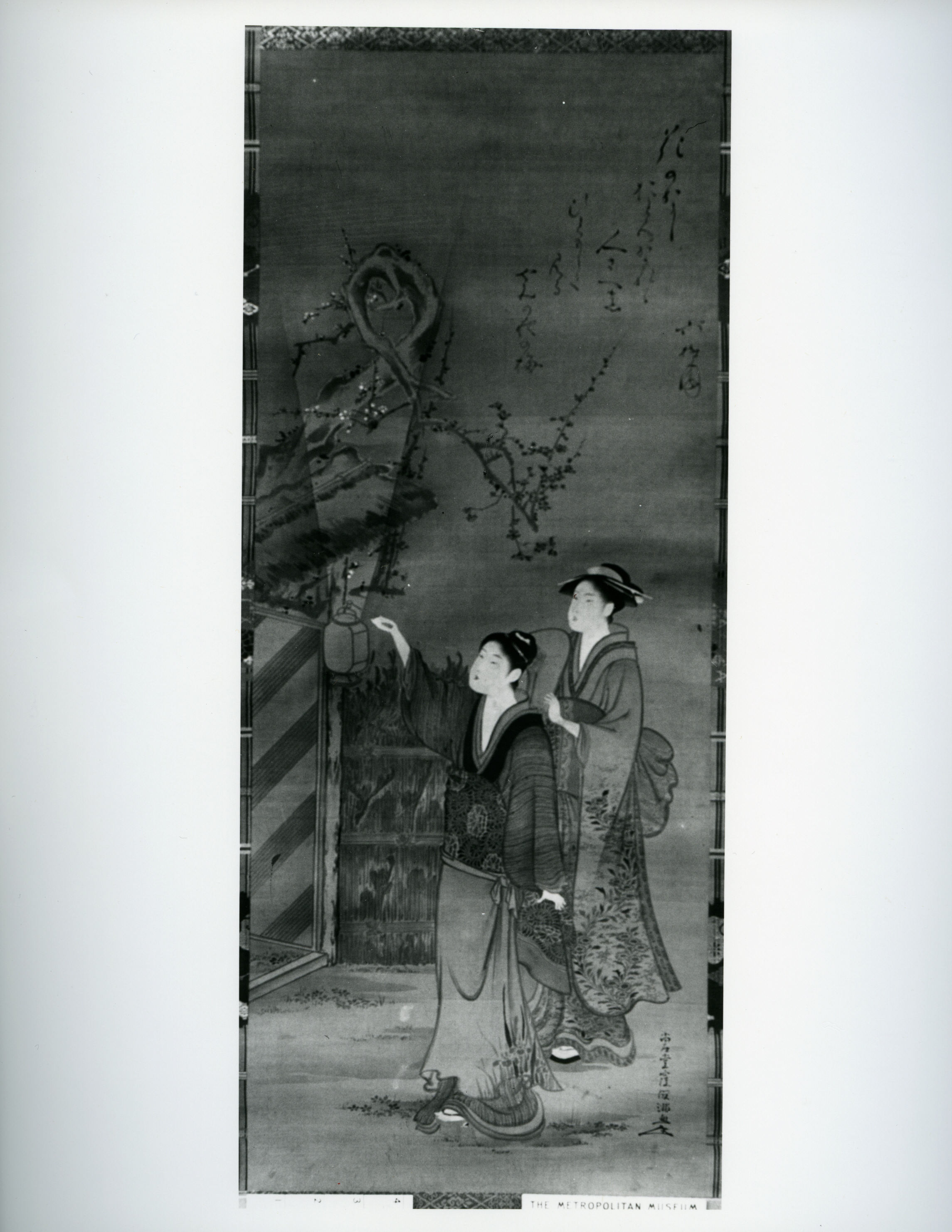
Title: Viewing Plum Blossoms at Night
Description:
Ink and color on silk, Edo period (1615–1868), Japan.
Related Results
Blossoming Plum
Blossoming Plum
Because it blooms in February, before donning its leaves, the Chinese flowering plum (Prunus mume) is associated with winter and is regarded as a symbol of strength in the face of ...
Old Weathered Plum Tree with Spring Blossoms, in the Manner of the Chinese Painter Wu Zhen (1280-1354)
Old Weathered Plum Tree with Spring Blossoms, in the Manner of the Chinese Painter Wu Zhen (1280-1354)
This plum-blossom painting is an expressive combination of balanced contrasts: soft, rounded plum blossoms and buds delicately rest on sharp branches that burst in every direction;...
Portrait of Sugawara no Michizane (Kitano Tenjin)
Portrait of Sugawara no Michizane (Kitano Tenjin)
Sugawara Michizane (845-903) was a brilliant Chinese literary scholar and statesman during Japan's Heian period (794-1185) who rose quickly to high courtly rank but was unjustly ex...
Hiranatsume Spring and Autumn Tea Caddy with Decoration of Cherry Blossoms and Maple Leaves
Hiranatsume Spring and Autumn Tea Caddy with Decoration of Cherry Blossoms and Maple Leaves
The slightly rounded walls of this small tea caddy rise almost vertically from the small, circular, countersunk base; they indent slightly near the top to form the vertical lip tha...
Plant pattern (shokubutsu monyō 植物文様): pine needles, plum blossoms and bamboo branches
Plant pattern (shokubutsu monyō 植物文様): pine needles, plum blossoms and bamboo branches
Underground dyed A shōchikubai sh様 motif. The depictions of these three plants can already be found in the ink painting of the Song dynasty as the “Drei Die des Winters (jap: Saika...