
Search engine for discovering works of Art, research articles, and books related to Art and Culture


Javascript must be enabled to continue!
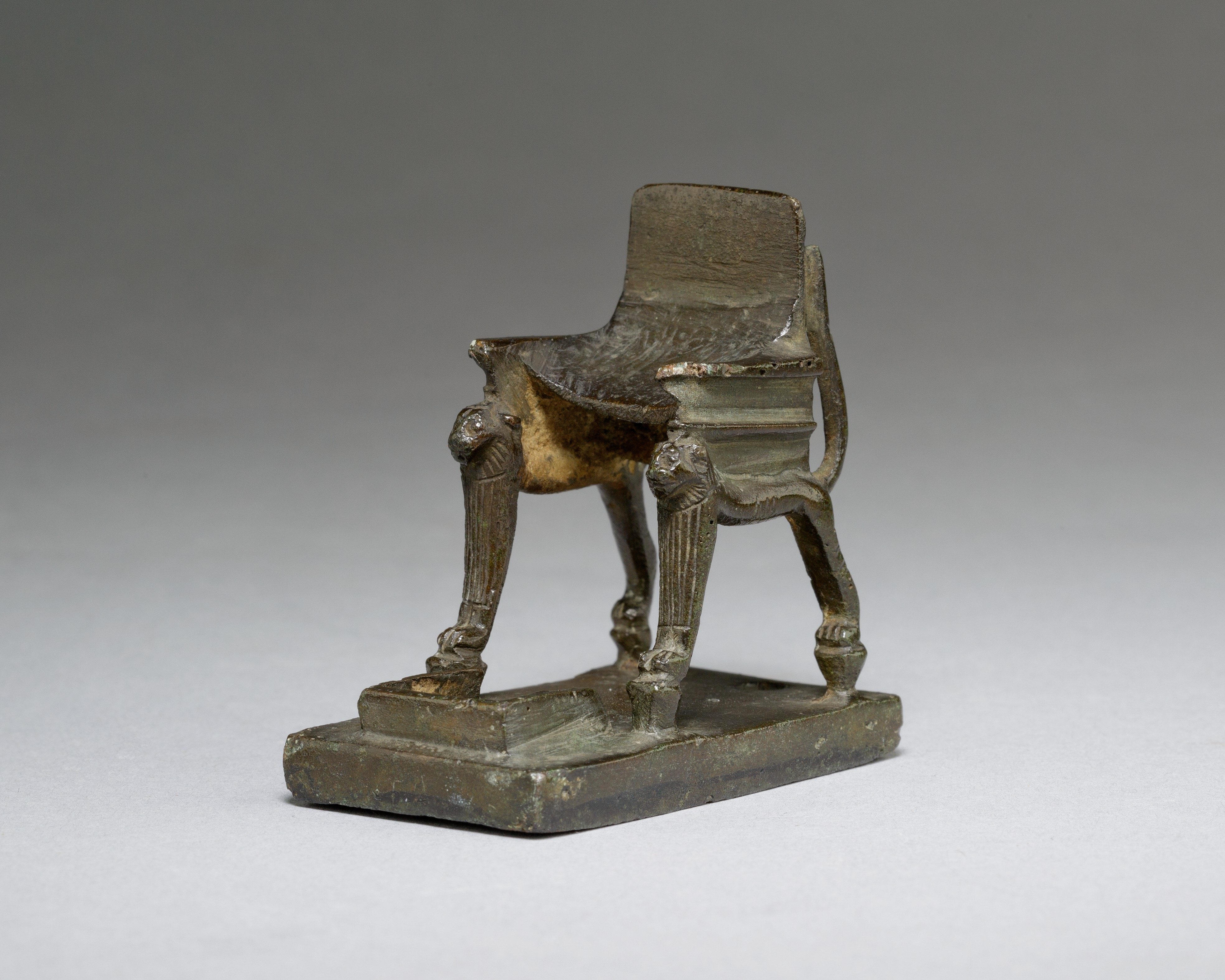
Throne for Statuette of a Deity
View through The Met
Cupreous metal, Late Period, Dynasty 26–30
Egyptian Art, Metropolitan Museum of Art New York NY, Gift of Susette and Marie Khayat 1964
Title: Throne for Statuette of a Deity
Description:
Cupreous metal, Late Period, Dynasty 26–30.
Related Results
Bead necklace dedicated to the Afro-Brazilian deity Oxossi
Bead necklace dedicated to the Afro-Brazilian deity Oxossi
Necklace of green flat, cylindrical porcelain beads.™ The necklace is dedicated to Oxossi, the deity of the forest and the hunt. His color is green or green with red and his sign t...
Seated Statuette of a Goddess
Seated Statuette of a Goddess
This seated female figure on throne is mold made from two pieces with a smooth back and molded front. A triangular fragment is missing from the bottom of the back, otherwise the ob...
Porträt Charles Edward Stuart (1720-1788)
Porträt Charles Edward Stuart (1720-1788)
Portrait of Charles Edward Stuart. The presenter of the throne, born in Rome, is shown here as a chest, as a young man with a friendly view. He wears a long, curly wig and a part o...
Bead necklace dedicated to the Afro-Brazilian deity Exu
Bead necklace dedicated to the Afro-Brazilian deity Exu
Bead necklace with black and red flat, cylindrical porcelain beads, alternating seven of each color.‖ The necklace is dedicated to the orixa Exu, the West African deity who mediate...
Historians have always believed that
Historians have always believed that
Historians have always believed that commerce existed between the Roman Empire and India, now the first actual evidence of this has come to light. Proof is given by a small, ornate...
Historians have always believed that
Historians have always believed that
Historians have always believed that commerce existed between the Roman Empire and India, now the first actual evidence of this has come to light. Proof is given by a small, ornate...
Historians have always believed that
Historians have always believed that
Historians have always believed that commerce existed between the Roman Empire and India, now the first actual evidence of this has come to light. Proof is given by a small, ornate...
The Moon God Mên
The Moon God Mên
This intact terracotta statuette depicts the moon god Mên on horseback. Mên sits on the back of the horse, turning his upper body to the right. He wears a Phrygian cap, a cloak ove...