
Search engine for discovering works of Art, research articles, and books related to Art and Culture


Javascript must be enabled to continue!
Adam and Eve with apple and serpent, from "The Passion of Christ", after Dürer
View through The Met
Engraving; third state of three, The Passion of Christ
The Passion of Christ, Drawings and Prints, Metropolitan Museum of Art New York NY, Gift of Henry Walters 1917
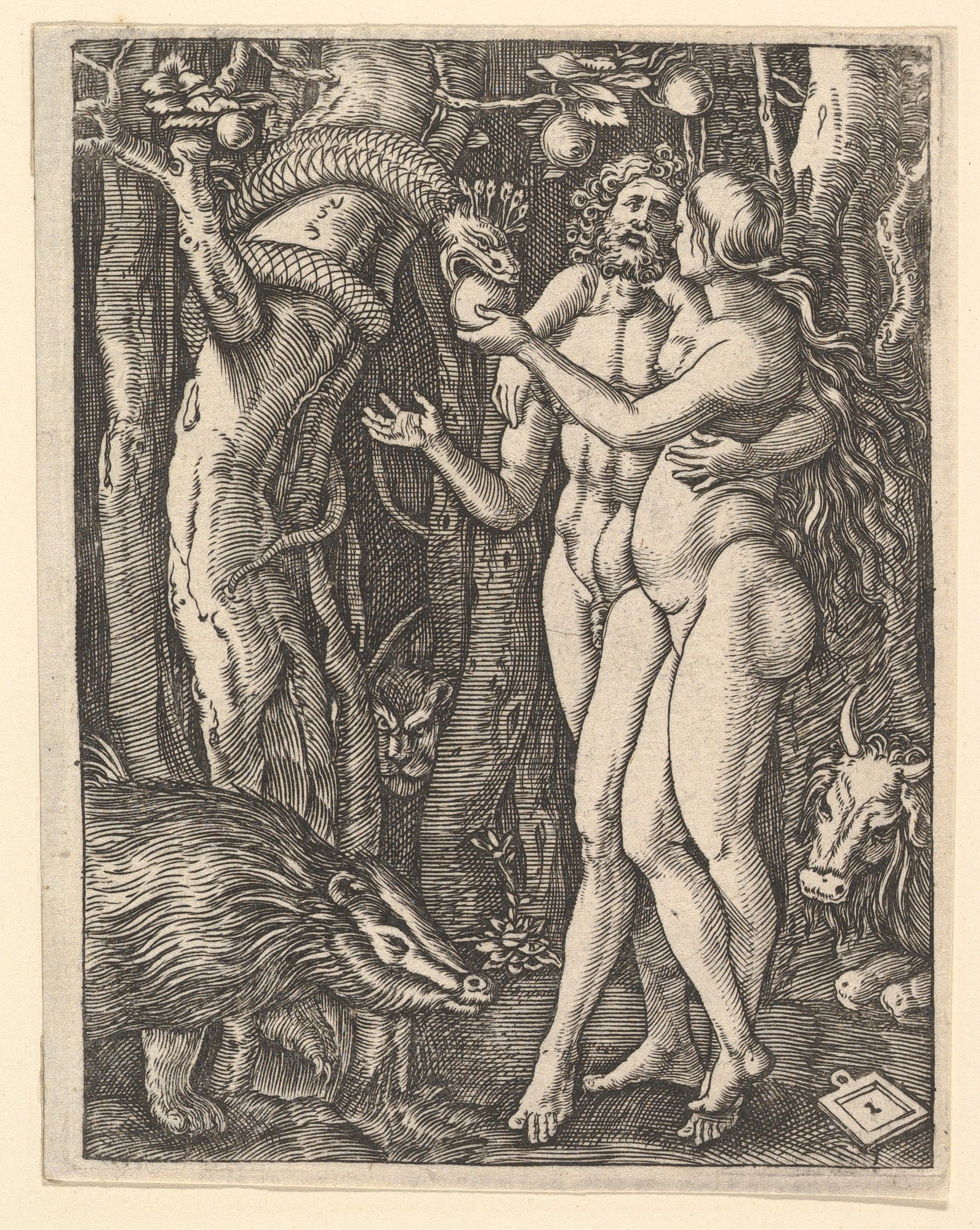
Title: Adam and Eve with apple and serpent, from "The Passion of Christ", after Dürer
Description:
Engraving; third state of three, The Passion of Christ.
Related Results
Adam and Eve
Adam and Eve
Adam and Eve entered the Thyssen-Bornemisza collection in 1929. The panel was acquired from the Julius Böhler gallery in Munich, who had previously owned the painting in 1916. In a...
Adam and Eve
Adam and Eve
The present panel has been in the Thyssen-Bornemisza collection since 1930, the year when it was first presented to the public in the exhibition at the Neue Pinakothek in Munich. T...
Eve Giving Adam the Forbidden Fruit, plate 3 from "The Story of Adam and Eve"
Eve Giving Adam the Forbidden Fruit, plate 3 from "The Story of Adam and Eve"
Engraving, The Story of Adam and Eve...
Michael Wolgemut und zwei weitere Künstlerbildnisse
Michael Wolgemut und zwei weitere Künstlerbildnisse
As an illustration of his 1759 “General Artist History,” Knorr stached a view of three portraits of artists in different frames, including a portrait of Dürer’s teacher Michael Wol...
Diptych with symbols of the Virgin and Redeeming Christ: Christ with the Cross as Redemptor Mundi (Right wing)
Diptych with symbols of the Virgin and Redeeming Christ: Christ with the Cross as Redemptor Mundi (Right wing)
This pair of panels formed part of a large ensemble of which the other subjects are now unknown. Within the Museum’s collection they are among the most iconographically interesting...
Diptych with symbols of the Virgin and Redeeming Christ: Virgin and Child in the Hortus Conclusus (Left wing)
Diptych with symbols of the Virgin and Redeeming Christ: Virgin and Child in the Hortus Conclusus (Left wing)
This pair of panels formed part of a large ensemble of which the other subjects are now unknown. Within the Museum’s collection they are among the most iconographically interesting...