
Search engine for discovering works of Art, research articles, and books related to Art and Culture



Javascript must be enabled to continue!
Rim fragment of relief chalice with inscription and papyrus plants, associated with 1983.599
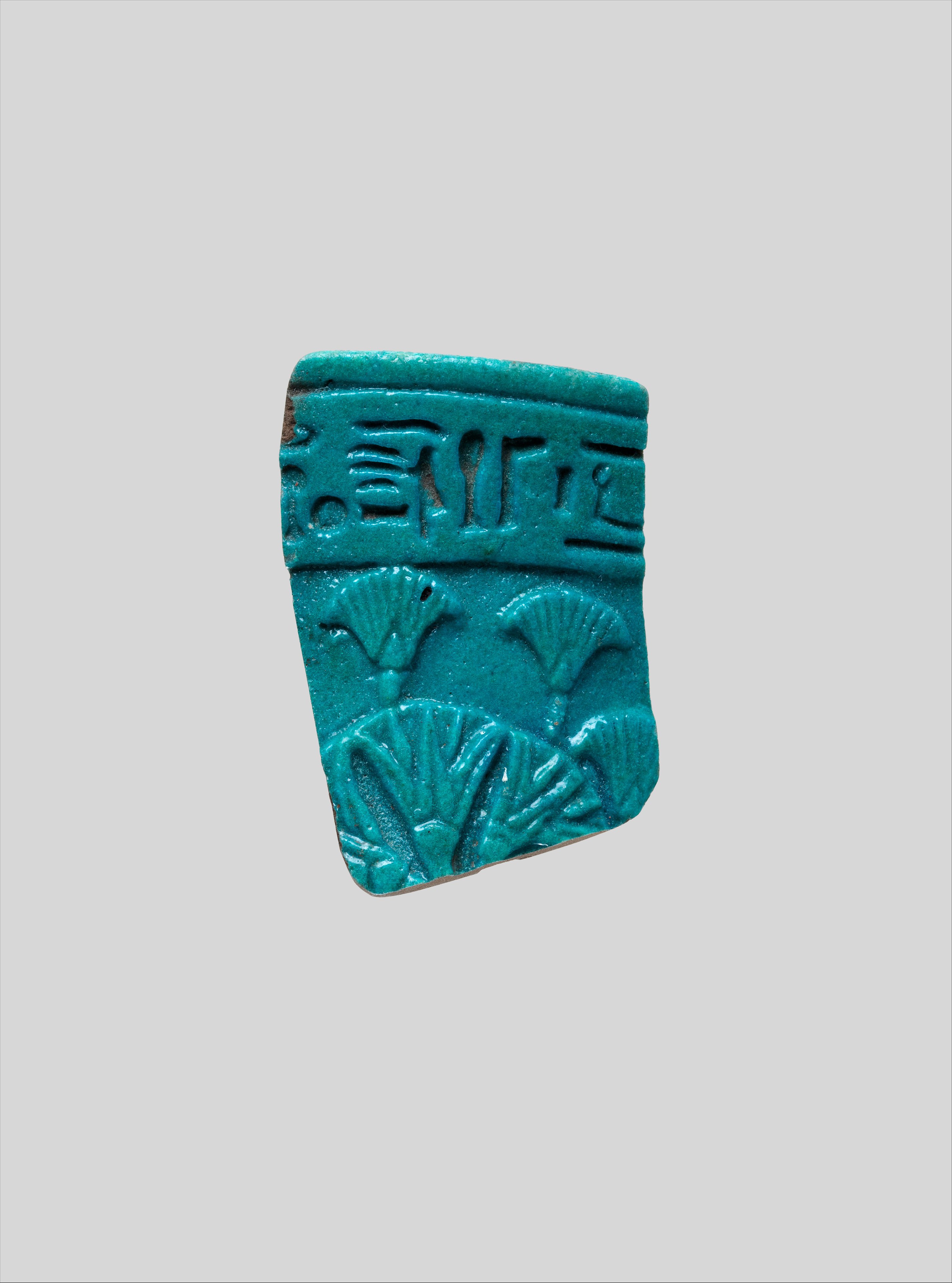
Title: Rim fragment of relief chalice with inscription and papyrus plants, associated with 1983.599
Description:
Blue green faience, Third Intermediate Period, Dynasty 22.
Related Results
Modeled, engraved and openwork perfume burner in bronze. Cylindrical base with flat bottom and flat rim on which a niche in the shape of a half dome. The opening is framed by a carved rim forming two opposing volutes, with two bird heads in the centre. On
Modeled, engraved and openwork perfume burner in bronze. Cylindrical base with flat bottom and flat rim on which a niche in the shape of a half dome. The opening is framed by a carved rim forming two opposing volutes, with two bird heads in the centre. On
Modeled, engraved and openwork perfume burner in bronze. Cylindrical base with flat bottom and flat rim on which a niche in the shape of a half dome. The opening is framed by a car...
Belt end with leopards flanking a chalice, Byzantine Empire, 400-600, gold embossed and chased. Said to have been found in Malaga. Gold belt end with leopards flanking a chalice. Gold.
Belt end with leopards flanking a chalice, Byzantine Empire, 400-600, gold embossed and chased. Said to have been found in Malaga. Gold belt end with leopards flanking a chalice. Gold.
Belt end with leopards flanking a chalice, Byzantine Empire, 400-600, gold embossed and chased. Said to have been found in Malaga. Gold belt end with leopards flanking a chalice. ...
Relief chalice rim fragment with a wedjat frieze and below that a Hathor sistrum head emerging from papyrus plants (joined with 2010.9)
Relief chalice rim fragment with a wedjat frieze and below that a Hathor sistrum head emerging from papyrus plants (joined with 2010.9)
Faience, Third Intermediate Period, Dynasty 21–24...
Fragment of a Wall Relief: Head of a Winged Protective Spirit
Fragment of a Wall Relief: Head of a Winged Protective Spirit
Representing the head of a winged genie, or protective spirit, this relief fragment was part of the wall decoration of the throne room of King Ashurnasirpal II's Northwest Palace a...
Latin Funerary Inscription of Q. Caecilius Hilarus and Caecilia Eleutheris
Latin Funerary Inscription of Q. Caecilius Hilarus and Caecilia Eleutheris
Marble Latin Funerary Inscription of Caecilius Hilarius, physician to Caecilia Metella. Excellent condition. Thin crack from right-of-center bottom to middle of fourth row of inscr...
Temple relief with depiction of the falcon-headed Aton and King Amenophis IV.
Temple relief with depiction of the falcon-headed Aton and King Amenophis IV.
The relief block from Karnak dates back to the first two years of Amenophis' IV. It is one of the few examples that still show Pharaoh in the traditional way of depicting Thebes. T...
Forty-seven Fragments of Arretine Pottery Decorated with Various Relief, No Signatures
Forty-seven Fragments of Arretine Pottery Decorated with Various Relief, No Signatures
Fragment 26: Triangular-shaped fragment of red Arretine pottery. This fragment comes from close to the rim of the vessel and is therefore decorated with three incised lines circlin...