
Search engine for discovering works of Art, research articles, and books related to Art and Culture


Javascript must be enabled to continue!
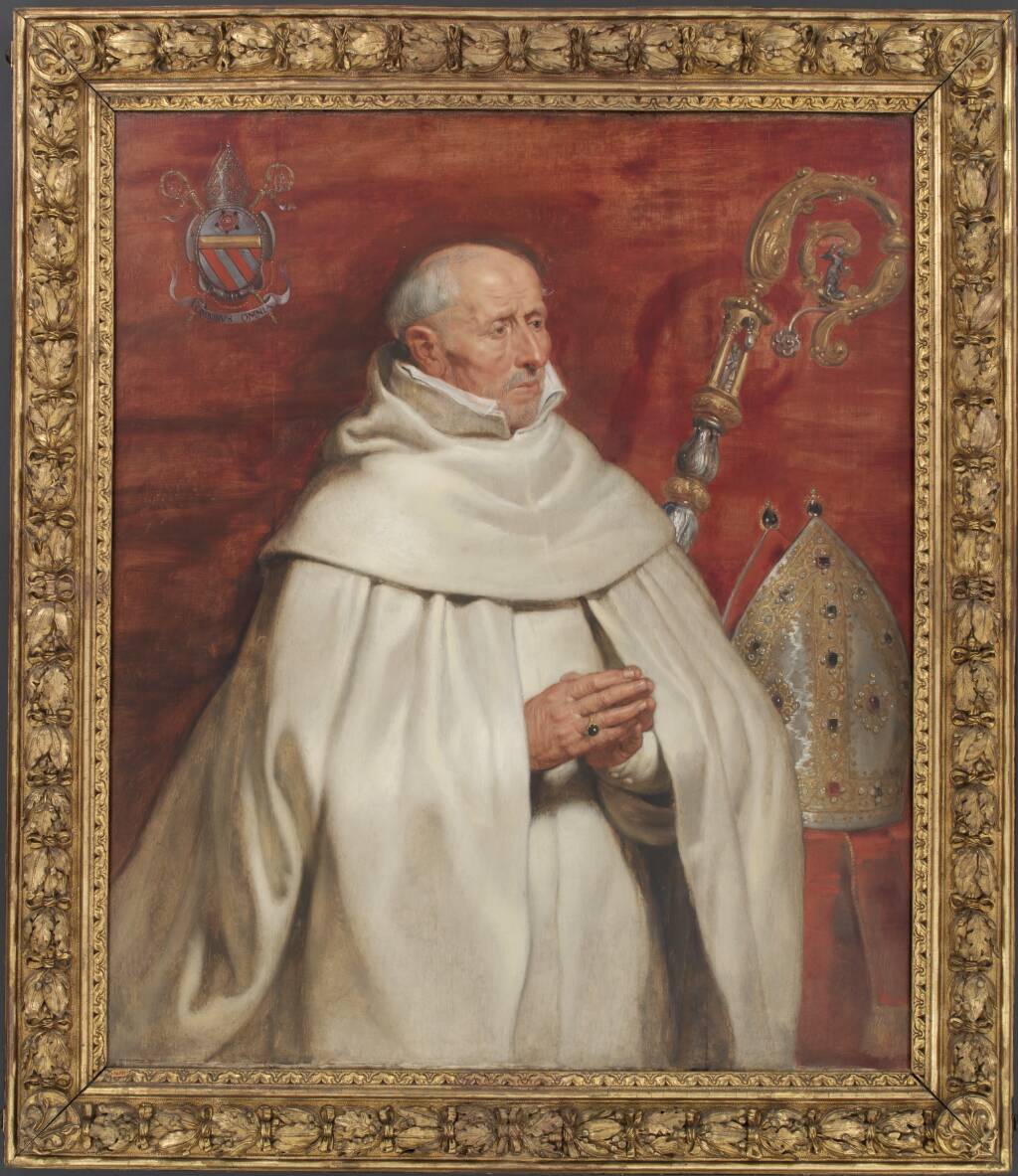
Matthaeus Yrsselius (1541-1629), Abbot of Sint-Michiel's Abbey in Antwerp
View through National Gallery of Denmark
Yrsselius was originally a sepulchral tablet accompanied by an epitaph which does not survive today. The tablet was originally placed by the abbot’s grave in the church of the St.Michael’s Abbey. A few years prior to his death the abbot gave the church an altarpiece for the high altar, featuring a Rubens painting of the Adoration of the Magi.
Part of an all-inclusive decoration
The tablet was intended to be hung in such a way that the abbot looked towards the high altar with his hands folded in "eternal prayer", taking part in the adoration of the Christ Child on the altarpiece. This form of all-inclusive decoration, where figures in paintings are connected by the mental bridge established through a gaze, a gesture, or spatial links, is a typical feature of the Baroque.
The portrait's colour scheme
Matthæus Yrsselius had his portrait painting wearing the white habit of the Premonstratensians with the mitre and the crozier by his side. In a colour scheme typical for Rubens, the white habit shines like mother-of-pearl against a lacquer-red background where the shadow cast by the crozier gives depth.
Title: Matthaeus Yrsselius (1541-1629), Abbot of Sint-Michiel's Abbey in Antwerp
Description:
Yrsselius was originally a sepulchral tablet accompanied by an epitaph which does not survive today.
The tablet was originally placed by the abbot’s grave in the church of the St.
Michael’s Abbey.
A few years prior to his death the abbot gave the church an altarpiece for the high altar, featuring a Rubens painting of the Adoration of the Magi.
Part of an all-inclusive decoration
The tablet was intended to be hung in such a way that the abbot looked towards the high altar with his hands folded in "eternal prayer", taking part in the adoration of the Christ Child on the altarpiece.
This form of all-inclusive decoration, where figures in paintings are connected by the mental bridge established through a gaze, a gesture, or spatial links, is a typical feature of the Baroque.
The portrait's colour scheme
Matthæus Yrsselius had his portrait painting wearing the white habit of the Premonstratensians with the mitre and the crozier by his side.
In a colour scheme typical for Rubens, the white habit shines like mother-of-pearl against a lacquer-red background where the shadow cast by the crozier gives depth.
Related Results
The Nativity
The Nativity
Jacques Daret trained with Robert Campin, in whose workshop he is recorded in 1428. In 1432 he is registered in the painters’ guild in Tournai. Daret’s works are heavily indebted t...
View of the Siege of Regensburg, etching, 1634
View of the Siege of Regensburg, etching, 1634
Merian, Matthaeus : ¬ The ¬ zu Hungarn and Böheim K. M. Insultation of the H. R. Fre様 en Instead of Regenspurg: which was launched the 15th MaMAnno 1634 and completed the 17th Iuli...
PM 008485 B Gent
PM 008485 B Gent
Belgium. Oost-Vlaanderen. Gent. Sint-BaafskathedraalInterieur, de preekstoel, detal: figuur De Waarheid, Inv 122; PREEKSTOEL, 1741-1745, door Laurent DELVAUX Deense eik en wit Ital...
PM 008103 B Gent
PM 008103 B Gent
Belgium. Oost-Vlaanderen. Gent. Sint-BaafskathedraalPreekstoel door Laurent Delvaux, Inv 122, Deense eik en wit Italiaans marmer, geverfd en verguld hout;; zwart marmeren trede; ge...
PM 008486 B Gent
PM 008486 B Gent
Belgium. Oost-Vlaanderen. Gent. Sint-BaafskathedraalInterieur, de preekstoel, detal: figuur De Waarheid, Inv 122; PREEKSTOEL, 1741-1745, door Laurent DELVAUX Deense eik en wit Ital...
PM 133141 B Machelen
PM 133141 B Machelen
Machelen-aan-de-Leie, parochiekerk Sint-Michiel, Cornelius en Ghislenus. Zulte. Oost-Vlaanderen. Belgium. Schilderij, Onze-Lieve-Vrouw met Kind schenkt de rozenkrans aan de Heilige...
Bust of a Roman Emperor (modern)
Bust of a Roman Emperor (modern)
Bust of Julius Caesar or one of the early Roman emperors; head and bust made separately; brass mount.
Letters "GA" carved on back of bust....