
Search engine for discovering works of Art, research articles, and books related to Art and Culture


Javascript must be enabled to continue!
Portræt af Sokrates, siddende
View through National Gallery of Denmark
The Greek philosopher Socrates may have been sunk in thought like this, his head slightly bowed and his body aged. But the head does not match the seated figure. The head is in the Greek style, carved after familiar Greek busts of Socrates. The body, however, is in the Roman style. It is more sunken, more everyday- like and realistic than any Greek figure would ever be. The 19th century saw an explosive, parallel growth of interest in philosophy, history, and cast collections. The philosopher G.W.F. Hegel wrote that Socrates and Antiquity may well be exemplary, but not as perfect as Hegel’s own time. Hegel believed that unlike his own era, the Ancients’ philosophy was so infused with everyday life that its art and thinking could never develop a complete system for human thought and awareness. With this position in mind it seemed natural to build museums with cast collections that traced the development of human thought from Socrates to Hegel.
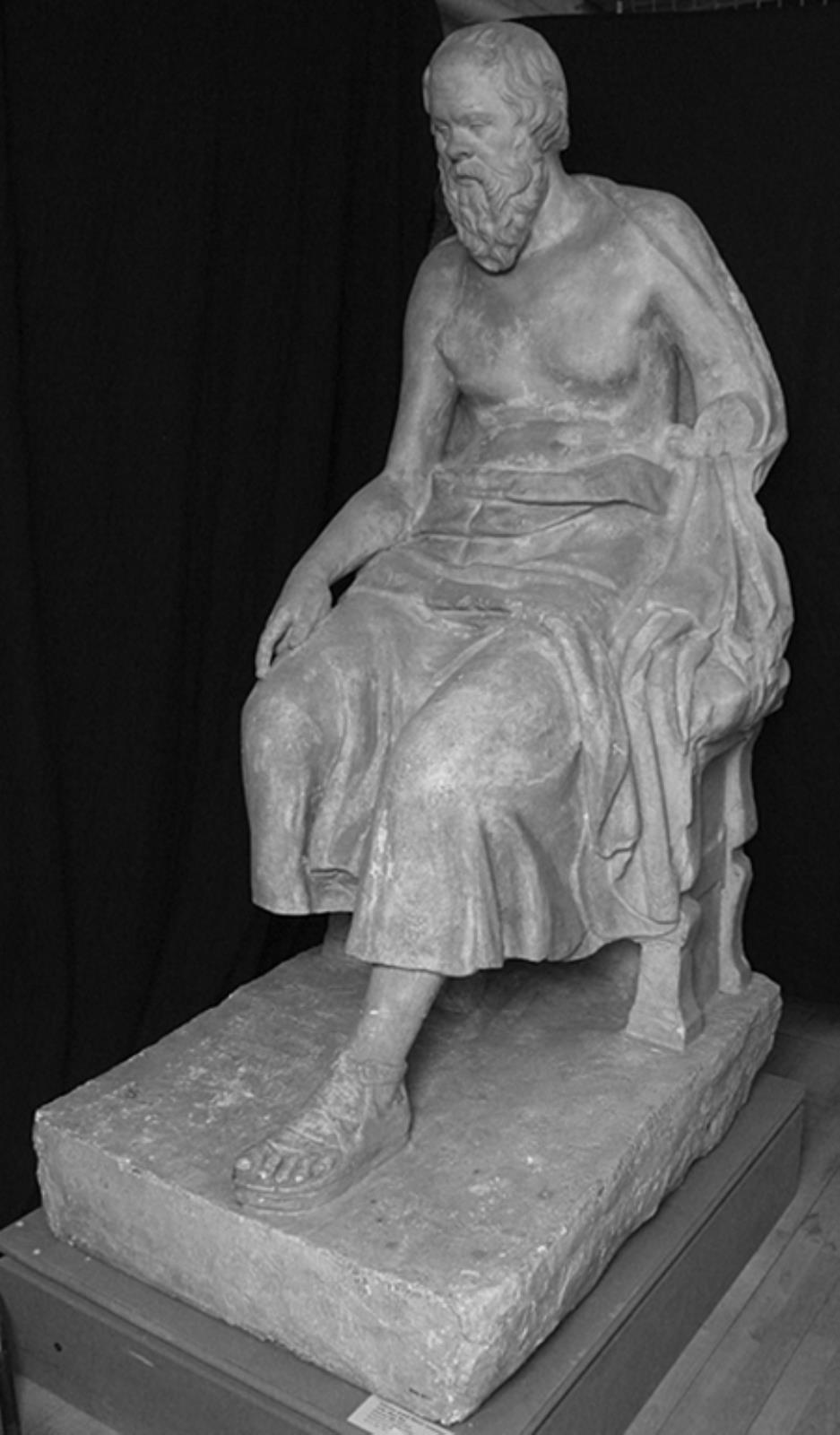
Title: Portræt af Sokrates, siddende
Description:
The Greek philosopher Socrates may have been sunk in thought like this, his head slightly bowed and his body aged.
But the head does not match the seated figure.
The head is in the Greek style, carved after familiar Greek busts of Socrates.
The body, however, is in the Roman style.
It is more sunken, more everyday- like and realistic than any Greek figure would ever be.
The 19th century saw an explosive, parallel growth of interest in philosophy, history, and cast collections.
The philosopher G.
W.
F.
Hegel wrote that Socrates and Antiquity may well be exemplary, but not as perfect as Hegel’s own time.
Hegel believed that unlike his own era, the Ancients’ philosophy was so infused with everyday life that its art and thinking could never develop a complete system for human thought and awareness.
With this position in mind it seemed natural to build museums with cast collections that traced the development of human thought from Socrates to Hegel.
Related Results
Sammenkrøbet, siddende dreng
Sammenkrøbet, siddende dreng
The original was acquired by Catherina the Great and is the only work by this Renaissance master in Russian possession. The copy was acquired from the Academy of Art in Skt. Peters...
Portræt af Antinoos (m. proptrækker-krøller)
Portræt af Antinoos (m. proptrækker-krøller)
Copy in plaster of Aphrodite Urania with left foot on a tortoise, appr. 420 BC Being the Goddess of desire and childbirth, she was supposed to share the joy of everything wet with ...
Carnelian engraved gem with a portrait of Sokrates
Carnelian engraved gem with a portrait of Sokrates
Sard-Carnelian ?, Late Republican or Early Imperial, Roman...