
Search engine for discovering works of Art, research articles, and books related to Art and Culture


Javascript must be enabled to continue!
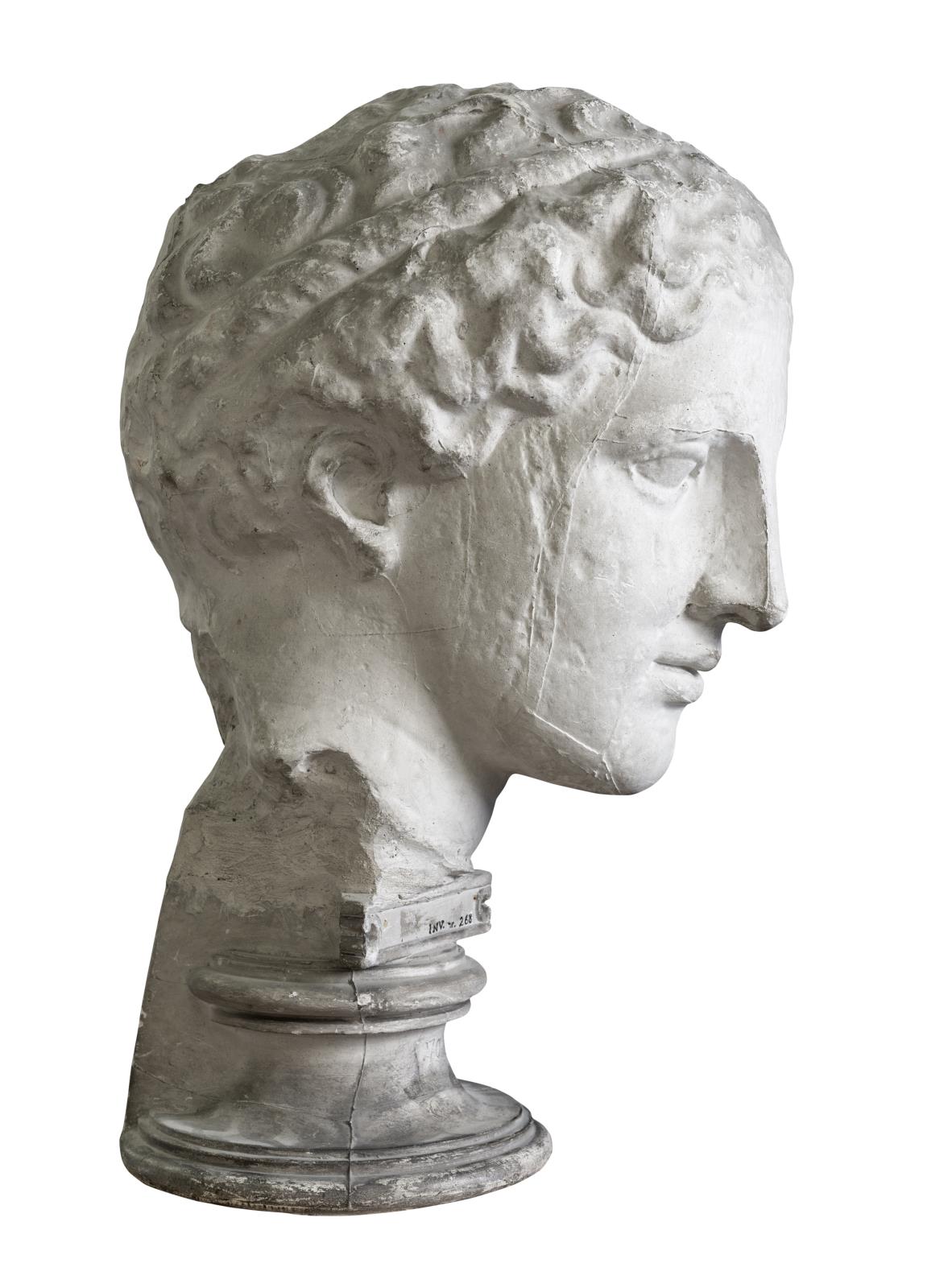
Kvinde, Det Weber-Labordeske Hoved
View through National Gallery of Denmark
The original was found at the Acropolis and is attributed to Phidias, who is regarded as the greatest artist of Greek Antiquity. In its own time it was regarded as an ideal of feminine beauty, harmonious and full of emotion at the same time; a head that any serious artist must relate to. The designation used for the head refers to those who owned the original before it arrived at the Louvre in Paris. Double lines of moulding flash run along the cheeks. They show that this copy was not created in the same mould as the earliest casts, but in a new mould that retained the flashing from the first form and prompted the creation of new ones. The figure was clearly so popular that a new mould was soon necessary. Comparative study of the flashing shows that this cast was presumably done after a cast owned by the sculptor Bertel Thorvaldsen. Today, archaeologists and art histories conduct research on older casts in order to achieve deeper and keener insight into past fascinations with Antiquity.
Title: Kvinde, Det Weber-Labordeske Hoved
Description:
The original was found at the Acropolis and is attributed to Phidias, who is regarded as the greatest artist of Greek Antiquity.
In its own time it was regarded as an ideal of feminine beauty, harmonious and full of emotion at the same time; a head that any serious artist must relate to.
The designation used for the head refers to those who owned the original before it arrived at the Louvre in Paris.
Double lines of moulding flash run along the cheeks.
They show that this copy was not created in the same mould as the earliest casts, but in a new mould that retained the flashing from the first form and prompted the creation of new ones.
The figure was clearly so popular that a new mould was soon necessary.
Comparative study of the flashing shows that this cast was presumably done after a cast owned by the sculptor Bertel Thorvaldsen.
Today, archaeologists and art histories conduct research on older casts in order to achieve deeper and keener insight into past fascinations with Antiquity.
Related Results
Stående kvinde, Afrodite fra Melos. Venus fra Milo
Stående kvinde, Afrodite fra Melos. Venus fra Milo
Venus (Aphrodite) is the goddess of love. She was depicted in the nude or in various stages of nudity (and painted). The figure is executed in the Hellenistic style and famed for i...