
Search engine for discovering works of Art, research articles, and books related to Art and Culture


Javascript must be enabled to continue!
Funerary Cone of the House Mistress Sitamun
View through The Met
Pottery, New Kingdom, Dynasty 18
Egyptian Art, Metropolitan Museum of Art New York NY, Rogers Fund 1915
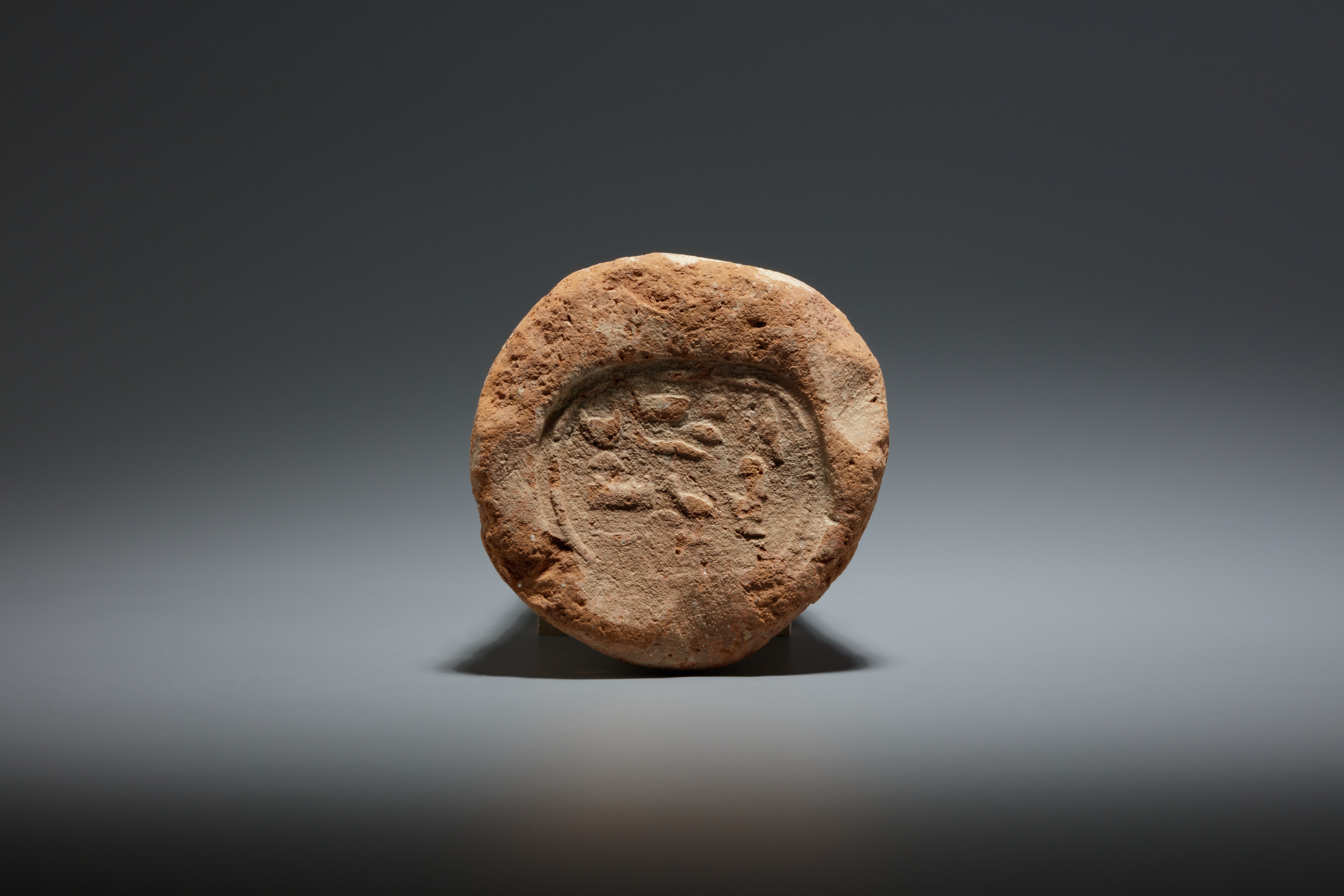
Title: Funerary Cone of the House Mistress Sitamun
Description:
Pottery, New Kingdom, Dynasty 18.
Related Results
Sculpture from the funerary chamber of Toya (Peal de Becerro, Jaén, Spain)
Sculpture from the funerary chamber of Toya (Peal de Becerro, Jaén, Spain)
Sculpture in round bundle carved in limestone. It represents a herbivore that lacks his head. Currently this sculptural fragment is preserved in the Museo Arqueológico Nacional of ...
Ottoman funerary inscription on a Hellenistic or Roman relief
Ottoman funerary inscription on a Hellenistic or Roman relief
Hellenistic or Roman relief depicting half a rosette. It could belong to an architectural sculpture or to a funerary stele or part of a sarcophagus. During the Ottoman period it w...
Latin Funerary Inscription of Q. Caecilius Hilarus and Caecilia Eleutheris
Latin Funerary Inscription of Q. Caecilius Hilarus and Caecilia Eleutheris
Marble Latin Funerary Inscription of Caecilius Hilarius, physician to Caecilia Metella. Excellent condition. Thin crack from right-of-center bottom to middle of fourth row of inscr...
Country House by a River
Country House by a River
The second half of the 1880s was a particularly difficult time for Cézanne. In 1885 he appears to have had an abortive romantic entanglement, which left him agitated and unbalanced...
Relief of Mogón (Jaén, Spain)
Relief of Mogón (Jaén, Spain)
The discovery of the “Relief of Mogon” occurred in a casual way in 1942 in an indeterminate place on the banks of Guadalquivir and was relocated on the façade of a peasant’s house,...
Secvențe din Muzeul Satului. Casa Drăguș (1971)
Secvențe din Muzeul Satului. Casa Drăguș (1971)
In the picture is the house of the household from the village of Drăguș, from the Olt Land, brought to the museum in 1936. The house dates from the nineteenth century and consists ...