
Search engine for discovering works of Art, research articles, and books related to Art and Culture


Javascript must be enabled to continue!
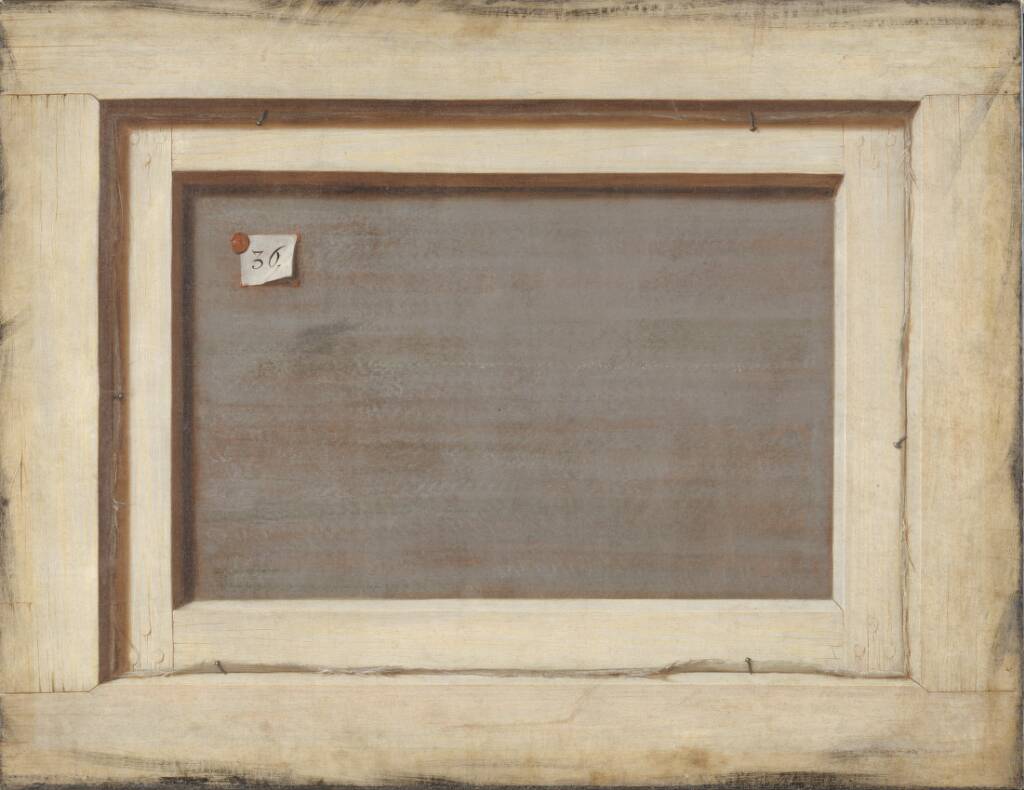
Trompe l'oeil. The Reverse of a Framed Painting
View through National Gallery of Denmark
With the absence of the frame that traditionally serves as the architectural transition between the spectator’s reality and the picture’s painted universe, this work by the Flemish painter Gijsbrechts is moving beyond the usual realms of art and into the illusionistic domains of the stage. The deception of the eye is certainly there. When viewing the picture from afar, we are truly cheated into believing that the artist has left a painting behind on the floor with its reverse facing outwards. With its ability to surprise and deceive the spectators, this work was eminently qualified to be part of the royal Kunstkammer. Another cutout - showing an easel bearing a still life and the reverse of a painting standing at its foot, the actual panel cut out to follow the contours of the objects painted on it - is described in the Royal DanishCabinet of Curiosities’ first inventory from 1674 as: "A stand with painter’s paraphernalia painted on perspective." Back then the cabinet of curiosities was still housed at the Copenhagen Castle, but a few years later when the monarch set up the cabinet in a new building, the present-day Danish National Archives, the easel became part of the décor of the entrance hall where it was presumably joined by The Reverse of a Framed Painting.
Værkdatering: 1668-1672
Påbegyndt: fagligt skøn afsluttet: fagligt skøn
Title: Trompe l'oeil. The Reverse of a Framed Painting
Description:
With the absence of the frame that traditionally serves as the architectural transition between the spectator’s reality and the picture’s painted universe, this work by the Flemish painter Gijsbrechts is moving beyond the usual realms of art and into the illusionistic domains of the stage.
The deception of the eye is certainly there.
When viewing the picture from afar, we are truly cheated into believing that the artist has left a painting behind on the floor with its reverse facing outwards.
With its ability to surprise and deceive the spectators, this work was eminently qualified to be part of the royal Kunstkammer.
Another cutout - showing an easel bearing a still life and the reverse of a painting standing at its foot, the actual panel cut out to follow the contours of the objects painted on it - is described in the Royal DanishCabinet of Curiosities’ first inventory from 1674 as: "A stand with painter’s paraphernalia painted on perspective.
" Back then the cabinet of curiosities was still housed at the Copenhagen Castle, but a few years later when the monarch set up the cabinet in a new building, the present-day Danish National Archives, the easel became part of the décor of the entrance hall where it was presumably joined by The Reverse of a Framed Painting.
Related Results
painting, painting, painting, painting, painting, painting, painting, painting, painting, painting, painting, painting, painting, painting, painting, painting, painting, painting, painting, painting, painting, painting, painting, painting, painting, paint
painting, painting, painting, painting, painting, painting, painting, painting, painting, painting, painting, painting, painting, painting, painting, painting, painting, painting, painting, painting, painting, painting, painting, painting, painting, paint
"Here is portrayed three Moods of the Sky and the effects on the Fish and Animals. Sharks and Turtles come to the Surface when it is Raining. Wallabies and Kangaroos are out feedin...
A Roberta di Camerino printed jersey 'trompe d'oeil', 'Guanahato', dress, late 1960s. This jersey printed day dress with trompe d'oeil garments details and bold colour combinations is representative of Roberta di Camerino designs of the early 1970s. Rober
A Roberta di Camerino printed jersey 'trompe d'oeil', 'Guanahato', dress, late 1960s. This jersey printed day dress with trompe d'oeil garments details and bold colour combinations is representative of Roberta di Camerino designs of the early 1970s. Rober
A Roberta di Camerino printed jersey 'trompe d'oeil', 'Guanahato', dress, late 1960s. This jersey printed day dress with trompe d'oeil garments details and bold colour combinations...
Materials for a Leisure Hour
Materials for a Leisure Hour
Shortly before painting Materials for a Leisure Hour, William Harnett had learnt to master the complex, painstaking trompe l’oeil technique, which he would regularly use thereafter...
Trompe-l'Oeil Exercise: Prints on a Table Top
Trompe-l'Oeil Exercise: Prints on a Table Top
Pen and brown ink brush and brown wash over traces of graphite...
Trompe l'Oeil. A Cabinet of Curiosities with an Ivory Tankard
Trompe l'Oeil. A Cabinet of Curiosities with an Ivory Tankard
This artwork is a cabinet door that can actually be opened. It was probably made to fit into a panel or wall of the Green Cabinet at Rosenborg Castle. The Green Cabinet contained F...
Trompe l'oeil of a Letter Rack with Proclamation by Frederik III
Trompe l'oeil of a Letter Rack with Proclamation by Frederik III
Envelopes were not used in the seventeenth century; in-stead, letters were folded up and sealed with red wax and a signet. This letter rack holds many letters, opened and un-opened...
The Annunciation Diptych
The Annunciation Diptych
Jan van Eyck and Robert Campin were the founders of the Flemish School. Together they advanced towards a new concept of painting in Flanders that would eventually replace the decor...
painting (oil): ["Cock and Hen with Chickens and Pigeons"]
painting (oil): ["Cock and Hen with Chickens and Pigeons"]
NCM 1939-2 employs a favourite compositional device of the artist where one bird flies towards others already on the ground. In the middle foreground, a white hen flaps her wings a...