
Search engine for discovering works of Art, research articles, and books related to Art and Culture


Javascript must be enabled to continue!
Wine cooler with A Marine Triumph of Bacchus
View through The Met
Maiolica (tin-glazed earthenware)
Rights: Public Domain
European Sculpture and Decorative Arts, Metropolitan Museum of Art New York NY, The Friedsam Collection Bequest of Michael Friedsam 1931
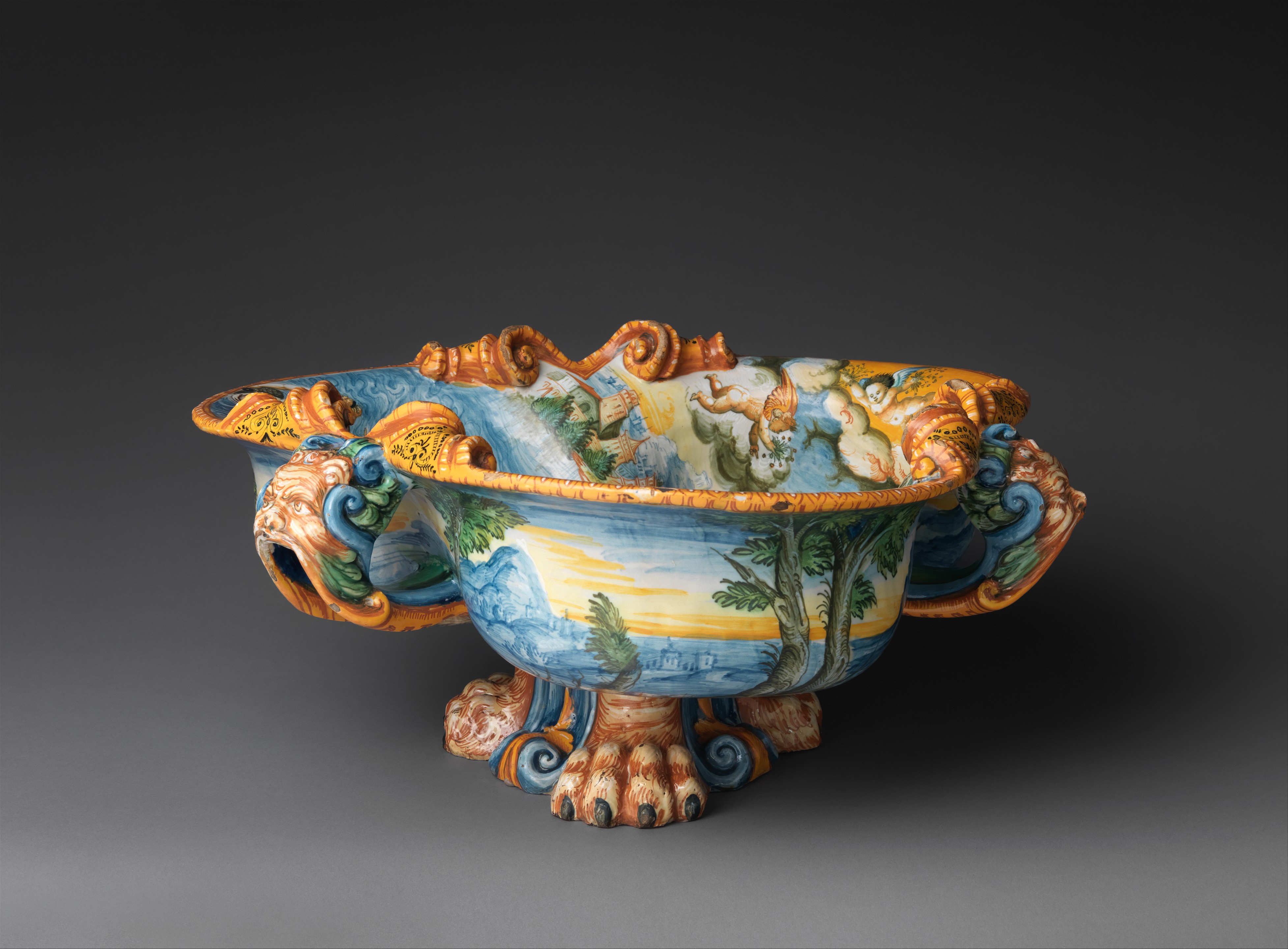
Title: Wine cooler with A Marine Triumph of Bacchus
Description:
Maiolica (tin-glazed earthenware).
Related Results
Bacchus and Ariadne
Bacchus and Ariadne
The present pair of canvases depicts the weddings of Neptune, god of the sea, and Bacchus, god of wine. They can be dated to the early 1690s during the time Ricci was in Rome. Amo...
Neptune and Amphitrite
Neptune and Amphitrite
The present pair of canvases depicts the weddings of Neptune, god of the sea, and Bacchus, god of wine. They can be dated to the early 1690s during the time Ricci was in Rome. Amo...
Calyx Krater (mixing bowl for wine and water): Return of Hephaistos to Olympos
Calyx Krater (mixing bowl for wine and water): Return of Hephaistos to Olympos
This krater (mixing bowl for wine and water) features a lively depiction of the return of the god of the forge Hephaistos to Olympos, the home of the gods. Hephaistos had previousl...
Kneeling man offering wine, attributed to Reẓā `Abbāsī (d. 1635)
Kneeling man offering wine, attributed to Reẓā `Abbāsī (d. 1635)
Kneeling man offering wine, possibly by Reza `Abbasi (d. 1635)
A young man holds out a small footed glass of red wine, to an unseen companion. The wine vessels and fruit suggest th...
Still Life with porcelain Bowl and Nautilus Cup
Still Life with porcelain Bowl and Nautilus Cup
The still life, a pictorial representation of foodstuffs, objects or inanimate objects, was one of the artistic genres that became fully independent in the 17th century. The origin...
The Triumph of the Word of God, from "Triumph of the Catholic Church" (oil sketch for a painting of the same subject)
The Triumph of the Word of God, from "Triumph of the Catholic Church" (oil sketch for a painting of the same subject)
Oil on paper pen and brown ink, Triumph of the Catholic Church...