
Search engine for discovering works of Art, research articles, and books related to Art and Culture



Javascript must be enabled to continue!
Michelangelo Buonarroti, The Lamentation over the Dead Christ (1540)
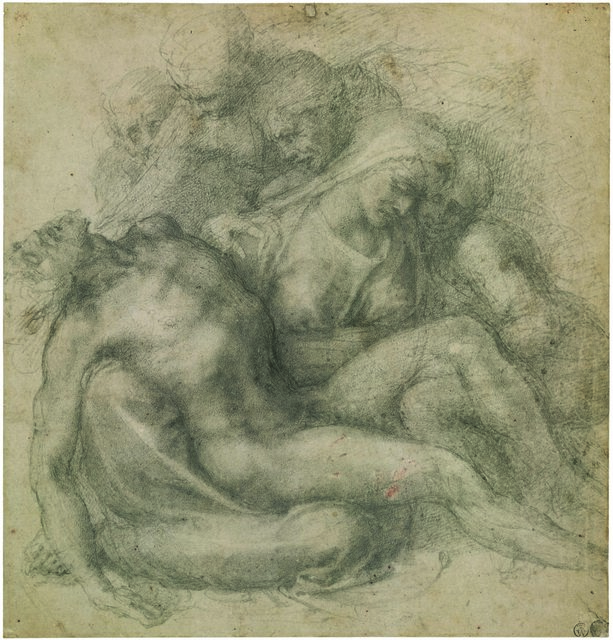
Title: Michelangelo Buonarroti, The Lamentation over the Dead Christ (1540)
Description:
Black chalk, 28.
1 × 26.
8 cm.
Related Results
The Risen Christ
The Risen Christ
This panel depicting The Risen Christ was formerly in the collection of the Pusterla della Porta family in Milan, where it is recorded from 1590 until the first quarter of the 20th...
Christ with the Cross
Christ with the Cross
Christ holding the cross was a motif that El Greco derived from the narrative of Christ’s Passion, creating an isolated image that seems to have been extremely popular with his cli...
Christ dead in the sepulchre and three pains
Christ dead in the sepulchre and three pains
The most convincing hypothesis, despite the uncertainties stemming from the existence of several variants of the same subject, identifies the painting in Brera with the “foreshorte...
X-radiograph(s) of "The Lamentation over the Dead Christ"
X-radiograph(s) of "The Lamentation over the Dead Christ"
X-Radiograph Description: X-Radiograph (4 films against face-reveal canvas; 1 film against verso - not as good; 2 films at 50KV)
X-Radiograph Settings: 30 KV, 5 mA, 5 minute, 45...
Diptych with symbols of the Virgin and Redeeming Christ: Christ with the Cross as Redemptor Mundi (Right wing)
Diptych with symbols of the Virgin and Redeeming Christ: Christ with the Cross as Redemptor Mundi (Right wing)
This pair of panels formed part of a large ensemble of which the other subjects are now unknown. Within the Museum’s collection they are among the most iconographically interesting...