
Search engine for discovering works of Art, research articles, and books related to Art and Culture


Javascript must be enabled to continue!
Votive cone with cuneiform inscription of Sin-Kashid
View through The Met
Clay, Old Babylonian, Babylonian
Ancient West Asian Art, Metropolitan Museum of Art New York NY, Gift of Mrs. Henry E. Coe 1957
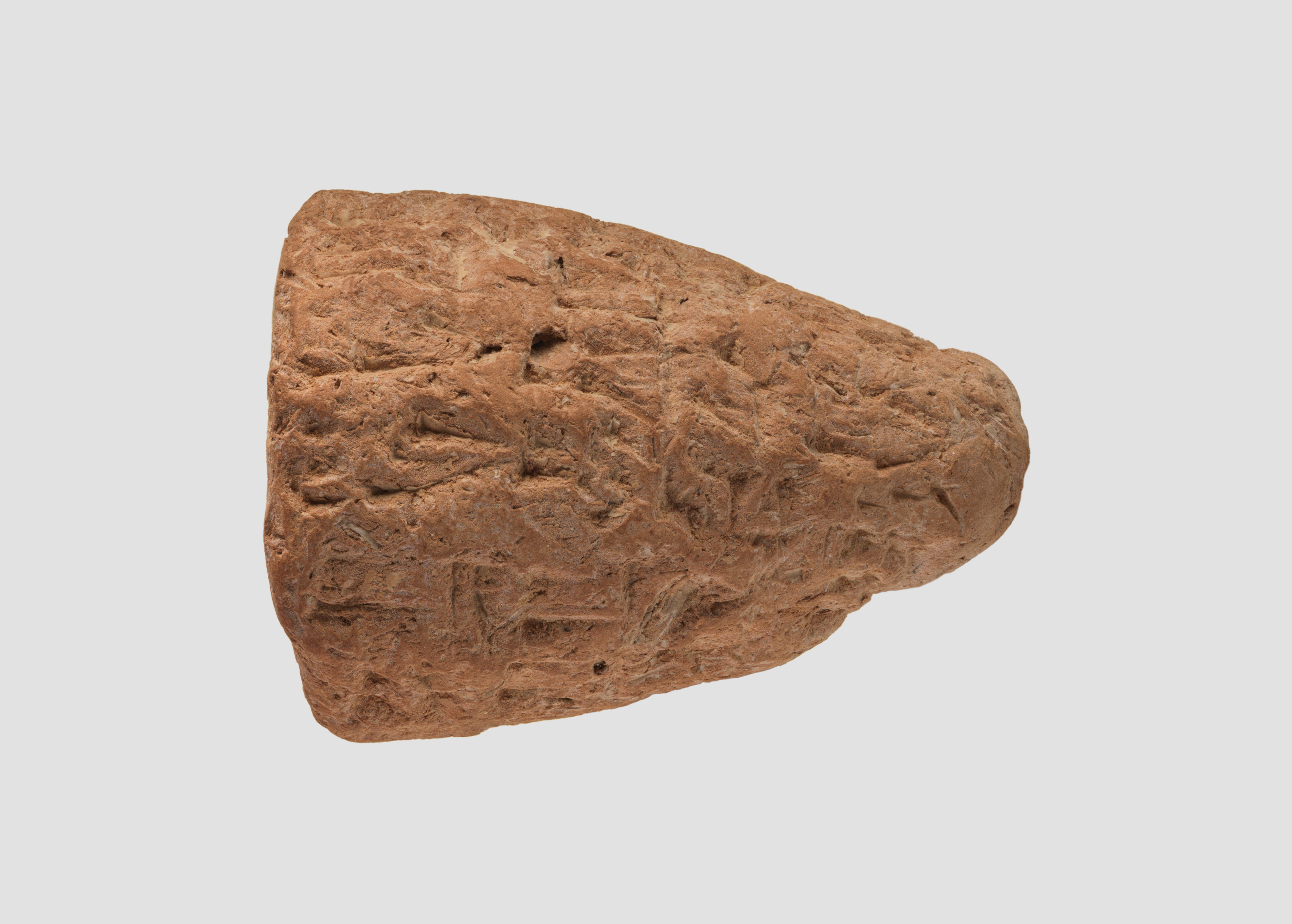
Title: Votive cone with cuneiform inscription of Sin-Kashid
Description:
Clay, Old Babylonian, Babylonian.
Related Results
Clay Foundation Cone: Old Babylonian Period Cuneiform Inscription
Clay Foundation Cone: Old Babylonian Period Cuneiform Inscription
Small clay cone with cuneiform inscription written in Sumerian. A foundation deposit of Sin-kashid, an Amorite (a west Semitic speaking tribe) ruler of Uruk during the Old Babyloni...
Latin Funerary Inscription of Q. Caecilius Hilarus and Caecilia Eleutheris
Latin Funerary Inscription of Q. Caecilius Hilarus and Caecilia Eleutheris
Marble Latin Funerary Inscription of Caecilius Hilarius, physician to Caecilia Metella. Excellent condition. Thin crack from right-of-center bottom to middle of fourth row of inscr...
Votive Terracotta Penis and Scrotum
Votive Terracotta Penis and Scrotum
Mold made model of male genitalia of pinkish clay with coarse temper. The back side is hollow. Penis is uncircumcised. The right testicle hangs lower than the left. The surface is ...
Votive Terracotta Penis and Scrotum
Votive Terracotta Penis and Scrotum
Votive terracotta penis and scrotum. Brownish clay, porous, with gritty black impurities. Most likely from a sanctuary votive deposit in Etruria (central Italy). Such terracotta ma...
Votive Terracotta Penis and Scrotum
Votive Terracotta Penis and Scrotum
Votive terracotta penis and scrotum. Reddish brown clay, porous, with gritty black impurities. Most likely from a sanctuary votive deposit in Etruria (central Italy). Such terracot...
Votive Terracotta Ear
Votive Terracotta Ear
Votive terracotta ear. Porous buff clay. Most likely from a sanctuary votive deposit in Etruria (central Italy). Such terracotta ears may have been given either as a request or as ...
Inscribed Clay Nail of King Enmetena
Inscribed Clay Nail of King Enmetena
Terracotta cone-shaped foundation nail with a cuneiform inscription, written in Sumerian, in the upper half of the object, just below the nail head. The inscription is written in t...