
Search engine for discovering works of Art, research articles, and books related to Art and Culture

ShareThis
Javascript must be enabled to continue!

Fragment of a Door Jamb with Geometric and Vegetal Motifs

View through The Met
Limestone; traces of paint on plaster
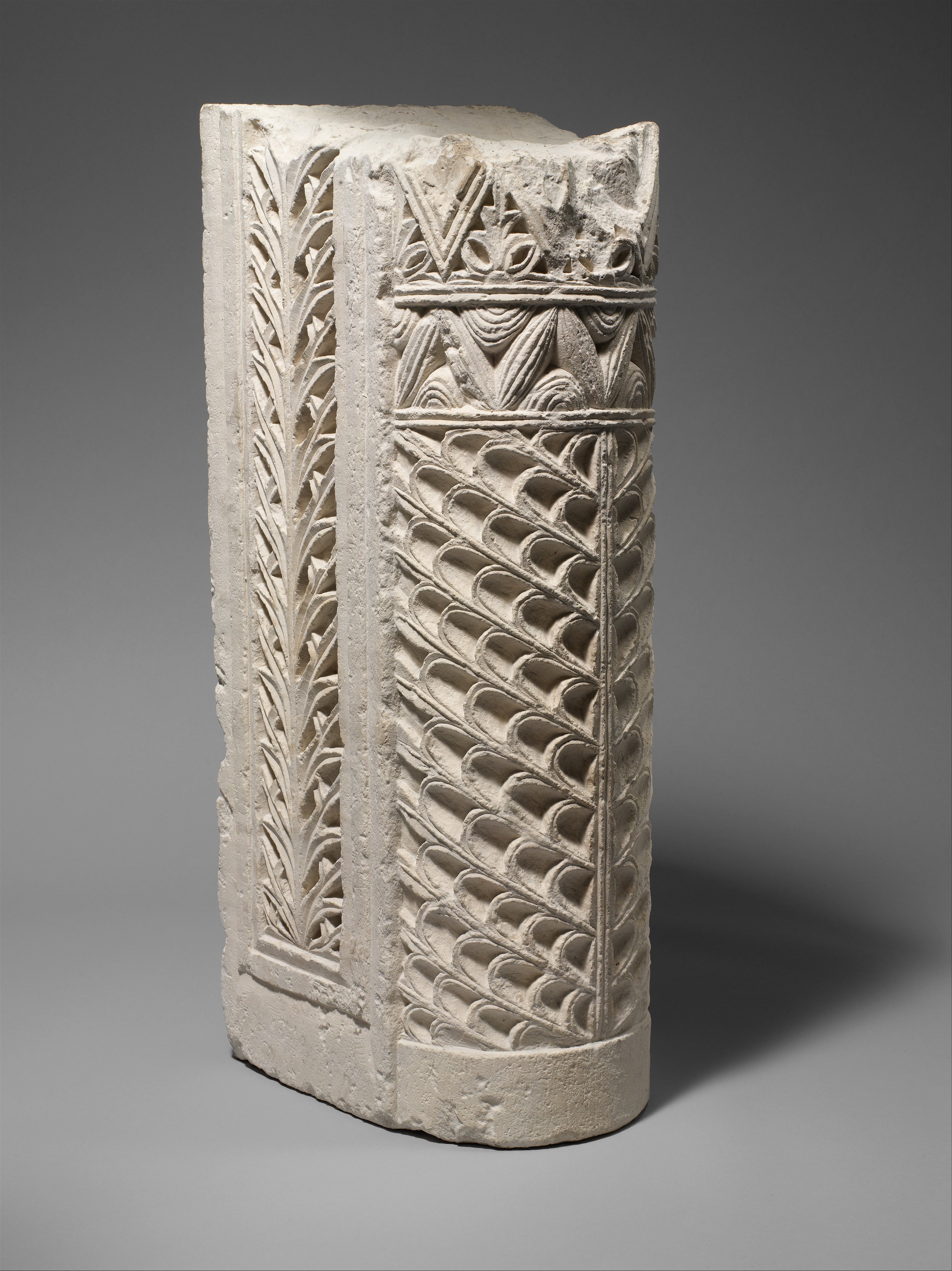
Islamic Art, Metropolitan Museum of Art New York NY, Rogers Fund 1910
image-zoom
Title: Fragment of a Door Jamb with Geometric and Vegetal Motifs
Description:
Limestone; traces of paint on plaster.

Related Results

Cloth for men
Cloth for men
A men's cloth (hinggi), consisting of two weaves sewn together. On the cloth are skull trees and horses. The central band shows the 'patola ratu' motif, a motif inspired by the pat...
Moccasins
Moccasins
CLOTHING AND ACCESSORIES: production and decoration The wealth of the Plains consisted of the immense bison herds. The bison didn't just provide food. The hide of this animal was u...
Moccasins
Moccasins
"(Western?) Apache moccasins; k(h)é (TK); buckskin, rawhide, sinew, glass beads; h. 13 cm., l. (of sole) 26.5 cm., w. (of sole) 9.5 cm; ca. 1880.In pre-reservation times, Western A...
Man's shirt
Man's shirt
Man's outfit; Plains Cree; 1840-1850Hide, porcupine quills, beaver toes, sinew, pigments; l. of shirt at front, 105 cm; l. of inside leggings, 115 cm.‖RMV 524-2 and 3; purchased fr...
Hip belt
Hip belt
2294-8 Beaded belt (ípzàtsis, Uhlenbeck and Van Gulik 1930:26); harness leather, glass beads, brass tacks; l. 85 cm., w. 4 cm.; ca. 1910.‖ This woman's belt was obtained by Mrs. Uh...
Moccasins
Moccasins
The origin of the Arapahoes is in the western Great Lakes region, but they moved westward to the Plains. Increasingly, they owned horses and evolved into nomadic buffalo hunters. T...
Moccasins
Moccasins
The origin of the Arapahoes is in the western Great Lakes region, but they moved westward to the Plains. Increasingly, they owned horses and evolved into nomadic buffalo hunters. T...
Boot
Boot
"(Western?) Apache moccasin; k(h)é (TK); buckskin, rawhide, sinew; h. 84 cm., l. (of sole) 28 cm., w. (of sole) 18 cm.; ca. 1880.‖ This is the most basic version of the classic thi...

Back to Top
