
Search engine for discovering works of Art, research articles, and books related to Art and Culture


Javascript must be enabled to continue!
Donkey with packs on its back
View through The Met
Clay twigs, Second Intermediate Period–Early New Kingdom, Dynasty 13–18
Egyptian Art, Metropolitan Museum of Art New York NY, Rogers Fund 1912
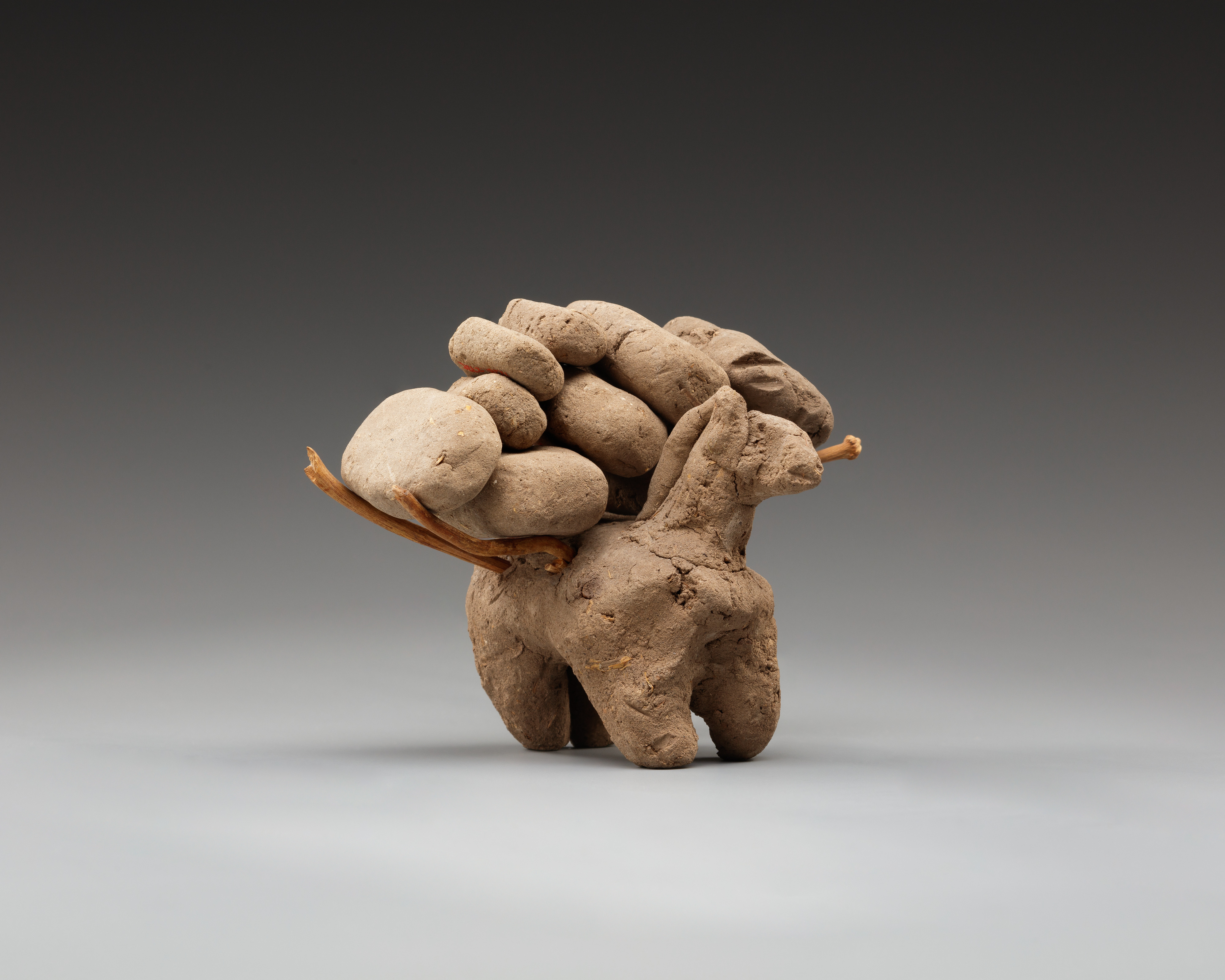
Title: Donkey with packs on its back
Description:
Clay twigs, Second Intermediate Period–Early New Kingdom, Dynasty 13–18.
Related Results
Epona(?) Seated on a Donkey
Epona(?) Seated on a Donkey
Goddess sitting side saddle, wrapped in a shawl. Little modeling and crude execution. Donkey is better executed, walking with left hind leg and foreleg forward. Traces of brown ...
Calyx Krater (mixing bowl for wine and water): Return of Hephaistos to Olympos
Calyx Krater (mixing bowl for wine and water): Return of Hephaistos to Olympos
This krater (mixing bowl for wine and water) features a lively depiction of the return of the god of the forge Hephaistos to Olympos, the home of the gods. Hephaistos had previousl...
The genius of France extirpating despotism tyranny & oppression from the face of the earth Or the royal warriors defeated by Isaac Cruikshank, 1756?-1811, artist Published 1792.
The genius of France extirpating despotism tyranny & oppression from the face of the earth Or the royal warriors defeated by Isaac Cruikshank, 1756?-1811, artist Published 1792.
Cartoon shows a woman wearing a liberty cap, representing the genius of France, holding a cat-o'-nine-tails in one hand and the reins of a donkey in the other; on this donkey and a...
The poor common donkey
The poor common donkey
The woodcut “Der arm gemein Esel”, which was mostly attributed to Peter Flötner, was edited in 1525 by Hans Guldenmund in Nuremberg with verses by Hans Sachs (1494-1576) (cf. Schoc...
Pen Box with Elderly Saint and Riverine Landscapes
Pen Box with Elderly Saint and Riverine Landscapes
Cover and sliding compartment with rounded ends.The top is decorated in vertical format with three cartouches. In the center, an elderly figure, perhaps a saint, with his eyes clo...
Mountainous Landscape with a Scholar Riding a Donkey and Approaching a Village Nestled in a Grove of Trees
Mountainous Landscape with a Scholar Riding a Donkey and Approaching a Village Nestled in a Grove of Trees
This small, rectangular album leaf depicts a landscape with several houses nestled behind a grove trees in the left foreground; in the right foreground, a scholar seated astride a ...
Folio 313 (text, recto and verso), from a manuscript of the Divan (Collection of Works) of Anvari
Folio 313 (text, recto and verso), from a manuscript of the Divan (Collection of Works) of Anvari
The recto and verso side of the folio features two columns of Persian text written in black ink and nasta’liq script. The recto side has two horizontal breaks, while the verso has ...