
Search engine for discovering works of Art, research articles, and books related to Art and Culture


Javascript must be enabled to continue!
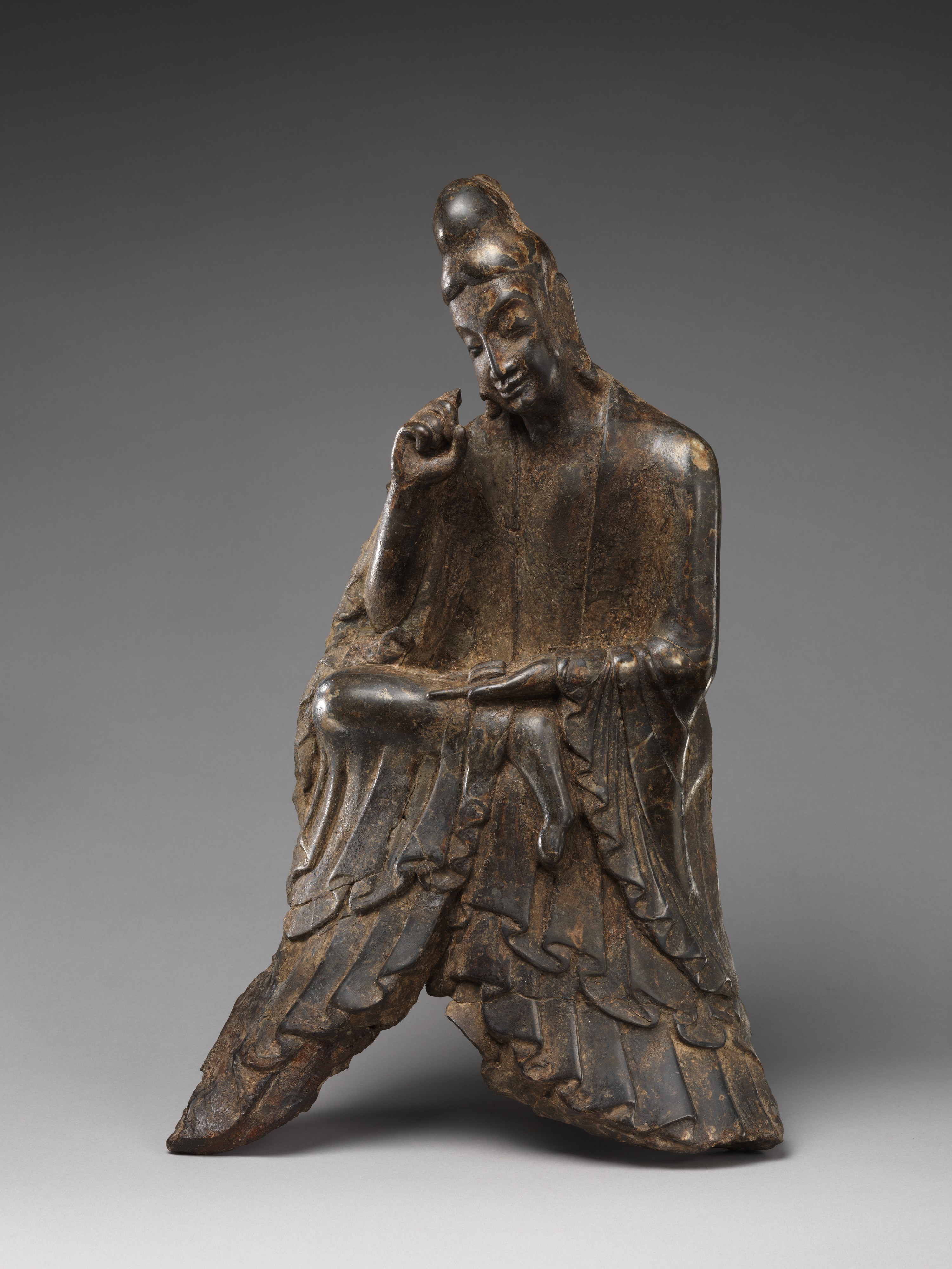
Bodhisattva in pensive pose
View through The Met
Limestone, Northern Wei dynasty (386–534), China
Rights: Public Domain
Asian Art, Metropolitan Museum of Art New York NY, Fletcher Fund 1939
Title: Bodhisattva in pensive pose
Description:
Limestone, Northern Wei dynasty (386–534), China.
Related Results
One Page from the Ksitigarbha-Bodhisattva-Pranidhana-Sutra (Sutra of the Oath of the Bodhisattva Ksitigarbha)
One Page from the Ksitigarbha-Bodhisattva-Pranidhana-Sutra (Sutra of the Oath of the Bodhisattva Ksitigarbha)
Originally a section of a handscroll, or possibly a page from an accordion-fold album, this calligraphic work represents text from a Buddhist sutra, specifically, text from the Ksi...
Figur. Rökelsehållare. Kangxi, Qingdynastin.
Figur. Rökelsehållare. Kangxi, Qingdynastin.
FIGURE. Elephant White, standing with his head bent down and turned to the right. The body shaped in vaults and spirals. On the back a brown saddle, saddle cover in brown and yello...
Mother and Child
Mother and Child
Renoir once quipped that had God not created the female breast, he might never have become an artist. Indeed, the full, womanly bosom figures prominently in Renoir's loving portray...
Bodhisattva Maitreya
Bodhisattva Maitreya
This typical figure of the art of Gandhara, an ancient region that occupied what is today northwest Pakistan and east Afghanistan, is a bodhisattva, one of the essential figures of...
Seated Chijang Posal (Chinese, Dizang Pusa; Sanskrit, Bodhisattva Ksitigarbha) Flanked by the Ten Kings of Hell, Monk Tomyŏng (Chinese, Daoming), and Three Officials
Seated Chijang Posal (Chinese, Dizang Pusa; Sanskrit, Bodhisattva Ksitigarbha) Flanked by the Ten Kings of Hell, Monk Tomyŏng (Chinese, Daoming), and Three Officials
This painting depicts Chijang Posal (Chinese, Dizang Pusa; Sanskrit, Bodhisattva Ksitigarbha) seated at the center of the composition and surrounded by the Ten Kings of Hell, Monk ...