
Search engine for discovering works of Art, research articles, and books related to Art and Culture


Javascript must be enabled to continue!
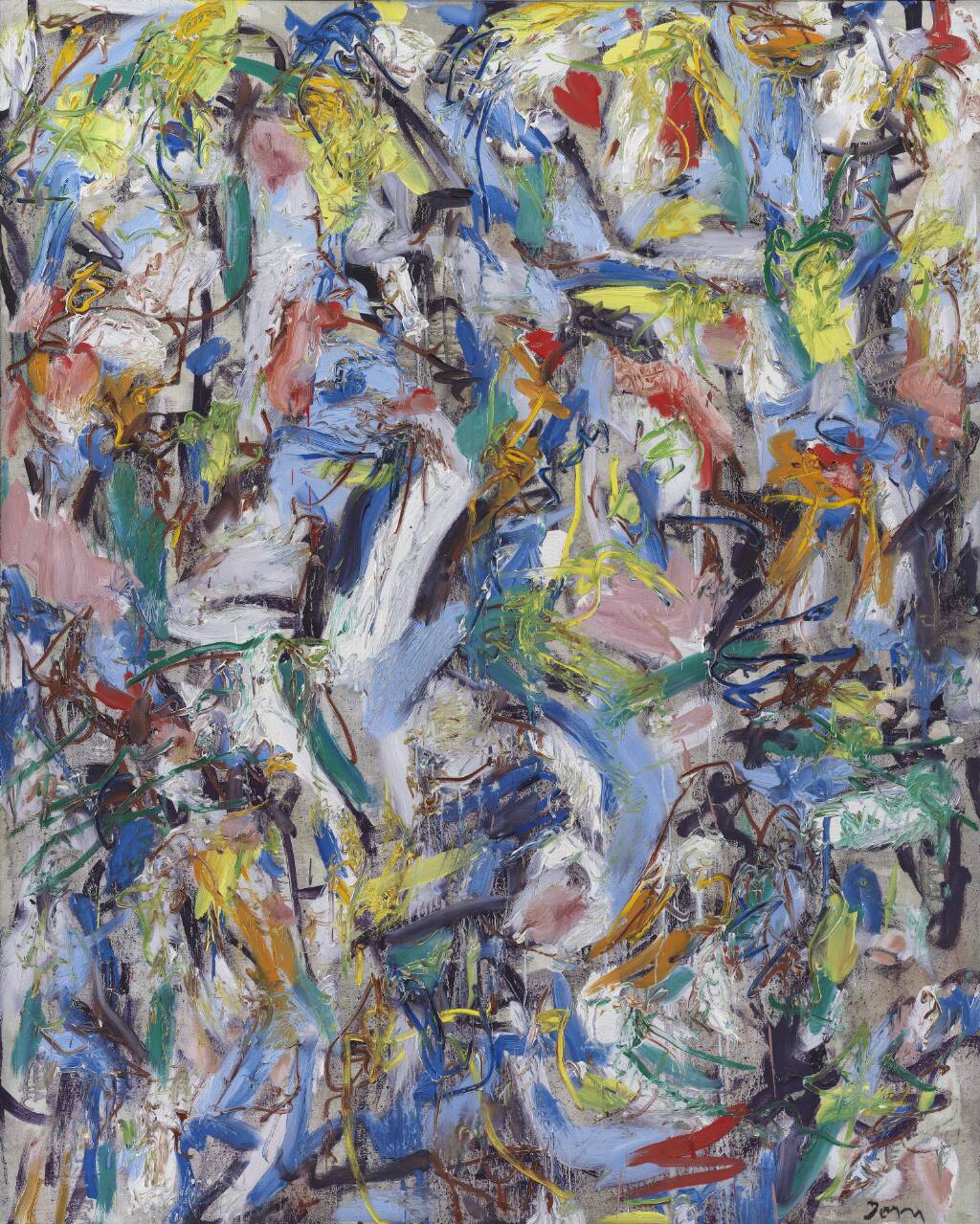
Skrevet i sand: Alpona
View through National Gallery of Denmark
On the back of the canvas, Asger Jorn has written the title of
this picture in Danish in large black painted letters: ‘WRITTEN
IN SAND (ALPONA)’. Alpona painting is a technique used
in ceremonial contexts in the Bengal region of India and
Bangladesh, where rice flour spread out on the ground is
painted using one’s fingers or branches, cotton threads or
scraps of cloth dipped in pigmented liquid. Despite this
reference, Written in Sand (Alpona) is a traditional oil painting
on canvas. Even so, the title suggests that by this point Jorn
was looking beyond the Western painting tradition. Jorn had
already written about Alpona painting as a phenomenon in
texts from 1948 and 1951. With this picture, he picked up the
theme again, helping him rethink his painting in an even more
radical way than before.
Written in Sand (Alpona) constitutes a watershed
moment in Jorn’s art. The recognisable, representational
elements previously found in his painting recede into the
background while colours and textures take centre stage.
The picture marks a dramatic shift in Jorn’s approach to
painting, ushering in the last phase of his work (50 Favorites in the SMK Collection).
Title: Skrevet i sand: Alpona
Description:
On the back of the canvas, Asger Jorn has written the title of
this picture in Danish in large black painted letters: ‘WRITTEN
IN SAND (ALPONA)’.
Alpona painting is a technique used
in ceremonial contexts in the Bengal region of India and
Bangladesh, where rice flour spread out on the ground is
painted using one’s fingers or branches, cotton threads or
scraps of cloth dipped in pigmented liquid.
Despite this
reference, Written in Sand (Alpona) is a traditional oil painting
on canvas.
Even so, the title suggests that by this point Jorn
was looking beyond the Western painting tradition.
Jorn had
already written about Alpona painting as a phenomenon in
texts from 1948 and 1951.
With this picture, he picked up the
theme again, helping him rethink his painting in an even more
radical way than before.
Written in Sand (Alpona) constitutes a watershed
moment in Jorn’s art.
The recognisable, representational
elements previously found in his painting recede into the
background while colours and textures take centre stage.
The picture marks a dramatic shift in Jorn’s approach to
painting, ushering in the last phase of his work (50 Favorites in the SMK Collection).
Related Results
PM 103821 Nohant
PM 103821 Nohant
Nohant-Vic; Domaine George Sand; Centre, Indre; France; ref: PM_103821_Nohant; La salle d'entrée Europe/France/Nohant-Vic; ; {{fr/Entrée de la maison de George Sand à Nohant-Vi...
The Sand Bargeman
The Sand Bargeman
In 1871 Jozef Israëls moved into a modern villa on the Koninginnegracht in The Hague. From his sitting room, he could see the fishermen, sand bargemen and seaside visitors travelli...
Photographic postcard, black and white, of a girl sitting on the sand next to a black dog, taken on the south coast of England, by Remington's Photo Service (A.H. Remington), England, 1920-39. Black and white photographic postcard (landscape) of a girl si
Photographic postcard, black and white, of a girl sitting on the sand next to a black dog, taken on the south coast of England, by Remington's Photo Service (A.H. Remington), England, 1920-39. Black and white photographic postcard (landscape) of a girl si
Photographic postcard, black and white, of a girl sitting on the sand next to a black dog, taken on the south coast of England, by Remington's Photo Service (A.H. Remington), Engla...
Photograph, tinted and mounted on card, of a boy wearing a stripy top and shorts, sitting on the sand with a spade, taken on the south coast of England, by Remington's Photo Service (A.H. Remington), England 1920-39. Card mounted tinted photograph of a bo
Photograph, tinted and mounted on card, of a boy wearing a stripy top and shorts, sitting on the sand with a spade, taken on the south coast of England, by Remington's Photo Service (A.H. Remington), England 1920-39. Card mounted tinted photograph of a bo
Photograph, tinted and mounted on card, of a boy wearing a stripy top and shorts, sitting on the sand with a spade, taken on the south coast of England, by Remington's Photo Servic...
Photograph, tinted and mounted on card, of baby boy in blue gingham waders sitting on the sand with a bucket and spade, taken on the south coast of England, by Remington's Photo Service (A.H. Remington), England, 1920-39. Card mounted tinted photograph of
Photograph, tinted and mounted on card, of baby boy in blue gingham waders sitting on the sand with a bucket and spade, taken on the south coast of England, by Remington's Photo Service (A.H. Remington), England, 1920-39. Card mounted tinted photograph of
Photograph, tinted and mounted on card, of baby boy in blue gingham waders sitting on the sand with a bucket and spade, taken on the south coast of England, by Remington's Photo Se...