
Search engine for discovering works of Art, research articles, and books related to Art and Culture


Javascript must be enabled to continue!
Galileo Galilei: Galileo Galilei at his trial at the Inquisition in Rome in 1633. Process print after a painting.
View through Europeana Collections
Wellcome Collection
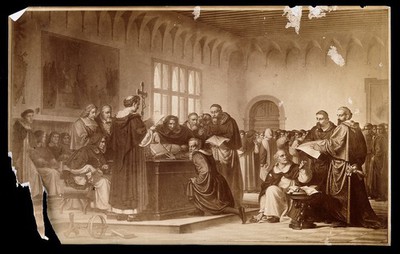
Title: Galileo Galilei: Galileo Galilei at his trial at the Inquisition in Rome in 1633. Process print after a painting.
Description not available.
Related Results
painting, painting, painting, painting, painting, painting, painting, painting, painting, painting, painting, painting, painting, painting, painting, painting, painting, painting, painting, painting, painting, painting, painting, painting, painting, paint
painting, painting, painting, painting, painting, painting, painting, painting, painting, painting, painting, painting, painting, painting, painting, painting, painting, painting, painting, painting, painting, painting, painting, painting, painting, paint
"Here is portrayed three Moods of the Sky and the effects on the Fish and Animals. Sharks and Turtles come to the Surface when it is Raining. Wallabies and Kangaroos are out feedin...
Sidereus nuncius magna longeque admirabiblia spectacula pandens, suspiciendaque proponens vnicuique praesertim vero philosophis
Sidereus nuncius magna longeque admirabiblia spectacula pandens, suspiciendaque proponens vnicuique praesertim vero philosophis
Galileo Galilei (1564–1642) was an Italian astronomer, mathematician, physicist, philosopher, and inventor. He revolutionized the sciences in the Western world by using mathematics...
(XXIV) Peintures de la Sala Borgia au Vatican de l'invention de Raphael recueilles par les Piranesi et Dessinées par Thomas Piroli, Paris (Pietro and Francesco Piranesi and Leblanc) and Rome (Piroli) (1803); (XXV) Peintures de la Villa Lante, à Rome, de l
(XXIV) Peintures de la Sala Borgia au Vatican de l'invention de Raphael recueilles par les Piranesi et Dessinées par Thomas Piroli, Paris (Pietro and Francesco Piranesi and Leblanc) and Rome (Piroli) (1803); (XXV) Peintures de la Villa Lante, à Rome, de l
Engraving, (XXIV) Peintures de la Sala Borgia au Vatican de l'invention de Raphael recueilles par les Piranesi et Dessinées par Thomas Piroli Paris (Pietro and Francesco Piranesi ...
Frederik VI av Danmark (1768–1839)
Frederik VI av Danmark (1768–1839)
New acquisitions, November 2016 Five paintings by Christoffer Wilhelm Eckersberg Nationalmuseum has added no fewer than five works by Christoffer Wilhelm Eckersberg to its Danish a...
Karen Margrethe Borch
Karen Margrethe Borch
New acquisitions, November 2016 Five paintings by Christoffer Wilhelm Eckersberg Nationalmuseum has added no fewer than five works by Christoffer Wilhelm Eckersberg to its Danish a...
Galileo Galilei (1564-1642), after Justus Suttermans (1597-1681)
Galileo Galilei (1564-1642), after Justus Suttermans (1597-1681)
Harvard owns another portrait of Galileo, also copied from the Sustermanns original. See object number H182. The original painting by Justus Suttermans is in the Uffizi Gallery, Fl...
The Water Stream, La Brème
The Water Stream, La Brème
“I also hold that painting is a quite concrete art, and can consist of nothing but the representation of real, tangible things, ” wrote Gustave Courbet in an open letter to his stu...
Galileo Galilei (1564-1642), after Justus Suttermans
Galileo Galilei (1564-1642), after Justus Suttermans
The original portrait of Galileo by Sustermanns is in the Uffizi Museum, Florence....