
Search engine for discovering works of Art, research articles, and books related to Art and Culture


Javascript must be enabled to continue!
Shabti of the God's Wife Maatkare, daughter of Painedjem I
View through The Met
Faience, Third Intermediate Period, Dynasty 21
Rights: Public Domain
Egyptian Art, Metropolitan Museum of Art New York NY, Rogers Fund 1944
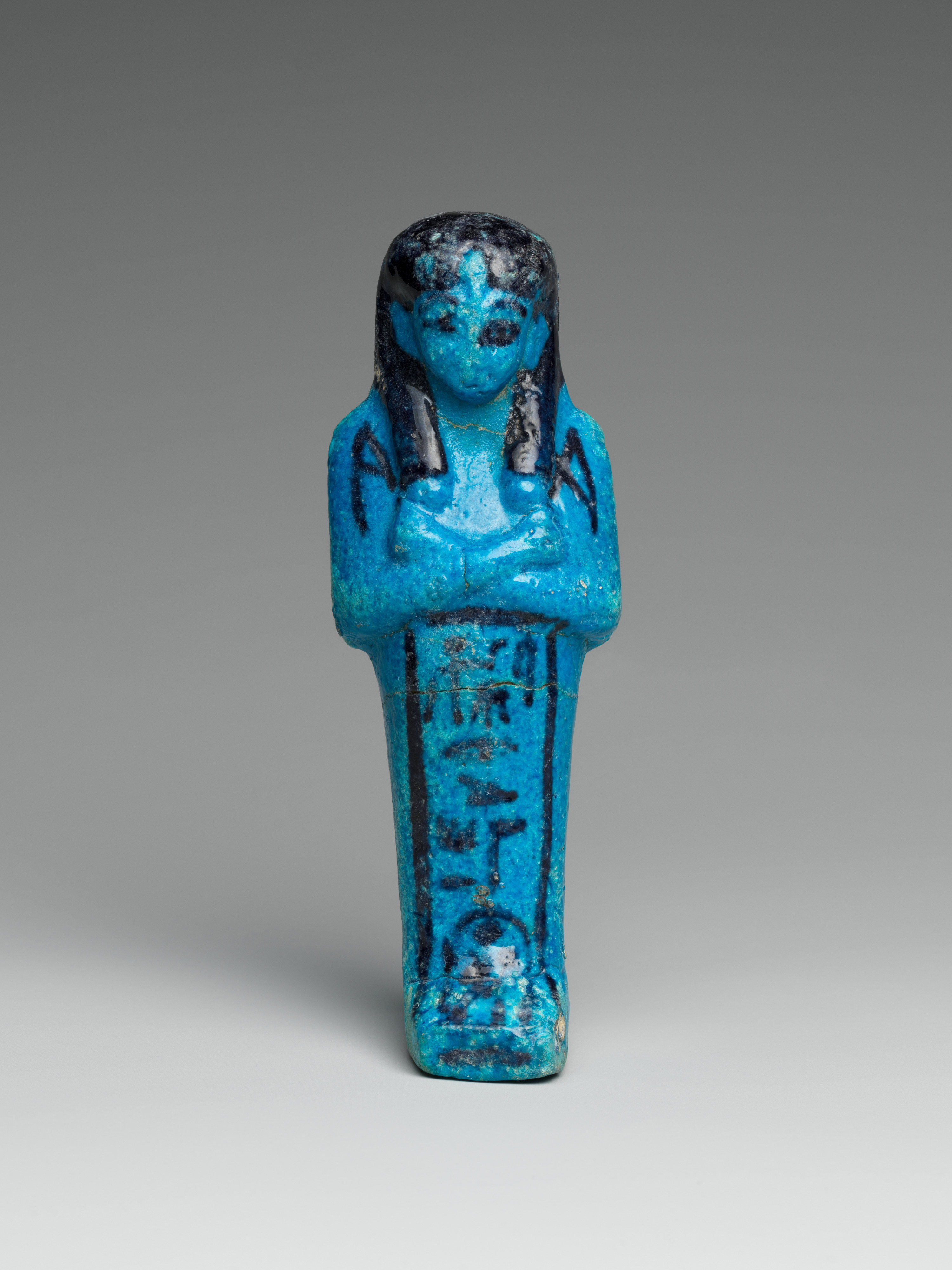
Title: Shabti of the God's Wife Maatkare, daughter of Painedjem I
Description:
Faience, Third Intermediate Period, Dynasty 21.
Related Results
Gospel of the Lots of Mary
Gospel of the Lots of Mary
A miniature codex that contains 37 oracles, entitled The Gospel of the Lots of Mary according to its incipit. These oracles would be chosen via lot divination so as to provide the ...
The whole of Protestant Christianity
The whole of Protestant Christianity
Probably : On the left, next to the man with turban: "The three faithful servant at the time of persecution. The devil hopes to be the machomet. Alcorom. / Calvinists and Arian for...
Mitteleuropa, Baden - Die Altweibermühle in der Wolfacher Fastnacht
Mitteleuropa, Baden - Die Altweibermühle in der Wolfacher Fastnacht
The musical comedy with spoken insertions is performed after the Shrove Monday's carnival parade in the market-place. The performance is organized by the "Freie Narrenzunft" (Free ...
Shabti of the Adoratrice of Hathor Henettawy, wife of Painedjem I
Shabti of the Adoratrice of Hathor Henettawy, wife of Painedjem I
Faience, Third Intermediate Period, Dynasty 21...
Shabti of the Adoratrice of Hathor Henettawy, wife of Painedjem I
Shabti of the Adoratrice of Hathor Henettawy, wife of Painedjem I
Faience, Third Intermediate Period, Dynasty 21...
Shabti of Isetemkheb (D), wife of Painedjem II
Shabti of Isetemkheb (D), wife of Painedjem II
Faience, Third Intermediate Period, Dynasty 21...
Shabti of the Adoratrice of Hathor ("Duahathor") Henettawy, wife of Painedjem I
Shabti of the Adoratrice of Hathor ("Duahathor") Henettawy, wife of Painedjem I
Faience, Third Intermediate Period, Dynasty 21...
Ushabti of Princess Maatkare
Ushabti of Princess Maatkare
Molded in faience, this ushabti has an uraeus on its forehead (a symbol of royalty) and breasts molded just above the hands, indicating gender. The inscription reads: "May the Osir...