
Search engine for discovering works of Art, research articles, and books related to Art and Culture


Javascript must be enabled to continue!
Bodhisattva Avalokiteshvara
View through The Met
Leaded brass with pigment and gilding lost-wax cast, Late Ming (1368–1644) or Qing (1644–1911) dynasty, China
Asian Art, Metropolitan Museum of Art New York NY, Purchase Bequest of Florance Waterbury in memory of her father John I. Waterbury by exchange 2009
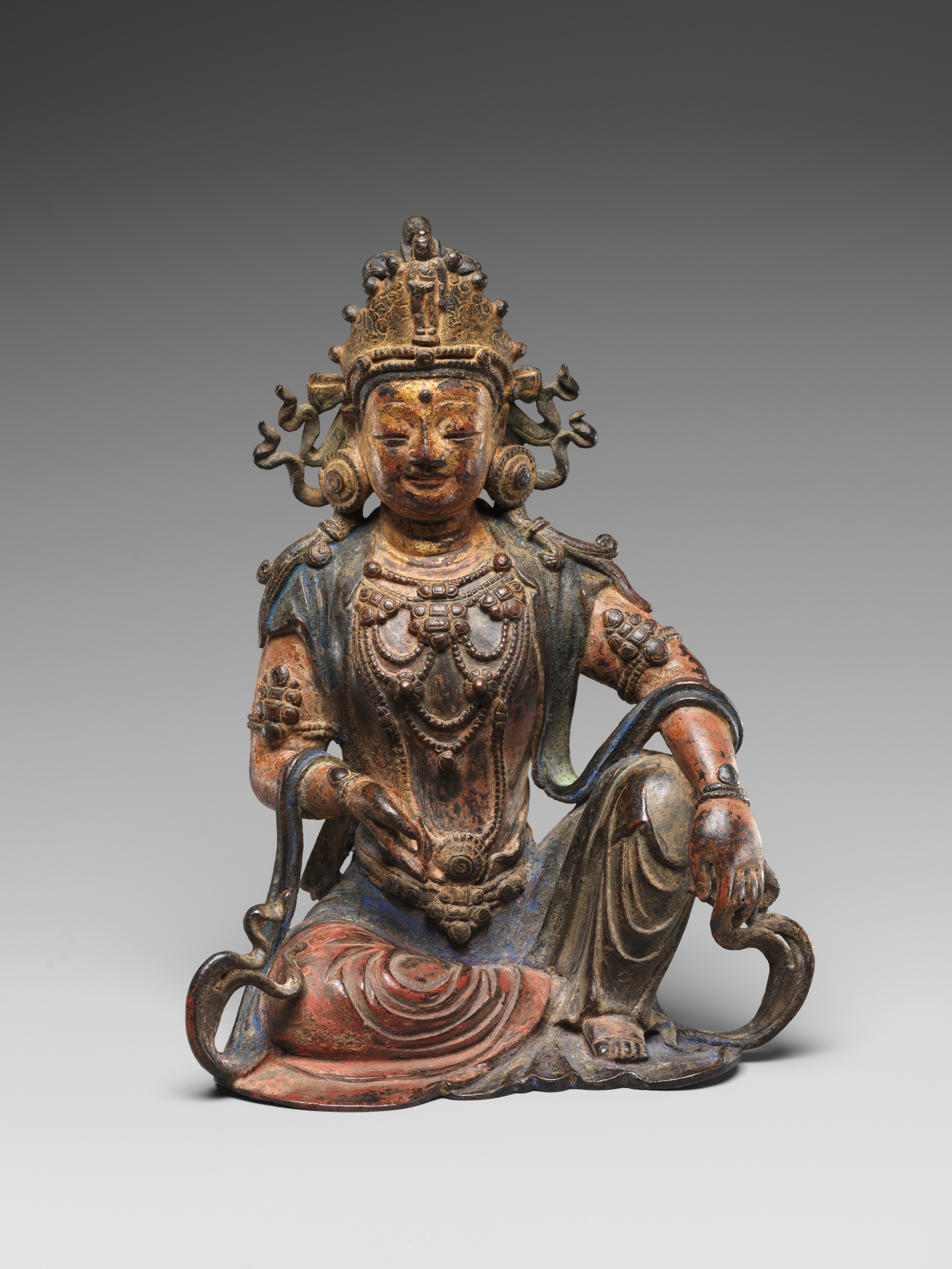
Title: Bodhisattva Avalokiteshvara
Description:
Leaded brass with pigment and gilding lost-wax cast, Late Ming (1368–1644) or Qing (1644–1911) dynasty, China.
Related Results
One Page from the Ksitigarbha-Bodhisattva-Pranidhana-Sutra (Sutra of the Oath of the Bodhisattva Ksitigarbha)
One Page from the Ksitigarbha-Bodhisattva-Pranidhana-Sutra (Sutra of the Oath of the Bodhisattva Ksitigarbha)
Originally a section of a handscroll, or possibly a page from an accordion-fold album, this calligraphic work represents text from a Buddhist sutra, specifically, text from the Ksi...
Bodhisattva Avalokiteshvara of the Lion's Roar, or Simhanada Avalokiteshvara (Shi Hou Guanyin)
Bodhisattva Avalokiteshvara of the Lion's Roar, or Simhanada Avalokiteshvara (Shi Hou Guanyin)
Wood (poplar) with pigment; single-woodblock construction, Ming dynasty (1368–1644), China...
The bodhisattva Avalokiteshvara
The bodhisattva Avalokiteshvara
A bodhisattva is one who has almost attained the state of enlightenment, but chooses to remain in the human world to help others on their journey to this state. Avalokiteshvara is ...
Figur. Rökelsehållare. Kangxi, Qingdynastin.
Figur. Rökelsehållare. Kangxi, Qingdynastin.
FIGURE. Elephant White, standing with his head bent down and turned to the right. The body shaped in vaults and spirals. On the back a brown saddle, saddle cover in brown and yello...
Bodhisattva, probably Avalokiteshvara
Bodhisattva, probably Avalokiteshvara
Bronze with high tin content, Anuradhapura period, Sri Lanka...
Bodhisattva Avalokiteshvara (Guanyin)
Bodhisattva Avalokiteshvara (Guanyin)
Leaded brass with pigment lost-wax cast, Qing dynasty (1644–1911) Qianlong period (1736–95), Tibet...