
Search engine for discovering works of Art, research articles, and books related to Art and Culture


Javascript must be enabled to continue!
Danaë
View through National Gallery of Denmark
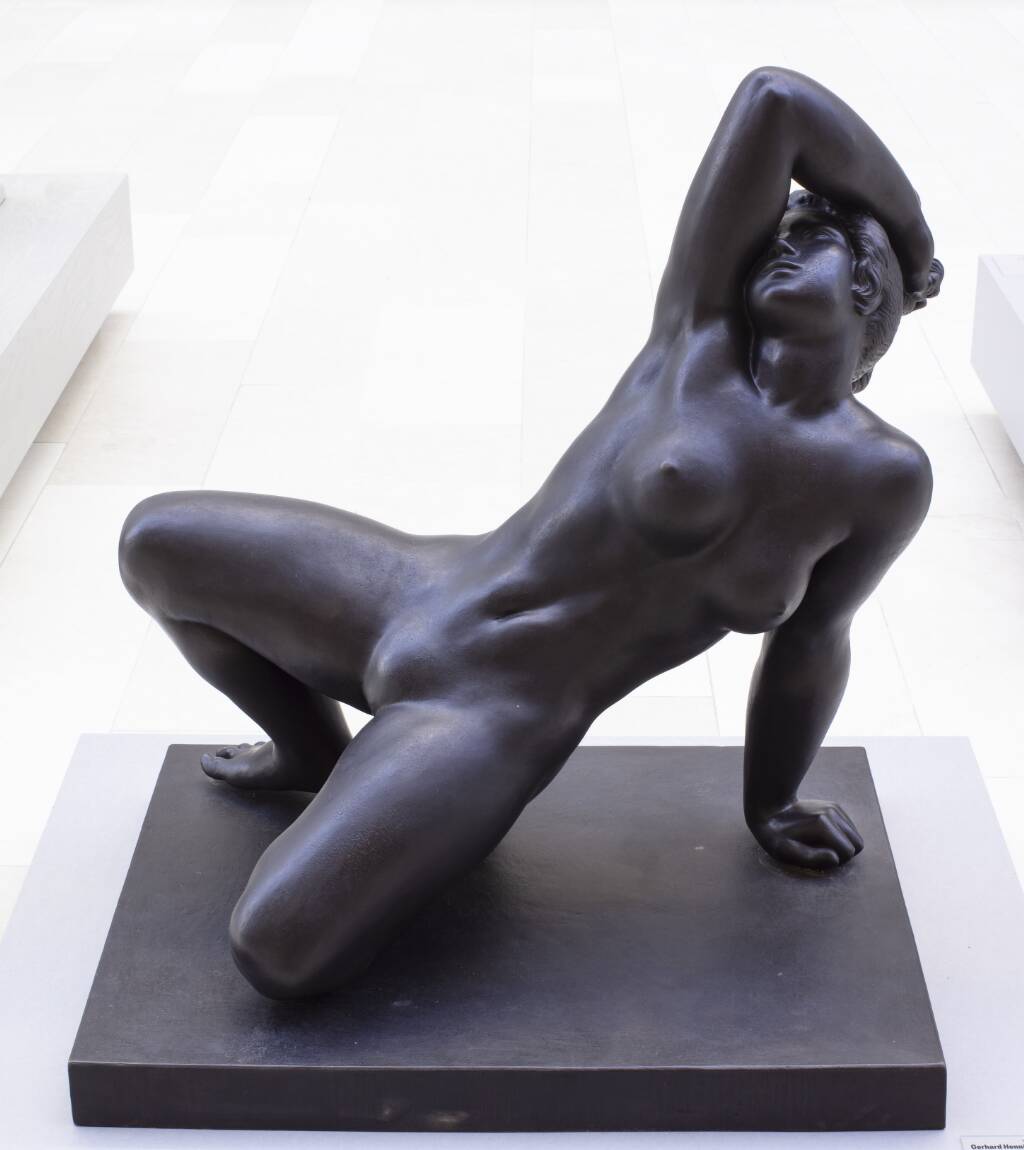
Danäe is one of Gerhard Henning’s most overtly sensual female figures. Still aglow from her encounter with Zeus’s golden shower, she arches her body in ecstasy. The daughter of a king, Danäe was one of the many mortal women Zeus desired. In response, her worried father had her locked up, but of course Zeus could not be so easily deterred. Transforming into golden rain, he bypassed the walls.
Art history is full of reclining female figures. They are especially known from the Renaissance and Baroque eras, where Danäe has many fellow sisters in the form of Venuses, nymphs and other mythological beauties. Still, other artists from Henning’s period shared a similar fascination with the reclining female figure. The pointedly erotic air is, however, entirely Gerhard Henning’s own. He makes few concessions to mythological trappings, and the sculpture caused quite a bit of outrage when another copy of it was erected in Odense in 1930.
Title: Danaë
Description:
Danäe is one of Gerhard Henning’s most overtly sensual female figures.
Still aglow from her encounter with Zeus’s golden shower, she arches her body in ecstasy.
The daughter of a king, Danäe was one of the many mortal women Zeus desired.
In response, her worried father had her locked up, but of course Zeus could not be so easily deterred.
Transforming into golden rain, he bypassed the walls.
Art history is full of reclining female figures.
They are especially known from the Renaissance and Baroque eras, where Danäe has many fellow sisters in the form of Venuses, nymphs and other mythological beauties.
Still, other artists from Henning’s period shared a similar fascination with the reclining female figure.
The pointedly erotic air is, however, entirely Gerhard Henning’s own.
He makes few concessions to mythological trappings, and the sculpture caused quite a bit of outrage when another copy of it was erected in Odense in 1930.
Related Results
Danaë and the Shower of Gold
Danaë and the Shower of Gold
Danaë lies naked, reclining gently on a divan. Above her falls a shower of gold. This is Jupiter, who came to Danaë in the form of golden rain and made her pregnant. Cupid, god of ...
X-radiograph(s) of "Danae"
X-radiograph(s) of "Danae"
X-Radiograph Description: Negative
Burroughs Number: 636
X-Radiograph(s) of:
Artist: Flinck, Govaert, Dutch, 1615-1660
Title: Danae
Owner: Boston Museum of Fine Arts, MA
...
Saint Petersburg. State Heritage. Visitors in front of “Danae” by Rembrandt
Saint Petersburg. State Heritage. Visitors in front of “Danae” by Rembrandt
Saint Petersburg. State Heritage. Visitors in front of “Danae” by Rembrandt...